ADVERTISEMENT
ADVERTISEMENT



From 2026, the penny will only be in your thoughts
The penny is slipping away not with a bang, but with a shrug, rounding rules, and generations of spare change memories.
-
1759953093.png) Staff Reporter
Staff Reporter - Thu, 01, Jan 2026
- 00:00 EST
- 183
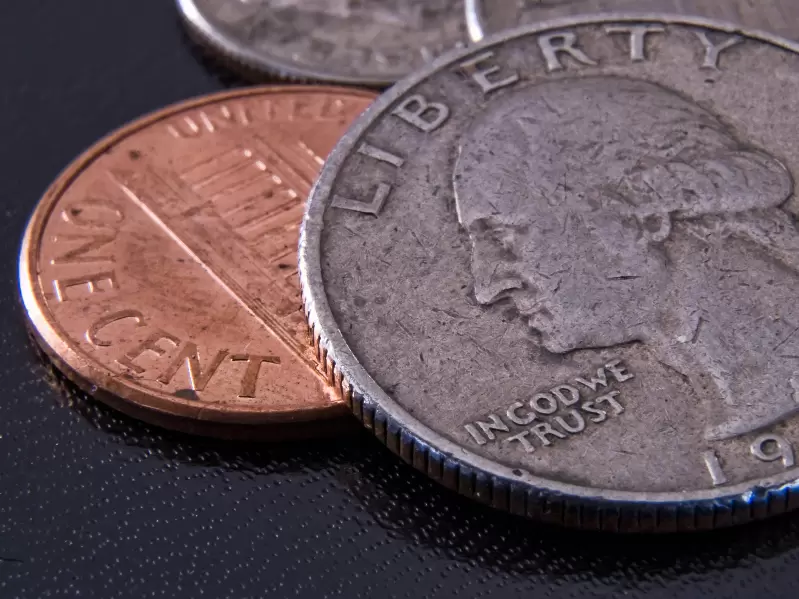 Representative image / Pexels
History has a sense of humor. Empires fall with a bang, revolutions with a roar—but the world’s most powerful country is about to lose something far smaller, quieter, and somehow more sentimental: the penny.
Not abolished, not banished, not even formally fired. Just… no longer invited back to work.
From early 2026, the United States will stop making new one-cent coins for everyday use. The penny—officially the “cent,” affectionately the copper-colored afterthought at the bottom of your pocket—will drift into a strange half-life. Still legal tender. Still technically money. But no longer born.
It’s a very American ending: nobody wants to kill it outright, Congress would have to do that, and Congress is busy. So instead, the penny is being gently starved of replacement parts. The U.S. Mint has ordered its last penny blanks. When they run out, that’s it. No more newborn Lincolns.
This is not because the penny has suddenly offended national values. It’s because it costs nearly 3.7 cents to make a one-cent coin. In fiscal year 2024 alone, that stubborn arithmetic drained more than $85 million from the Treasury. Even in a country that can lose billions between budget line items, losing money by manufacturing money eventually becomes embarrassing.
And yet, do not expect a sudden, cinematic disappearance. There are an estimated 114 billion pennies already loose in the wild—under sofa cushions, in parking lots, in jars labeled “Vacation 2009”. They remain legal tender indefinitely. Pennies will haunt America for years, like polite ghosts insisting they’re still allowed to be here.
What will change is the choreography of cash. Without fresh pennies entering circulation, retailers are preparing to round totals to the nearest nickel. Pay $10.02 in cash, and it becomes $10.00. Pay $10.03, and it becomes $10.05. Digital payments will still glide precisely to the cent, because computers don’t care about nostalgia.
Some companies are already choosing sides. Certain McDonald’s locations will round to the nearest five cents, meaning the difference between $10.22 and $10.23 now matters in a way it hasn’t since the invention of the calculator. Wendy’s has suggested franchisees round down when they’re short on pennies—a subtle, almost radical kindness. Auntie Anne’s, Cinnabon, Jamba, Carvel, and friends are recommending rounding in the customer’s favor, proving once again that sugar is not the only thing these companies are selling.
Others are getting creative. One Sheetz store reportedly offered a free drink to anyone who brought in a dollar’s worth of pennies. This was either a clever promotion or a cry for help.
Of course, Americans have always had a complicated relationship with the penny. We say “a penny saved is a penny earned,” but we will not bend over to pick one up. We keep jars of them for years, then spend half an afternoon feeding them into a machine that takes a percentage of their value as a convenience fee. We call them “lucky,” but only if they’re face up and only if we’re already in a good mood.
There’s also the quiet collector fantasy. Pennies minted before 1982 contain enough copper to be worth more than their face value, at least in theory. The rest—mostly zinc, thinly coated in nostalgia—are unlikely to fund anyone’s retirement. Still, millions of Americans will continue to believe that this jar, this time, is the one.
The irony, of course, is rich. The United States issues the world’s reserve currency, moves markets with a sentence, and can finance wars with numbers so large they blur into abstraction—yet it has been quietly losing money on the smallest coin in its system for years. The penny didn’t fall because it was useless. It fell because it was inefficient.
So the coin that once symbolized thrift, humility, and honest value will fade out not with outrage, but with rounding guidance.
From 2026 onward, the penny won’t vanish. It will linger—in drawers, in memories, in the phrase “put in your two cents,” which will continue long after the cent itself becomes theoretical. It will be penny in your thoughts: not gone, not useful, but strangely hard to let go.
And somewhere, Abraham Lincoln will continue staring into the middle distance, engraved on billions of coins no one quite knows what to do with, presiding over the quietest retreat in American monetary history.
Related











ADVERTISEMENT

ADVERTISEMENT
E Paper
Video

Comments
Start the conversation
Become a member of New India Abroad to start commenting.
Sign Up Now
Already have an account? Login