ADVERTISEMENT
ADVERTISEMENT


Five Indian Americans on TIME100 Health 2026
The recognition places them in AI-enabled care, personalized gene-editing therapies, opioid surveillance and harm reduction, cancer screening research, and oncology innovation.
-
1759163132.png) Anushka Pathak
Anushka Pathak - Thu, 12, Feb 2026
- 15:41 EST
- 1045
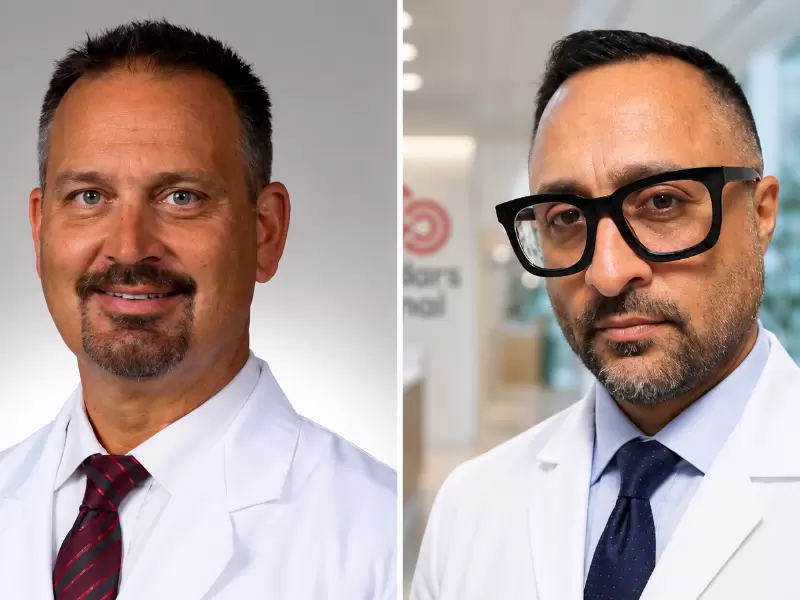
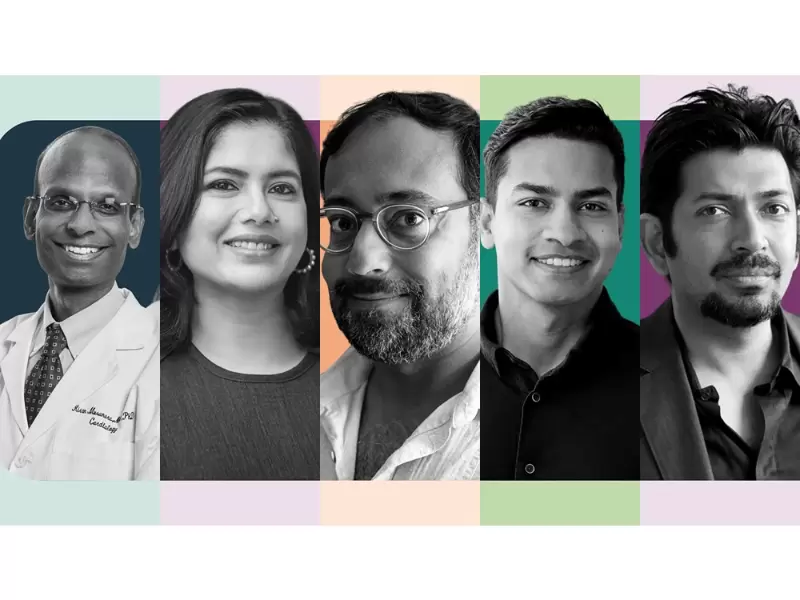 L-R: Kiran Musunuru, Priti Bandi, Nabarun Dasgupta, Karan Singhal, Siddhartha Mukherjee / Courtesy: TIME100 Health
TIME magazine has named five Indian American health leaders to its annual TIME100 Health list, which recognizes influential leaders shaping global healthcare.
Karan Singhal, Kiran Musunuru, Nabarun Dasgupta, Priti Bandi, and Siddhartha Mukherjee were recognized for integrating AI into clinical care, pioneering personalized gene-editing therapies, addressing evolving drug threats, expanding cancer screening access, and advancing cancer science and treatment, respectively.
ALSO READ: Vinod Dham, Padma Chebrolu receive top UC alumni honors
San Francisco-based technologist Karan Singhal, who serves as head of the Health AI team at OpenAI, was named among the innovators on the list.
With more than 40 million people querying ChatGPT daily about health concerns, Singhal led the 2026 launch of ChatGPT Health, allowing users to upload medical records and personal data for tailored guidance.
He collaborated with over 260 physicians worldwide to improve safety and reliability in the large language models supporting the tool and contributed to a clinical study assessing AI as a clinician copilot. His work informed ChatGPT for Healthcare, now in use at institutions including Boston Children’s Hospital and Cedars-Sinai Medical Center.
“The idea that you could have a companion in your pocket helping you navigate care has been a dream for a long time,” Singhal says.
Kiran Musunuru was recognized as a pioneer in health for his work with Rebecca Ahrens-Nicklas, director of the Gene Therapy for Inherited Metabolic Disorders Frontier Program at Children’s Hospital of Philadelphia.
As director of the Genetic and Epigenetic Origins of Disease Program at the Penn Cardiovascular Institute and scientific director at the Penn Center for Inherited Cardiovascular Disease, Munsuru collaborated with Jennifer Doudna’s team to develop and deliver what has been described as the first personalized CRISPR therapy to baby KJ Muldoon, born in Aug. 2024 with a mutation that caused the absence of an enzyme required for protein processing.
The treatment, administered in three infusions beginning at six months old in early 2025 without traditional animal testing, prevented severe symptoms, and KJ later celebrated his first birthday while continuing under monitoring. “I don’t think it’s exaggerating to say that this is the future of medicine,” says Musunuru.
Recognized in the leaders category is Nabarun Dasgupta, a Raleigh-based epidemiologist and associate professor in the Department of Epidemiology at the University of North Carolina at Chapel Hill and Core Faculty at the UNC Injury Prevention Research Center.
His work in combating the drug crisis was recognized as he directs the Opioid Data Lab, also known as the UNC Street Drug Analysis Lab, monitoring emerging substances such as medetomidine and potent synthetic opioids. As co-founder of the nonprofit Remedy Alliance with co-directors Eliza Wheeler and Maya Doe-Simkins, he has supported the distribution of more than 6 million low- or no-cost naloxone doses nationwide since 2022 and expanded community drug-checking initiatives.
Cancer researcher Priti Bandi, from Atlanta, is the scientific director of Cancer Risk Factors and Screening Surveillance Research at the American Cancer Society, where she leads the cancer risk factors and screening surveillance team. A Nov. 2025 JAMA study she led estimated that universal lung cancer screening among eligible adults could prevent more than 62,000 deaths over five years.
Bandi cited access barriers, cost burdens, pandemic disruptions, smoking-related stigma, and limited CT imaging in rural areas as persistent challenges. “Certain groups have low uptake year on year because the bigger picture questions are not being addressed, which is access to care,” she says. “Even a small cost burden can prevent you from taking up screening.” She added, “Good science moves good policy.”
Also named among the catalysts is Siddhartha Mukherjee, an oncologist, cancer researcher, and Pulitzer Prize-winning author, who serves as assistant professor of medicine in the Department of Medicine (Oncology) at Columbia University Irving Medical Center in New York City.
His clinical focus includes leukemia, blood stem cell biology, and bone marrow transplantation. In 2025, he updated his 2010 book, “The Emperor of All Maladies: A Biography of Cancer,” adding four chapters on advances in detection, prevention, and treatment. “I felt an urgent need,” Mukherjee says, “because much of what we know about cancer had changed.”
He co-founded Manas AI in 2025 with LinkedIn co-founder Reid Hoffman to advance AI-driven drug discovery. “Manas has discovered medicines that were unimaginable in terms of their chemical composition,” Mukherjee says. “And within six months, we have probably virtually screened or created virtual medicines that number in the hundreds of thousands, and we will get into the millions.” He described the development as a “massive turning point.”
The five honorees, along with the others, will receive the award during the TIME100 Impact Dinner: Leaders Shaping the Future of Health on Feb. 19 in New York City.
Discover more at New India Abroad.
Leave A Comment
Related





ADVERTISEMENT

ADVERTISEMENT
E Paper
Video

Comments
Start the conversation
Become a member of New India Abroad to start commenting.
Sign Up Now
Already have an account? Login