ADVERTISEMENT
ADVERTISEMENT



Varun Dhawan: A man of many moods
Following his debut, Varun delivered a string of hits-Main Tera Hero, Humpty Sharma Ki Dulhania, and Badrinath Ki Dulhania.
-
 Bollywood Insider
 - Sun, 14, Jun 2026
- 04:22 EDT
- 41
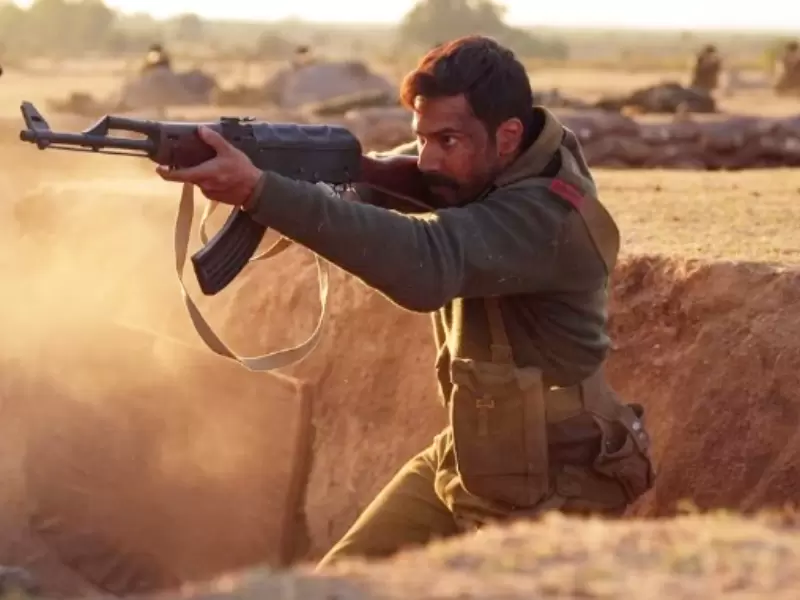 Varun Dhawan / Photo : IANS/Varundhawan/insta
Varun Dhawan arrived as a promising star with Student of the Year (2012), but what followed was far from predictable. Over the years, he has carved a niche by balancing crowd-pleasing entertainers with occasional, surprising detours into darker, more complex territory. That duality has kept him relevant-and interesting.
Born to filmmaker David Dhawan and with brother Rohit Dhawan as a director, Varun entered Bollywood under the inevitable "nepo kid" label. But he was clear from the start-he wouldn't coast on legacy. He trained rigorously, working on his acting, physique, and dance before stepping into the spotlight. Today, he occupies a rare space: not just a star, not just an actor, but someone constantly oscillating between the two. That balance has become his biggest strength.
The launchpad
When Varun debuted with Student of the Year, directed by Karan Johar, he embodied the quintessential Bollywood hero-charming, athletic, and instantly likeable. Sharing screen space with Alia Bhatt and Sidharth Malhotra, he stood out for his natural ease and screen confidence. The audience responded immediately, especially his growing female fan base.
Also Read: Barun Sobti faces Mona Singh’s authority in ‘Kohrra 2’
Yet, the nepotism debate loomed large. Instead of avoiding it, Varun chose to outgrow it. His strategy was simple: mix safe box-office bets with unexpected choices.
The commercial sprint
Following his debut, Varun delivered a string of hits-Main Tera Hero, Humpty Sharma Ki Dulhania, and Badrinath Ki Dulhania. These films cemented his position as a bankable romantic hero.
Then came Judwaa 2, a remake of his father's cult film starring Salman Khan. It was more than nostalgia-it was a calculated embrace of legacy. Varun leaned into physical comedy, channeling the Govinda-era entertainers while giving them a contemporary spin.
By this point, he wasn't just popular-he was dependable. In an industry where consistency is rare, Varun became a bona fide crowd-pleaser.
Breaking the mould
Success, however, comes with the risk of repetition. Varun recognised it early.
Just when he seemed comfortably slotted as a commercial "chocolate boy," he pivoted. Sriram Raghavan's Badlapur marked a turning point. As a brooding man consumed by revenge, Varun shed his easy charm for something far more unsettling-and it worked.
If Badlapur hinted at depth, October confirmed it. Under Shoojit Sircar's restrained direction, Varun delivered one of his most internalised performances. Playing a hotel trainee navigating love, loss, and emotional limbo, he proved he could command silence just as effectively as spectacle.
These weren't just experiments-they were statements. Varun was no longer just a star; he was an actor willing to risk his image for growth.
"I am trying to balance both my boyish charm and rugged roles," he once said, "and I'd love to do an out-and-out children's film someday."
Offbeat narratives and balance
Post October, Varun's career became a careful balancing act. On one side were big-scale entertainers like Kalank and Coolie No. 1. On the other were rooted stories like Sui Dhaaga, where he played a small-town tailor chasing dignity and self-worth.
Then came Bhediya, a genre-bending horror-comedy that allowed him to explore physical transformation alongside humour. It reflected not just his versatility, but also his willingness to evolve with changing audience tastes.
The persona
Off-screen, Varun has cultivated an accessible, "boy-next-door" image. Highly active on social media and in public appearances, he connects easily with younger audiences.
"I don't know how to react to it," he admits about the love he receives. "But people have been amazing. Families come up and tell me they enjoy my work-that makes me happy."
He draws a clear distinction between fame and fulfilment. "Being successful and achieving success are two different things," he says, reflecting on his father's journey from a non-film background to directing over 40 films.
"I want people to like me for the characters I play-not because I look good or trend on Instagram. That kind of validation can get lonely."
The challenges
Varun's journey hasn't been without setbacks. Films like Kalank and Coolie No. 1 faced both critical and commercial disappointment. The post-pandemic landscape further shifted audience expectations, and like many actors, Varun had to recalibrate.
But retreat was never an option. Instead, he looked to reinvent himself, exploring new projects and genres, and rethinking his choices.
"I don't dwell on failure," he says. "It's part of life. I don't celebrate success too loudly either. I prefer balance."
Fatherhood has added a new dimension to his life. "Now I have a daughter. Her smile brings me a joy that no box-office success can match."
The road ahead
Varun Dhawan stands at a fascinating juncture. He has the mass appeal of a traditional Bollywood hero and the instinct to explore beyond it. To label him purely as a "commercial star" would be limiting.
He is, instead, a work in progress-someone who understands the grammar of Bollywood but refuses to be confined by it.
Up next, he looks forward to collaborating on Hai Jawani Toh Ishq Hona Hai, alongside Mrunal Thakur and Pooja Hegde.
"There are challenges, but I don't talk about them," he says. "It's my responsibility. I don't want sympathy-want to prove myself."
The pandemic pause, he reflects, offered perspective. "I realised we chase success so much that we forget relationships. That stress affects everything-even your craft."
A star still evolving
Varun Dhawan's journey is not about reinvention through noise, but evolution through choice. He has embraced stardom without being consumed by it, and experimentation without losing his audience.
In an industry of extremes, he remains comfortably in between-and that may just be his greatest strength.
Discover more at New India Abroad.
Related



ADVERTISEMENT

ADVERTISEMENT
E Paper
Video

Comments
Start the conversation
Become a member of New India Abroad to start commenting.
Sign Up Now
Already have an account? Login