ADVERTISEMENT
ADVERTISEMENT


Vaibhav Sooryavanshi and the reinvention of Bihar
“Vaibhav Sooryavanshi, a teenage cricketer from Bihar, is transforming the state’s long-standing image of sporting invisibility by breaking records and inspiring pride and aspiration among Biharis, highlighting the need for better infrastructure and support to nurture local talent and prevent future stars from leaving the state”
-
 Neeraj Jha
 - Sun, 12, Jul 2026
- 16:30 EDT
- 35
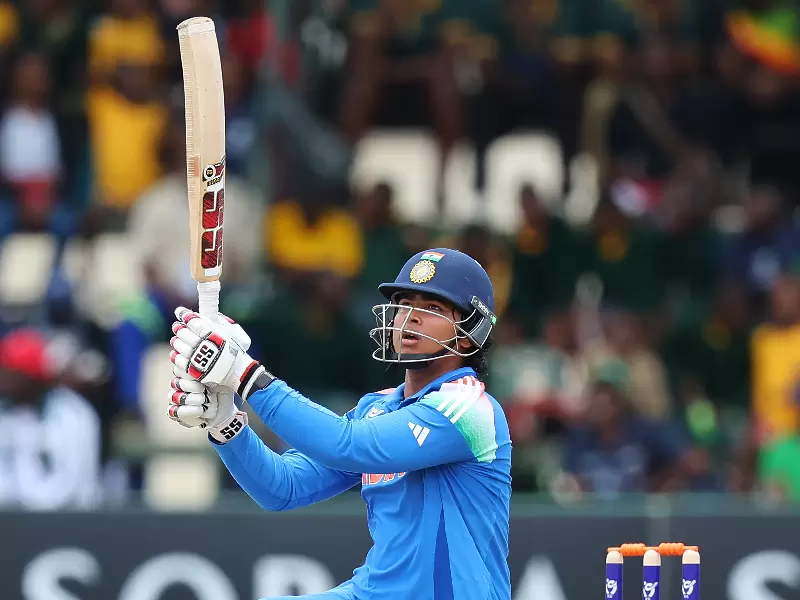 India U19's Vaibhav Sooryavanshi plays a shot during the ICC Under-19 World Cup 2026 final against England U19 at Harare Sports Club, in Harare, on Friday, February 6, 2026. / IANS/X/@BCCI
A few years ago, whenever I told my friends in Delhi that I had played competitive cricket for Patna district, I would notice a familiar smile.
Not admiration. Amusement. The assumption was simple: Bihar and cricket were not supposed to belong in the same sentence. For decades, that has been Bihar's sporting reality.
A state of more than 130 million people. A state that has produced scholars, bureaucrats, entrepreneurs and political leaders. A state whose people have helped build economies across India and around the world. Yet when it came to sports, Bihar was largely invisible.
Today, that is changing, and remarkably, the face of that change is a teenager from Samastipur. Remember this name – Vaibhav Suryavanshi.
This is not merely the story of a gifted cricketer. It is the story of how one young boy has begun changing the perception of an entire state.
Bihar's Long Cricketing Tragedy
The tragedy of Bihar cricket was never the lack of talent. The tragedy was the lack of opportunity and corruption. For years, aspiring cricketers from Bihar faced an ecosystem that simply could not compete with other states. Infrastructure was poor. Administrative uncertainty persisted. Professional pathways were limited.
The most famous example remains Mahendra Singh Dhoni. Dhoni's family roots trace back to Bihar, but history had other plans. After Jharkhand was carved out of Bihar in Nov 2000, Ranchi became part of the new state, resulting in Bihar's prolonged absence from the mainstream domestic cricket structure – which only worsened matters. The result was predictable, Dhoni wore the jersey for India from the state of Jharkhand. Talented cricketers increasingly sought opportunities elsewhere. Ishan Kishan followed a similar path. Countless others did the same.
For years, Bihar became a talent exporter rather than a talent destination. Ironically, every Bihari still celebrated these stars as their own. Because deep down, people knew the problem was never talent. The problem was the system.
The State That Exported Everything
For decades, Bihar exported people as workers, engineers, doctors, teachers, civil servants, and politicians. If there was one area where Bihar consistently dominated national conversations positively, it was the number of young men and women cracking the UPSC examinations and entering the IAS and IPS. Bihar became synonymous with ambition and resilience. But not sporting excellence.
For decades, Bihar's image outside the state was shaped less by its achievements and more by migration statistics, political headlines, and persistent stereotypes. Many Biharis living outside the state know exactly what I mean. We learned to carry our identity carefully. We were proud of being Bihari, but we also knew the stereotypes attached to that identity.
Dhurandhar Style Entry: From Tajpur to the World Stage
In a cricket-obsessed nation that has produced legends from Mumbai, Delhi, Bengaluru, Chennai and Ranchi, a new name is emerging from an unlikely corner of the country. Vaibhav Suryavanshi, a teenager from Tajpur in Bihar's Samastipur district, has rapidly become one of the most talked-about young cricketers in the world.
At an age when most children are focused on school examinations, Suryavanshi is rewriting record books and forcing seasoned international bowlers to rethink their plans.
The numbers behind his rise tell only part of the story. At 13, he became the youngest player ever to secure an IPL contract when Rajasthan Royals signed him for ₹1.1 crore. A year later, he was the youngest centurion in men's T20 history — a 35-ball hundred that remains the fastest by an Indian in IPL history. During IPL 2025, he scored 252 runs in seven matches at a strike rate touching 207. He then dominated the 2026 Under-19 World Cup final with 175 off 80 balls and broke AB de Villiers' record for the fastest 150 in List A cricket.
But it was IPL 2026 that changed everything. The 680 runs he scored across 15 matches – the highest ever by an uncapped player in IPL history – were extraordinary enough. The 65 sixes were something else. Opposition captains who once planned to attack him early began spending their pre-match meetings simply asking how to limit the damage. His 97 off 29 balls in the Eliminator, including 12 sixes, was the kind of innings that makes experienced broadcasters reach for words they don't normally use.
What the numbers cannot capture is the fearlessness. First-ball sixes against world-class bowlers have become his signature – not as a statement, but simply as his default mode. That mindset, at 15, is rarer than any statistic.
Opposition teams increasingly altered their field placements and bowling strategies specifically to contain him. Captains who once focused on dismissing him quickly often found themselves searching for ways merely to limit the damage.
With success, however, came scrutiny.
During a recent India A versus Sri Lanka A tournament, Suryavanshi found himself at the centre of controversy following an on-field altercation with Sri Lankan players. The incident sparked widespread debate about aggression, temperament and the pressures of handling fame at such a young age.
The teenager's response came not through words but through performance.
In the tournament final, with expectations and criticism at their peak, Suryavanshi delivered a match-winning 94 and walked away with the Player of the Match award. It was a statement innings that shifted attention back to what had brought him into the spotlight in the first place – his cricket.
His story carries significance beyond cricket.
For decades, Bihar has struggled to produce sporting stars who have remained closely identified with the state throughout their rise. Suryavanshi's emergence has provided millions of young people in Bihar with something powerful: representation.
The records he currently holds may eventually be broken. New milestones will emerge, and fresh talents will arrive. But the sense of belief he has created among a generation of young cricketers from India, and particularly Bihar, may prove to be his most enduring contribution.
At just 15, Vaibhav Suryavanshi has already become more than a prodigious, fearless batter. He has become a symbol of possibility.
I have deliberately avoided comparing him to Sachin Tendulkar or Virat Kohli. They are immortals of the game, each with their own unique story. Comparisons with legends such as Sachin and Kohli are inevitable, but perhaps premature. Both icons followed unique journeys that ultimately shaped Indian cricket. Suryavanshi's challenge is not to become the next Sachin or the next Virat, but to become the first Vaibhav Suryavanshi. Vaibhav deserves to write the first chapter of his own story. These numbers will change with every match and series, but they are already offering a glimpse of a player who could be destined for greatness.
One of the most destructive batting seasons ever witnessed from a teenager. Records broken, milestones shattered, bowlers intimidated, experts stunned. But numbers alone do not explain what has happened. Because Vaibhav's biggest achievement is not statistical – it's emotional. For the first time in decades, Bihar has a sporting icon who is proudly and unapologetically identified with Bihar. Not Jharkhand, Not Mumbai. Not Delhi, Not Karnataka. That distinction matters more than most people realise.
A 15-Year-Old Has Achieved What Thousands of Crores Could Not
Governments spend enormous amounts of money trying to change perceptions. Branding exercises, tourism campaigns, advertising slogans, consultants, roadshows, and investment summits. Sometimes they work – often they don't.
Yet a 15-year-old cricketer has achieved something those campaigns rarely achieve. He has made Bihar aspirational. Across social media, something fascinating is happening. Biharis who once quietly mentioned their roots are now proudly displaying them. WhatsApp groups are buzzing. LinkedIn posts are celebrating Bihar. He is viral on all social media platforms.
Young professionals in Bengaluru, Mumbai, Gurgaon, Dubai, London and New York are publicly embracing an identity many previously kept in the background.
The pride was always there – Vaibhav simply gave it a face.
From "Oye Bihari" to "Ek Bihari Sab Par Bhari"
MS Dhoni once recalled that Yuvraj Singh jokingly addressed him as "Oye Bihari". It reflected the reality of that era. Being called "Bihari" was often treated as a label.
Sometimes affectionate, sometimes dismissive.
How dramatically things have changed. Today, "Ek Bihari Sab Par Bhari" is not merely a slogan shouted during elections or cultural events. It is becoming a sporting statement, and I saw DJs using this whenever Vaibhav was on the wicket.
And Vaibhav Suryavanshi is its biggest ambassador. What makes Vaibhav particularly unique is that he is changing perceptions beyond sport. At a time when social media rewards arrogance and controversy, his humility has become part of his appeal.
The images that travel fastest are not always his sixes. They are often images of him touching elders' feet. For millions of Indians, he represents values often associated with Bihar's social fabric – respect for elders, strong family bonds and cultural rootedness. Respecting coaches and players, acknowledging family and remaining grounded.
He has unintentionally become a cultural ambassador. Not through speeches. Not through endorsements. But through behaviour.
Bihar Must Not Waste This Moment
Vaibhav’s impact is already larger than cricket and can inspire an entire generation. He cannot build stadiums. He can make children in Muzaffarpur and Bhagalpur dream of wearing white. He cannot create the infrastructure that turns those dreams into careers.
That responsibility sits elsewhere. Bihar has made encouraging moves – the facilities at Rajgir are a genuine beginning. But the beginning is not enough. The state still trails the leading sporting states by a distance that goodwill alone will not close. Academies need to be built. District facilities need investment. School competitions need to matter. Coaches need to be paid properly and respected seriously. Professional pathways need to exist before talent decides it must look elsewhere – as talent from Bihar has so often done before.
For decades, Bihar waited for a sporting icon who could change how the rest of India viewed the state. In a remarkable twist of history, that transformation may have arrived not through a government initiative, a corporate campaign or a political movement, but through a fearless teenager from Samastipur carrying a cricket bat.
The most important goal is simple: the next Vaibhav Suryavanshi should not have to leave Bihar to become who he is meant to be.
(The views and opinions expressed in this article are those of the author and do not necessarily reflect the official policy or position of New India Abroad.)
Discover more at New India Abroad.
Leave A Comment
Related





ADVERTISEMENT

ADVERTISEMENT
E Paper
Video

Comments
Start the conversation
Become a member of New India Abroad to start commenting.
Sign Up Now
Already have an account? Login