ADVERTISEMENT
ADVERTISEMENT



The rise of Bollywood's relatable stars
In rewriting the rules of stardom, Ayushmann Khurrana and Rajkummar Rao haven't just built remarkable careers-they've redefined what it means to belong.
-
 Bollywood Insider
 - Sun, 10, May 2026
- 03:58 EDT
- 20
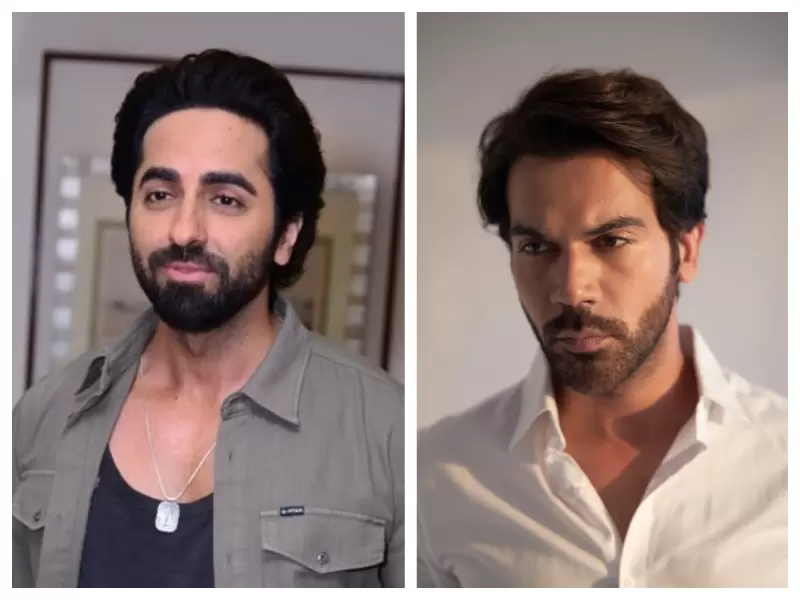 Ayushmann Khurrana and Rajkummar Rao / Wikimedia commons
For decades, Bollywood's leading men largely emerged from within-armed with legacy, access, and carefully orchestrated debuts. But over the past decade, a quiet revolution has reshaped the industry's idea of stardom. At the forefront of this shift are Ayushmann Khurrana and Rajkummar Rao-two actors who entered the industry without pedigree, yet rose to become some of its most compelling leading men. Their journeys are not just stories of perseverance, but of reinvention-of what it means to be a hero in modern Hindi cinema.
Outsiders who rewrote the rules
Ayushmann Khurrana and Rajkummar Rao are among the most significant names in Bollywood today, but their success has been anything but easy. Without industry connections or the advantage of film lineage, both actors carved their own paths to the top-relying solely on talent, persistence, and an unwavering belief in their craft.
Rajkummar Rao's journey is cinematic in itself. Hailing from Gurgaon and trained at the Film and Television Institute of India (FTII), he stepped into the unpredictable world of cinema with no safety net. His early roles were small-sometimes barely noticeable-but they carried a quiet sincerity that filmmakers couldn't ignore.
Ayushmann Khurrana's path was equally unconventional. Beginning as a radio jockey and television host, he was already a performer-but not in a way Bollywood traditionally rewarded. His debut in Vicky Donor (2012) introduced him not as a larger-than-life hero, but as a relatable Delhi boy navigating an unusual situation.
Neither actor fit the conventional Bollywood mould-and that became their greatest strength.
Breaking the mould
Ayushmann Khurrana's debut with Vicky Donor was a turning point. Tackling the taboo subject of sperm donation, the film defied mainstream conventions and struck a chord with audiences. Khurrana also showcased his musical talent, with Paani Da Rang becoming a chart-topping hit. From the outset, he established himself as a "singer-actor," blending performance with music seamlessly.
Rather than playing it safe, Khurrana leaned into unconventional storytelling. His filmography-Dum Laga Ke Haisha, Shubh Mangal Saavdhan, Badhaai Ho, Shubh Mangal Zyada Saavdhan, Andhadhun, and Article 15-reflects a consistent engagement with socially relevant and often taboo subjects. His performance in Andhadhun (2018) earned him the National Film Award for Best Actor.
As Khurrana has often emphasised, trusting instinct became central to his journey: the realisation that no formula guarantees success led him to rely on his gut-and it paid off.
Rajkummar Rao, meanwhile, made his debut with Love Sex Aur Dhokha (2010), directed by Dibakar Banerjee-one of the early Hindi films shot on digital format.
Though unconventional, the film announced Rao as an actor to watch. His breakthrough came with Shahid (2012), where his portrayal of human rights lawyer Shahid Azmi won him the National Film Award for Best Actor.
Rao brought a raw intensity to the screen, sharply contrasting Bollywood's glossy archetypes. His journey was marked by persistence-years of theatre, training, and rejection before recognition arrived.
The Rise of the relatable Hero
What sets Khurrana and Rao apart is not just their outsider status, but their conscious rejection of formula-driven cinema.
Khurrana built a niche with high-concept yet accessible films. Shubh Mangal Saavdhan addressed erectile dysfunction with humour and sensitivity, while Badhaai Ho explored late-age pregnancy within a middle-class family. These stories, rooted in everyday realities, resonated deeply with audiences and redefined commercial viability.
Also read: Neetu Kapoor, Kapil Sharma starrer 'Daadi Ki Shaadi' to be out on May 8
Rao, on the other hand, became synonymous with transformation. Whether it was the small-town writer in Bareilly Ki Barfi, the survivalist in Trapped, the idealistic bureaucrat in Newton, or the charming romantic in Stree, he displayed an extraordinary ability to disappear into his roles.
His performances consistently challenged the notion that leading men must conform to a singular image. Instead, Rao proved that versatility could be a star's greatest asset.
Redefining success
In an industry often obsessed with opening-day numbers, both actors have redefined success. Their films may not always boast massive box office openings, but they thrive on strong word-of-mouth, critical acclaim, and long-term audience engagement.
Khurrana has emerged as a reliable face of "thinking cinema"-films that entertain while provoking conversation. Rao, meanwhile, has earned a reputation as a director's actor, anchoring narratives that depend on performance rather than spectacle.
Their success is not an isolated phenomenon-it reflects a broader transformation in Bollywood. With the rise of multiplex audiences and streaming platforms, there is now greater space for diverse stories and unconventional protagonists. In many ways, their journeys have paved the way for a new generation of outsiders to dream bigger.
Insiders-on their own terms
Ironically, both actors are now firmly part of Bollywood's inner circle. Yet, they remain outsiders in spirit-continuing to take risks, challenge norms, and resist complacency.
Khurrana still gravitates toward scripts others might hesitate to embrace, while Rao continues to experiment with roles that defy commercial expectations. Their insider status has not diluted their individuality-if anything, it has amplified their influence.
From outsider to insider is no longer just a narrative arc-it is a blueprint. And as more actors follow in their footsteps, Bollywood finds itself at an exciting crossroads.
In rewriting the rules of stardom, Ayushmann Khurrana and Rajkummar Rao haven't just built remarkable careers-they've redefined what it means to belong.
Discover more at New India Abroad.
Related









ADVERTISEMENT

ADVERTISEMENT
E Paper
Video

Comments
Start the conversation
Become a member of New India Abroad to start commenting.
Sign Up Now
Already have an account? Login