ADVERTISEMENT
ADVERTISEMENT



The balancing and adopting act: My new shifting cross-cultural identity
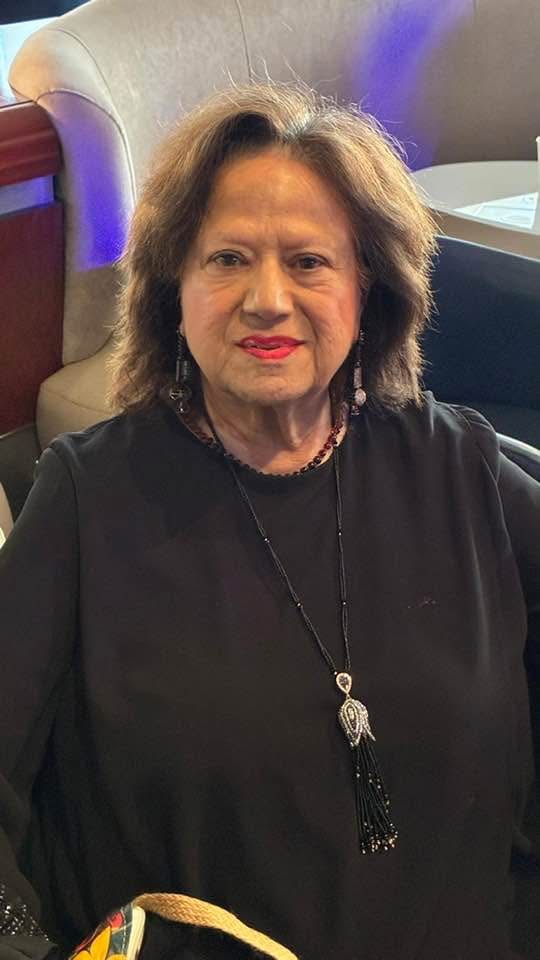
Angela Anand reflects on Asian American Pacific Islanders heritage month and her changing cultural identity
-
 Angela Anand
 - Tue, 05, May 2026
- 01:39 EDT
- 17
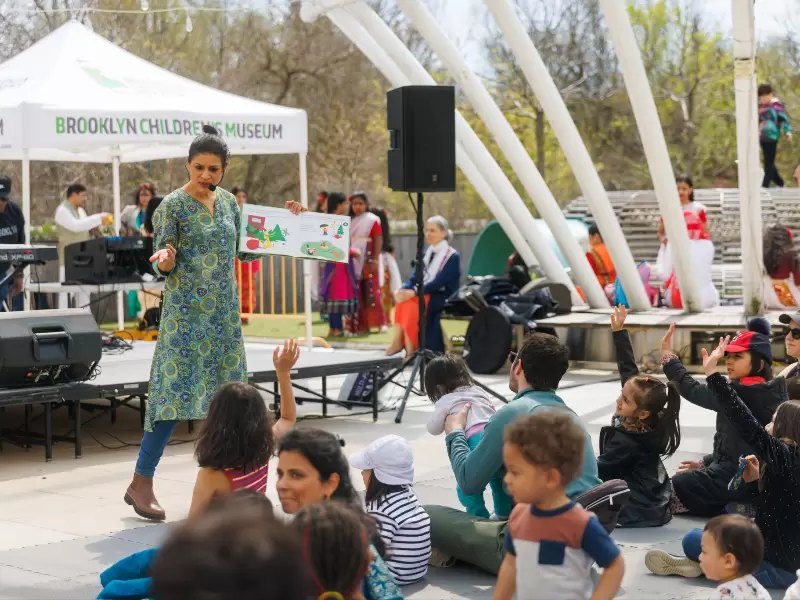
 Representative image / X
Having spent the early part of my life residing on a different continent, I regarded heritage as an inherent aspect of daily existence rather than a distinct concept. Customs and routines were established by the elders in the family, and mornings commenced with predictable patterns—familiar voices and carefully orchestrated activities that occurred automatically.
Responsibilities were clearly delineated: parents and younger family members each had their respective tasks. My routine included attending school in the morning and returning to relish home-cooked meals prepared by hired staff under my mother's supervision, following culinary traditions she learned from observing her own family's preferences. Cultural festivals were not merely dates on a calendar but immersive experiences that were anticipated and fully integrated into our lives. I adopted my parents' practices, not out of obligation, but because alternative ways of living did not naturally present themselves to me.
ALSO READ: Indian American leaders mark AAPI Heritage Month
In that region of the continent, individual identity was inherently recognized and required no further explanation. Upon reflection, I realize the depth of my sense of belonging; translation or justification was unnecessary. Culture was embedded within my daily life, not perceived as an external characteristic. However, following my migration to another continent, I faced substantial changes in environment, cuisine, customs and lifestyle. These circumstances necessitated gradual adaptation to new routines, acknowledging that such transitions are rarely immediate.
It came slowly, almost quietly, with distance. A new country, a different pace of life, unfamiliar expectations. At first, I held on instinctively. I recreated what I knew—cooking the same meals, observing the same rituals, marking the same festivals. It felt like continuity, a way of keeping something intact. But over time, the edges began to change. Life in a different continent does not bend evenly around inherited rhythms. Work schedules replace leisurely mornings. Festivals fall on weekdays. Ingredients are not quite the same. Conversations move faster, more direct, less layered with unspoken understanding. And without noticing it, I began to adapt.
Some changes were practical. Others were deeper. I found myself simplifying explanations of who I was. Translating not just language but meaning. Choosing which parts of my upbringing to emphasize, and which to leave unspoken. What had once been instinctive became deliberate. And somewhere in that process came an unsettling realization: I was no longer living my parents' life. I was living a version of it—altered, adjusted, shaped by a different world. At first, this felt like loss.
I noticed what was missing more than what remained. The fullness of festivals, now quieter. The ease of speaking without searching for the right word. The unspoken understanding that comes from being surrounded by people who share your context. There are things that do not travel easily across continents. But over time, another understanding began to take shape. What is happening all around sounds familiar and makes sense. I started to enjoy the local context, the humor, and the idea of poking fun with the help of sarcasm. Barbara Walters, Walter Cronkite, Johnny Carson and "All in the Family," and "Mary Tyler Moore," music of Linda Ronstadt, The Carpenters, and Johnny Cash made me enjoy television, music and current affairs.
I became acutely aware of what was absent rather than what persisted. Formerly vibrant festivals took on a more subdued atmosphere, and spontaneous conversation became less effortless as finding the appropriate words proved challenging. The unspoken understanding inherent among individuals sharing a common context did not translate seamlessly across continents. Yet, gradually, I developed a new appreciation for my surroundings. The local environment began to feel familiar and logical, and I grew to understand its humor and the nuanced use of sarcasm. The influence of Barbara Walters, Walter Cronkite, Johnny Carson, "All in the Family," and "Mary Tyler Moore," as well as the music of Linda Ronstadt, The Carpenters, and Johnny Cash, enabled me to engage with television, music and current affairs in a meaningful way. I loved going out and experiencing new cuisine, different holiday celebrations, and varied cultural performances.
What I experienced was not merely loss, but transformation. The traditions I upheld were evolving to accommodate the life I was establishing. Meals modified according to available resources maintained their significance as connections to home. Even abbreviated celebrations served as acts of remembrance. Explaining my cultural background to others prompted a deeper understanding of it than previously attained. Integrating two cultures is not a matter of prioritizing one over the other; instead, it involves permitting both to coexist, even if they do not align perfectly.
There are occasions when tension persists, prompting reflection on whether I am preserving sufficiently or relinquishing too easily, and highlighting the disparity between past and present. Conversely, there are moments of insight, recognizing that this intermediary space constitutes an identity in its own right rather than a compromise. While my current lifestyle differs from that of my parents, there remains a tangible connection. When returning to my country of origin, my relatives note my use of American terminology, revised concepts, and distinct perspectives, whereas I find familiarity in traditional ideas and approaches. Society may appear more modernized and advanced, yet it continues to value spirituality and interpersonal connections.
What I carry forward is not a perfect replica of what I inherited. It is something quieter, more intentional. A way of living that honors where I come from while making room for where I am. Perhaps this is what heritage becomes in the diaspora—not a fixed set of practices, but a series of choices. Not something we preserve unchanged, but something we reshape with care. I used to think combining two worlds meant finding a balance. Now I think it means accepting that the balance will keep shifting—and learning to live within that movement. In that space, between what I was given and what I am becoming, I am beginning to feel at home again.
The writer is a collaborator and community organizer.
(The views and opinions expressed in this article are those of the author and do not necessarily reflect the official policy or position of New India Abroad.)
Discover more at New India Abroad.
Related







ADVERTISEMENT

ADVERTISEMENT
E Paper
Video

Comments
Start the conversation
Become a member of New India Abroad to start commenting.
Sign Up Now
Already have an account? Login