ADVERTISEMENT

ADVERTISEMENT



“Stop the escalation,” Khanna decries U.S. threats to Iran’s power grid
The warning comes amid rising concerns that strikes on critical infrastructure could trigger widespread civilian suffering and escalate the conflict further.
-
 Malvika Choudhary
 - Mon, 23, Mar 2026
- 11:48 EDT
- 27
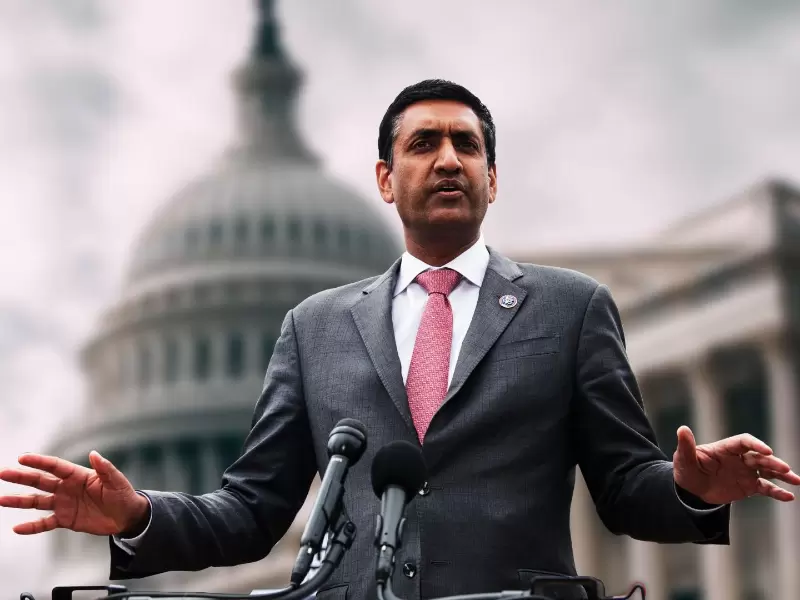 Congressman Ro Khanna / Ro Khanna website
Indian American Congressman Ro Khanna called on the U.S. administration to halt escalation and abandon plans to target Iran’s power infrastructure, warning that such actions would violate the laws of war and harm civilians.
“It is time for the President to put his ego and hubris aside and stop the escalation. Threatening war crimes is a violation of everything our nation stands for. End this dumb war that is costing Americans lives, draining our treasury, and making the world less safe,” Khanna wrote in a thread on X.
Also Read: Mideast war has no clear end in sight after three weeks
He argued that strikes on power infrastructure would be both unlawful and counterproductive.
(Thread) Indiscriminate bombing of Iran’s power plants would violate core principles of the laws of war rooted in the Geneva Conventions and Additional Protocol I which bind the U.S. as customary international law.
— Ro Khanna (@RoKhanna) March 22, 2026
“This approach does not weaken hardliners. It inflicts catastrophe on ordinary Iranians, rallies support around the regime and strengthens their narrative of external aggression,” Khanna said, adding that the regime’s “brutality is real and must be addressed but not by punishing civilians en masse.”
The democrat maintained that indiscriminate bombing of Iran’s power plants would violate core principles of international humanitarian law rooted in the Geneva Conventions and Additional Protocol I, which he noted bind the United States as customary international law.
He added that power infrastructure is often “dual use,” serving civilian life and some military functions, and can only be targeted if it makes an effective contribution to military action without causing mass civilian harm.
He also warned that modern electrical grids are deeply interconnected, meaning strikes on power lines or plants could trigger cascading blackouts affecting entire cities or regions.
“Proportionality forbids attacks where expected incidental civilian harm — including effects like loss of hospital power, water pumps failing, food spoilage or extreme heat or cold exposure — is excessive compared to the concrete military gain,” he said.
His remarks come as U.S. President Donald Trump has threatened to “obliterate” Iran’s power plants if Tehran does not reopen the Strait of Hormuz, a critical global oil route, escalating a conflict that began in late February with joint U.S.-Israeli strikes.
The conflict has killed more than 2,000 people, damaged infrastructure across multiple countries, and disrupted global energy markets.
Iran has warned it could retaliate against energy and water facilities across the Middle East if its power plants are targeted, raising fears of a broader regional infrastructure conflict.
The United States has delayed potential strikes on Iranian power infrastructure by five days, citing ongoing diplomatic efforts, even as both sides continue to exchange threats and military actions.
Discover more at New India Abroad.
Related










ADVERTISEMENT

ADVERTISEMENT
E Paper
Video

Comments
Start the conversation
Become a member of New India Abroad to start commenting.
Sign Up Now
Already have an account? Login