ADVERTISEMENT
ADVERTISEMENT



Stanford's Manu Prakash honored for sea ice research
The award recognized a France-US scientific collaboration studying microbial life in extreme polar environments.
-
 Malvika Choudhary
 - Mon, 25, May 2026
- 18:10 EDT
- 27
 Manu Prakash / news.stanford.edu
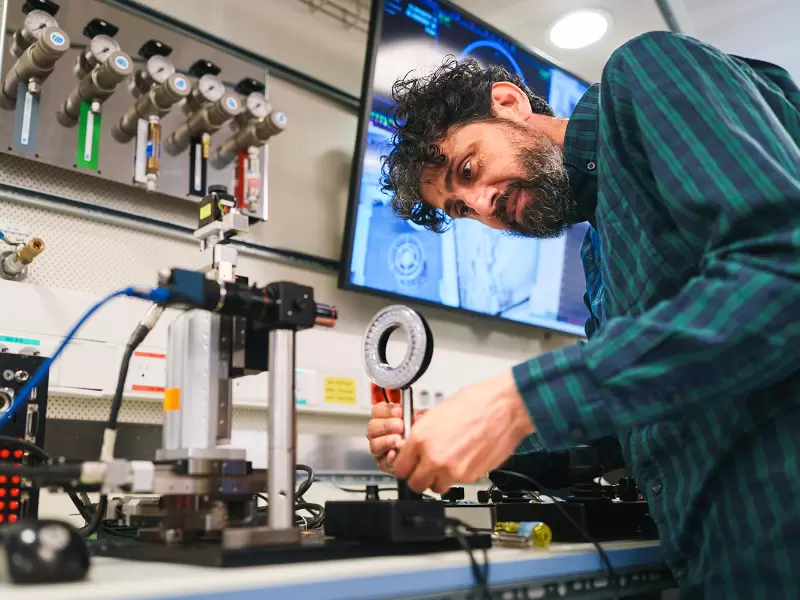
Indian American bioengineer Manu Prakash received a research award recognizing his work on how microscopic organisms survive inside sea ice, a study that could advance understanding of polar ecosystems and life in extreme environments.
Prakash, an associate professor of bioengineering at Stanford University, received the recognition alongside French researcher Marcel Babin during the symposium “From the Enlightenment to AI: 250 Years of Shared Scientific Revolutions Between France and the United States,” held May 20 and 21 at the Institut de France.
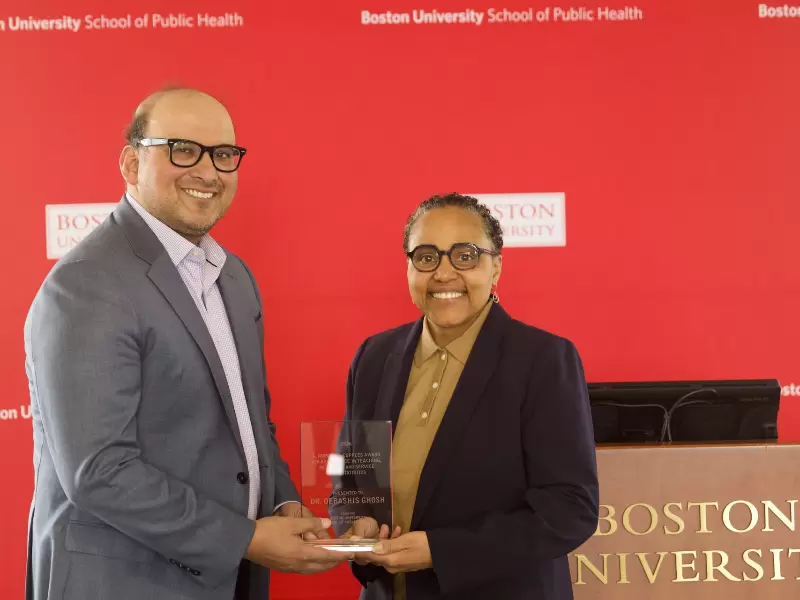
Also Read: Debashis Ghosh receives Boston University Biostatistics award
As part of the symposium, the Richard Lounsbery Foundation created a $25,000 research award to support four scientific collaborations between researchers in France and the United States.
Prakash and Babin were honored for their “Trapped in Ice” project, which examines how microorganisms colonize and survive within growing sea ice. The research combines bioengineering, polar science and micro-scale physics to study the physical and physiological mechanisms that allow life to persist in frozen environments.
Researchers said the work could help scientists better understand present-day polar ecosystems, Earth’s past glaciation periods and the potential for life on other planets.
Prakash contributes mathematical and experimental approaches to the project, including low-temperature ice microfluidics, specialized low-temperature microscopes and bioengineering methods designed to examine molecular processes at subcellular resolution.
The collaboration also includes researchers Éric Maréchal and François Fripiat and is supported by the Human Frontier Science Program.
Beyond polar research, Prakash is known for interdisciplinary work exploring how biological systems process information and behave in extreme conditions. His laboratory studies subjects including cognition in single-cell organisms and the origins of complex behavior in multicellular systems.
He has also developed low-cost scientific tools aimed at expanding access to science and healthcare globally, including Foldscope, a paper microscope used worldwide, and Abuzz, a mosquito-monitoring platform.
Prakash serves as a senior fellow at the Stanford Woods Institute for the Environment and is affiliated with several Stanford research initiatives, including Bio-X and the Wu Tsai Neurosciences Institute.
He earned his Ph.D. and master’s degree in applied physics from the Massachusetts Institute of Technology and completed his bachelor’s degree in computer science and engineering at the Indian Institute of Technology.
Discover more at New India Abroad.
Related





.jpg)
12.png)


ADVERTISEMENT

ADVERTISEMENT
E Paper
Video

Comments
Start the conversation
Become a member of New India Abroad to start commenting.
Sign Up Now
Already have an account? Login