ADVERTISEMENT
ADVERTISEMENT



Saffron, secular, and Sanatan: Reclaiming the civilizational soul of Bharat
It is about time Western media and anti-Hindu self-proclaimed academics accept Bharat’s indigenous principles and not impose their own concepts suggesting the dismantling of Hindutva.
-
 Vijendra Agarwal
 - Fri, 15, May 2026
- 04:10 EDT
- 27
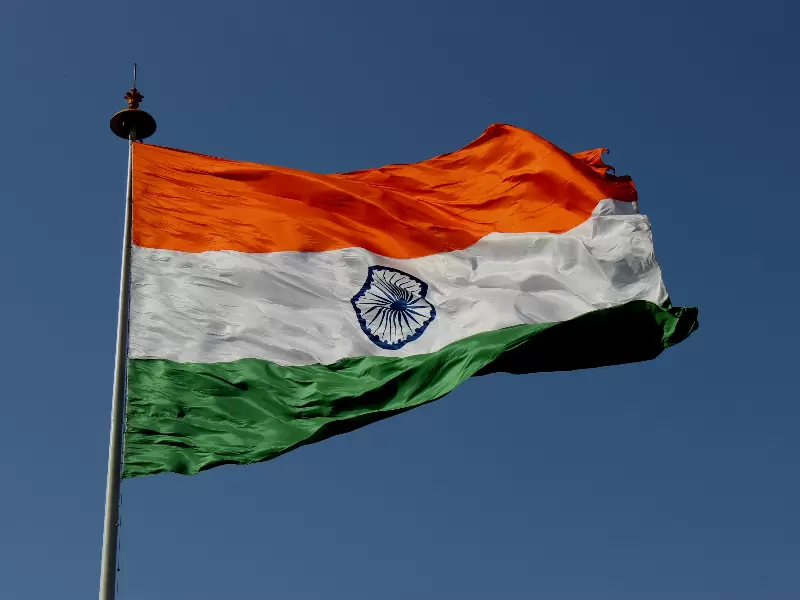 Indian flag / Pexels
The regional electoral outcomes in Bharat earlier in May have highlighted a widening conceptual chasm between India’s complex domestic democratic reality and the reductionist frameworks deployed by Western commentators. For global observers tracking India’s rapid economic, geopolitical, and military ascendancy, decoding this divergence is crucial. Rather than exhibiting signs of systemic democratic erosion, modern India’s contemporary political landscape reveals a resilient democratic system rooted in the triad of development, cultural diversity, and demographic dynamism.
In West Bengal, the Bharatiya Janata Party (BJP) secured a historic legislative mandate, effectively dismantling the long-standing hegemony of the Trinamool Congress (TMC). Far from a routine transfer of regional power, this electoral shift carries profound civilizational consequences. For a significant cross-section of the Bengali electorate, the outcome represented an institutional rejection of minority appeasement, border insecurity, administrative stagnation, and a political culture that systematically pathologized Hindu cultural expression. This decisive mandate portends the sunset of Mamata Banerjee’s political career and a fundamental realignment of the state’s political infrastructure.
Yet the predominant analytical framework within global media continues to interpret these democratic shifts through the restrictive lenses of “majoritarianism” and “democratic backsliding.” Editorial commentary in Al Jazeera characterized the BJP’s victory in Bengal as an erosion of secularism. An analysis by The Economist framed the electoral process as a heavy-handed, polarizing endeavor. Similarly, reportage from The New York Times and the BBC routinely pathologizes Prime Minister Narendra Modi’s political support as a disruptive “Hindu nationalist conquest” rather than a legitimate grassroots democratic evolution.
This persistent diagnostic failure reflects an ideological discomfort with a sovereign, confident nation that refuses to decouple modern statecraft from its organic civilizational identity. For local voters, the Bengal mandate was not a majoritarian threat but a democratic reclamation of the right to uninhibited civilizational practice, particularly regarding access to sacred spaces restricted by state-enforced political calculations by the TMC.
Deconstructing the “exclusionary” myth
A core tenet of international commentary asserts that Hindu-majority politics under the current administration are inherently exclusionary toward minority demographics. However, this hypothesis is thoroughly invalidated by empiricism. If the Hindu electorate were structurally majoritarian and exclusionary, India’s diverse regional leadership configurations would be mathematically impossible. Let us analyze how?
The parallel legislative election in Tamil Nadu provides a definitive empirical counterexample. In a state where Hindus and Christians comprise approximately 87.6% and 6.1% of the population, respectively, the electorate democratically elevated C. Joseph Vijay, the state’s first Christian chief minister. His political party, the Tamilaga Vettri Kazhagam (TVK), emerged as the single largest legislative entity and subsequently validated its mandate through a constitutional trust vote. This outcome demonstrates that a predominantly Hindu electorate will readily support a non-Hindu leader when voters are comfortable with the leader representing administrative efficacy, institutional transparency, and cultural respect.
This structural flexibility underscores a philosophical difference: Bharat’s civilizational concept of pluralism diverges fundamentally from Eurocentric political models. Western secularism historically requires the absolute exile of religious consciousness from the public sphere. Conversely, Indian secularism operates on the indigenous principle of Sarva Dharma Sambhava — the epistemological equality of all spiritual paths. It rejects the requirement that the majority community must erase its own cultural ontology to validate its tolerance of the other.
The ancient Vedic axiom, Ekam Sat Vipra Bahuda Vadanti (“Truth is one, the wise call it by many names”), offers a more precise analytical framework for India’s pluralism than modern Western sociopolitical binaries.
It is about time Western media and anti-Hindu self-proclaimed academics accept Bharat’s indigenous principles and not impose their own concepts suggesting the dismantling of Hindutva.
The triadic harmony: Saffron, secular, and Sanatan
Consequently, Saffron, secular, and Sanatan do not represent an ideological contradiction; they form a cohesive, mutually reinforcing paradigm:
- Saffron signifies the historical ethos of sacrifice, civic courage, and sovereign confidence.
- Sanatan embodies the timeless, pluralistic dharmic framework that fundamentally accommodates diverse epistemologies.
- Secular denotes the constitutional guarantee of equal civic dignity for all communities, standing opposed to the selective suppression of majority identity.
The geopolitical significance of the BJP’s consolidation in West Bengal and the TVK’s ascension in Tamil Nadu must be analyzed concurrently rather than dismissed selectively when they disrupt preferred international narratives. This pluralistic reality is further substantiated by additional institutional data: Approximately 23% of India’s 31 legislative states and union territories are currently governed by chief ministers from minority religious communities. These comprise Muslim (1), Christian (4), Sikh (1), and Buddhist (1) leaders. Such structural diversity at the executive level is virtually unparalleled globally.
In conclusion, these combined sociopolitical developments demonstrate that Bharat, as a majority Hindu nation, is capable of maintaining its civilizational core while operating as a robust, pluralistic democracy. The contemporary political transformation under Prime Minister Modi is not an abandonment of secularism but its emancipation from a paradigm that equated secular statecraft with Hindu cultural self-denial.
Global political observers and analysts must ultimately recognize that Saffron, secular, and Sanatan are harmonized tenets of a singular civilizational reality, collectively reasserting the authentic democratic soul of Bharat.
Vijendra Agarwal is a Ph.D. physicist from IIT Roorkee.
(The views and opinions expressed in this article are those of the author and do not necessarily reflect the official policy or position of New India Abroad.)
Discover more at New India Abroad.
Related



ADVERTISEMENT

ADVERTISEMENT
E Paper
Video

Comments
Start the conversation
Become a member of New India Abroad to start commenting.
Sign Up Now
Already have an account? Login