ADVERTISEMENT
ADVERTISEMENT



Pakistan’s identity pivot: From Islamist purism to reclaiming Hindu heritage without its native Hindus
What makes the development significant beyond bilateral rivalry is its connection to a wider intellectual shift.
-
 Utsav Chakrabarti
 - Wed, 01, Jul 2026
- 17:27 EDT
- 27
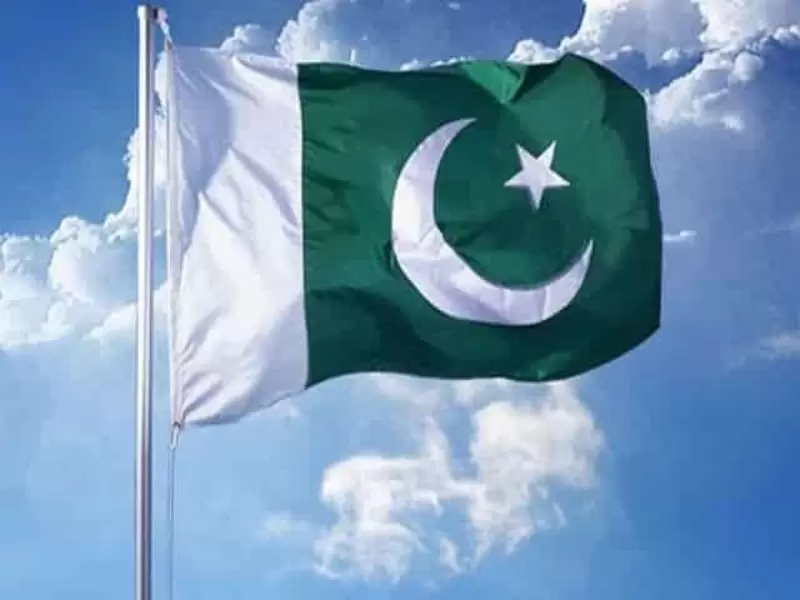 Pakistan flag / IANS
In the year following India’s decisive military success in Operation Sindoor and the unilateral abeyance of the Indus Water Treaty, Pakistan’s political and intelligence elite have begun a striking and desperate recalibration of national identity.
For decades, the dominant narrative in Pakistan framed the country as the natural heir to Arab and Central Asian Turkik Islamic conquerors — the “purest of the pure” Muslims whose history began with the arrival of foreign invaders. Today, that story is quietly giving way to claims of deeper continuity with the Hindu riverine civilizations of the Sindhu-Saraswati valleys.
This shift is not merely cosmetic. Pakistani discourse, once defined by the erasure of pre-Islamic history from school curricula and public memory, is increasingly referencing the indigenous cultural and civilizational substrate that long predates the advent of Islam in the region. Sites and symbols once ignored or downplayed are now being invoked to assert historical depth and indigeneity.
The Old Narrative and Its Symbols
For much of Pakistan’s existence, official and semi-official historiography emphasized descent from Arab, Turkic, and Persian lineages. Military hardware, missiles, and strategic assets were routinely named after figures associated with medieval Islamic conquests in the subcontinent.
Textbooks and state narratives presented the region’s pre-Islamic past as largely irrelevant or as a period of darkness from which Islam delivered salvation. This framing served both ideological and geopolitical purposes, reinforcing Pakistan’s self-image as the ideological antithesis of a Hindu-majority India.
The Triggers for Change
India’s recent actions — particularly the successful execution of Operation Sindoor and the termination of the Indus Water Treaty — appear to have accelerated an internal reassessment in Pakistan.
With water security and historical claims now under renewed pressure, the Pakistani thought leadership has begun highlighting the ancient Indus Valley (or Sindhu-Saraswati) civilization as its own civilizational inheritance. The pivot allows Pakistan to position itself as the custodian of an ancient heritage that transcends the 1947 partition, while simultaneously challenging India’s claim to that legacy.
Archaeological evidence from major Harappan-era sites, including Rakhigarhi in India and the long-studied ruins around Taxila (Takshashila) in Pakistan, provides the factual backdrop for this narrative adjustment. These findings underscore a continuous Hindu civilizational presence in the region stretching back millennia — a reality that sits uneasily with earlier attempts to portray Pakistan’s identity as exclusively post-Islamic and exogenous.
Indian Reactions and the Question of Hypocrisy
In India, the development has been met with a mixture of skepticism, irony, and pointed criticism. Many observers note the apparent contradiction: while Pakistan’s leadership explores claims to ancient indigenous Hindu roots, the country’s same indigenous Hindu minority has shrunk dramatically since 1947 through emigration, forced conversion, and documented cases of human trafficking.
Critics argue that any sincere embrace of the Sindhu-Saraswati heritage would logically require a more protective stance toward the living remnants of that civilizational Hindu continuum inside Pakistan.
These objections are substantive. The rebranding appears, at this stage, largely tactical — a response to shifting geopolitical realities rather than a fundamental ideological transformation. Yet the very fact that such a pivot is now being articulated publicly represents a notable expansion of the Overton window.
A Broader Global Reckoning
What makes the development significant beyond bilateral rivalry is its connection to a wider intellectual shift. For years, the global academic and policy discourse tended to view Hindu civilizational identity either as a derivative of larger frameworks, ie, Judeo-Christian, Marxist, or Islamic.
In recent years, however, there has been growing recognition — even in Western institutions — of the Hindu worldview as a distinct, indigenous civilizational paradigm with its own philosophical, cultural, and historical continuity. The knowledge that Hindus are the world's oldest continuous civilizational entity has also gathered more ground.
Once that lens gained traction, Pakistan’s earlier insistence on a purely Islamic exceptionalism detached from the subcontinent’s truth became harder to sustain against archaeological and genetic evidence. The Hindutva movement’s long-standing assertion that the Indian subcontinent’s core identity is Hindu, indigenous, and continuous has, whether by design or unintended consequence, compelled even its primary ideological adversary to concede rhetorical ground it once rejected outright.
Tactical pretensions or seeds of Ghar Wapsi?
It remains to be seen whether Pakistan’s emerging references to the Hindu Sindhu-Saraswati continuum will evolve into a substantive re-examination of its relationship with its pre-Islamic Hindu past and its minority communities, or whether they will remain limited to selective historical claims useful in water and territorial disputes driven by current geopolitical urgencies.
Ultimately, the Indian subcontinent’s Hindu civilizational layer is proving more resilient than the ideological constructs erected over it in the twentieth century. That of Islam in Pakistan and "secularism" in India.
The author is the Executive Director of the non-profit HinduACTion.
(The views and opinions expressed in this article are those of the author and do not necessarily reflect the official policy or position of New India Abroad.)
Discover more at New India Abroad.
Leave A Comment
Related


ADVERTISEMENT

ADVERTISEMENT
E Paper
Video

Comments
Start the conversation
Become a member of New India Abroad to start commenting.
Sign Up Now
Already have an account? Login