ADVERTISEMENT
ADVERTISEMENT



Pakistan lectures the world on Kashmir while massacring its own people
The contradiction between Pakistan's external advocacy on Kashmir and its internal conduct in Balochistan, Sindh, and Pashtun areas is not a matter of imperfection or slow reform.
-
1744362597.jpeg) Arun Anand
Arun Anand - Sat, 09, May 2026
- 17:39 EDT
- 22
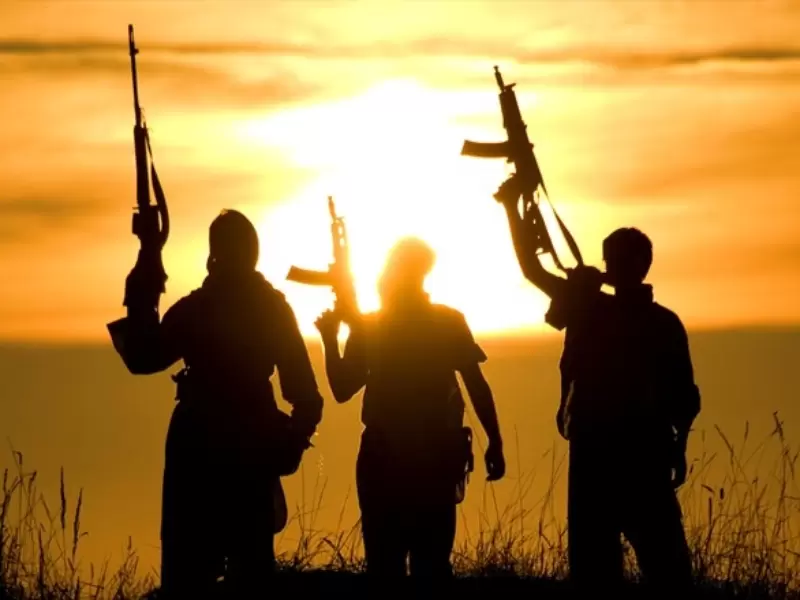 Pakistan terror groups send trainers to Afghanistan for target assassinations: UNSC report / IANS
Pakistan has spent decades positioning itself, in international forums, as the moral guardian of the Kashmiri people. Its diplomats raise Kashmir at every available platform. Its officials describe the region in passionate language about self-determination, human rights, and the dignity of populations under occupation. The performance has been consistent and well-funded.
What is rarely discussed alongside this performance is what Pakistan does to its own people. To its Baloch citizens, who disappear by the thousands at the hands of Pakistani security forces. To its Sindhi activists, whose voices are systematically crushed. To its Pashtun communities, who watch their movements suppressed by the same army that claims to liberate Kashmiris. The contradiction is not subtle. It is the central feature of Pakistan's domestic and foreign policy posture, and it deserves to be named clearly.
Also Read: Operation Sindoor: India’s Demonstration of Deep-Strike Precision and Strategic Resolve
Balochistan: The Open Secret
The Baloch Yakjehti Committee, a human rights body operating within Balochistan, has documented more than 1,250 cases of enforced disappearances in 2025 alone, and 231 cases in the first three months of 2026. According to the committee's submission to the Government of Balochistan, 821 individuals from 2025 and 142 from early 2026 remain missing, with their families still unaware of their whereabouts or condition.
These figures represent only the cases reported and verified. The actual scale of disappearances is widely understood to be substantially higher. The Human Rights Council of Balochistan documented 1,455 cases of enforced disappearance in 2025, including 1,443 men and 12 women. Of those, 1,052 individuals remain missing, 317 were released, 83 were killed in custody, and 3 were transferred to jail. Behind every one of these numbers is a family that does not know whether their son, husband, or daughter is alive.
The Pakistani state has not denied that disappearances are happening. It has, instead, moved to legalise them. The provincial government in Balochistan, headed by Chief Minister Sarfraz Bugti, approved the Balochistan Prevention, Detention and Deradicalisation Rules 2025, a framework that human rights organisations have described as an attempt to legalise enforced disappearances by allowing law enforcement to detain individuals as suspects in deradicalisation centres without due process. Amendments to the Anti-Terrorism Act of 1997, both at the federal level and in Balochistan, now permit detention of individuals for up to three months without charge or judicial oversight.
What the United Nations Has Said
United Nations human rights experts have repeatedly expressed alarm about Pakistan's conduct in Balochistan. In April 2025, just weeks before the Pahalgam attack and Operation Sindoor, UN experts called on Pakistan to address human rights violations in the province, expressing alarm at the unrelenting use of enforced disappearances, which the experts described as a serious human rights violation and an international crime.
Earlier in March 2025, UN experts had demanded the release of Baloch human rights defenders and an end to the crackdown on peaceful protests. The trigger for that statement was a series of incidents in Quetta, where police violently dispersed peaceful protests organised by the Baloch Yakjehti Committee, including a sit-in led by Mahrang Baloch, a prominent woman human rights defender. Police used batons and tear gas against demonstrators who had gathered with the bodies of those killed in earlier police operations.
The Human Rights Commission of Pakistan, an institution operating within Pakistan itself, released a report in early 2026 documenting that enforced disappearances, extrajudicial killings, and collective punishments persisted across Khyber-Pakhtunkhwa and Balochistan throughout 2025. The HRCP described security forces in those provinces as having become a law unto themselves, killing civilians on mere suspicion, often with zero evidence.
The Pakistani state has not denied that enforced disappearances are happening. It has, instead, moved to legalise them through new detention rules and amendments to the Anti-Terrorism Act.
Sindh and Pashtun Repression
The pattern is not limited to Balochistan. In Sindh, Pakistani authorities have systematically targeted Sindhi nationalist activists, journalists, and writers. The Sindhi political movement, which has long demanded greater autonomy and protection of Sindhi cultural identity, has faced intermittent crackdowns that include arrests, surveillance, and disappearances. The Pakistani state's hostility to Sindhi expression has been particularly intense when Sindhi voices criticise the Punjabi-dominated military establishment.
Pashtun communities in Khyber-Pakhtunkhwa have experienced a different but related pattern. The Pashtun Tahafuz Movement, or Pashtun Protection Movement, emerged in 2018 as a response to extrajudicial killings, displacement, and military operations in tribal areas. Its leaders have been arrested repeatedly. Manzoor Pashteen, the most prominent face of the movement, has faced multiple cases under sedition, terrorism, and various other charges. The Pakistani military's posture toward Pashtun activism mirrors its posture toward Baloch activism. Any organised political movement that challenges the army's role in tribal areas is treated as a threat to the state.
The Hypocrisy and Why It Matters
The contradiction between Pakistan's external advocacy on Kashmir and its internal conduct in Balochistan, Sindh, and Pashtun areas is not a matter of imperfection or slow reform. It is a structural feature of Pakistani state behaviour. The same army that claims to defend Kashmiri Muslims abducts Baloch Muslims. The same intelligence services that profess concern for self-determination in Kashmir crush Sindhi self-determination at home. The same diplomats who speak passionately about human rights in international forums know perfectly well what is happening in their own country's detention centres.
This hypocrisy matters not because hypocrisy is rare in international politics but because Pakistan has used its Kashmir advocacy as a primary tool of foreign policy for decades. Its credibility on Kashmir rests, in part, on its claim to be a sincere defender of Muslim rights. That claim is undermined every time a Baloch family files a missing person report. It is undermined every time a UN human rights body issues a statement on enforced disappearances. It is undermined every time a Pakistani court rules that an activist can be held for three months without charge.
India has, for its part, opened up Jammu and Kashmir to international observers, journalists, and tourists in ways that Pakistan would never permit in Balochistan. The Pahalgam attack itself was directed at tourists, who could only have been there because India had successfully promoted the region as safe for visitors. Indian Kashmir holds elections, runs a functioning legislature, and has a media environment that includes voices critical of the central government. Whatever criticisms one might make of India's policies in Kashmir, the comparison with Balochistan is not close.
The international community would benefit from applying the same standards to Pakistan's treatment of its own minorities that Pakistan demands be applied to India's treatment of Kashmiris. The disparity in treatment, in scrutiny, and in expectation has gone on long enough. A state that disappears thousands of its own citizens annually has forfeited the moral authority to lecture anyone on rights or representation.
The writer is an author and a columnist. He has authored more than 15 books including 'Taliban: War and Religion in Afghanistan'.
(The views and opinions expressed in this article are those of the author and do not necessarily reflect the official policy or position of New India Abroad.)
Discover more at New India Abroad.
Related





.jpg)
ADVERTISEMENT

ADVERTISEMENT
E Paper
Video

Comments
Start the conversation
Become a member of New India Abroad to start commenting.
Sign Up Now
Already have an account? Login