ADVERTISEMENT
ADVERTISEMENT



Minnesota’s first Hindu advocacy day marks growing civic engagement
The state’s inaugural event reflects a broader national trend among Hindu Americans to engage more directly in civic and legislative processes.
-
 Vijendra Agarwal
 - Sun, 19, Apr 2026
- 00:55 EDT
- 15
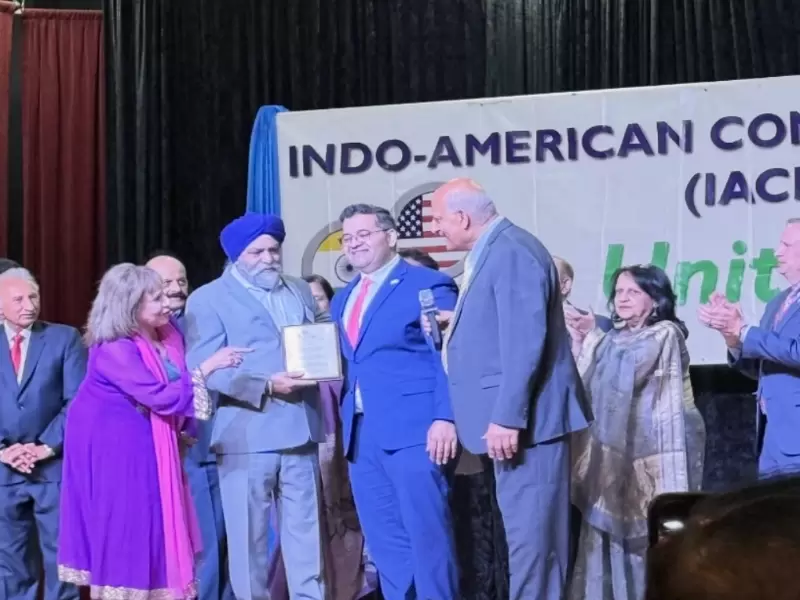
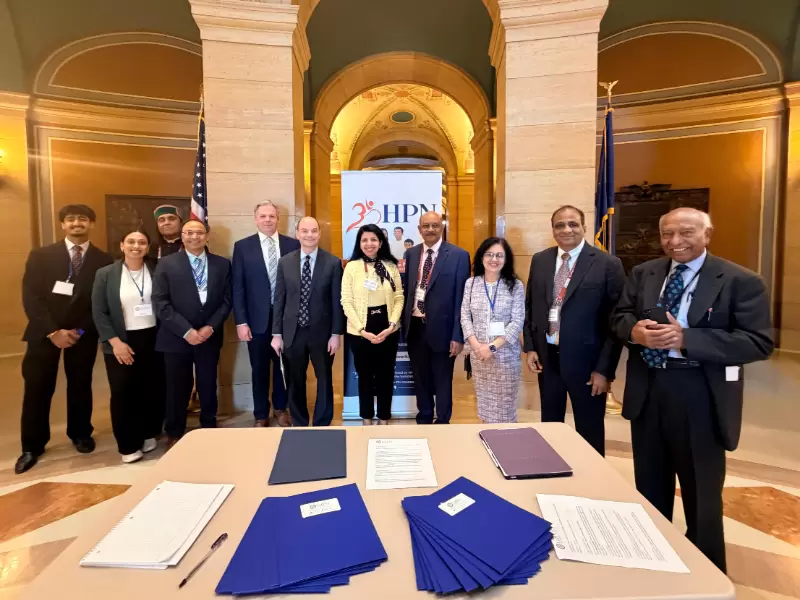 Key issues were discussed during the event. / Courtesy photo
Minnesota marked a milestone on April 16 with its first-ever Hindu Advocacy Day at the state Capitol, organized by the Coalition of Hindus of North America. The event reflects a broader national trend of increasing civic engagement among Hindu Americans.
The event comes at a time when conversations around religious identity, minority rights and hate-based discrimination are gaining prominence across the United States. Within that context, the presence of Hindu perspectives, although limited, in public policy discussions has become more visible and consequential.
The Minnesota event reflects similar advocacy efforts in Washington, D.C., as well as in states such as New Jersey and Georgia, signaling a shift toward more sustained and organized participation by Hindu Americans in public life.
While attendance from lawmakers was limited due to the demands of an active legislative session, the engagement was substantive and meaningful. Conversations between community members, legislators and visitors were thoughtful and constructive, reflecting a shift from visibility to genuine participation.
More than two dozen volunteers took part, including a strong representation of youth experiencing advocacy for the first time. Families attended together, underscoring an emerging intergenerational commitment to civic involvement. For many participants, the day offered a first-hand understanding of how democratic engagement works in practice.
Minnesota’s Hindu community, estimated at 40,000 to 45,000 individuals, represents a diverse diaspora, including those of Indian, Guyanese, Nepali, Sri Lankan, Fijian and Tibetan origin, among others. The event brought this diversity together under a shared cultural and civilizational framework rooted in the values of Sanatan Dharma.
Key issues discussed included:
Growing awareness of Hinduphobia and anti-Hindu discrimination
Rising incidents of temple vandalism and anti-Hindu hate in the United States
Global concerns, including the situation of Hindus in Bangladesh
The need for broader recognition of Hindu identity and civil rights
While Hinduphobia remains underreported, emerging indicators, including federal hate crime data and independent research, suggest that anti-Hindu bias is an emerging area of concern. These developments, both domestic and global, are increasingly shaping the priorities of Hindu communities in the United States.
The event builds on recent legislative efforts in Minnesota, including a resolution addressing Hinduphobia (SF 4115) that has gained grassroots support (New India Abroad, March 18). The resolution seeks to recognize anti-Hindu hate, bigotry and discrimination as a human rights concern within the constitutional framework. More broadly, such efforts aim to ensure that anti-Hindu discrimination is acknowledged within policy discussions, an important step toward both recognition and accountability.
In many cases, narratives around Hinduism and India have developed with limited direct representation from Hindu voices in civic spaces. Advocacy initiatives like this aim to address that gap by promoting direct engagement with lawmakers and the broader public.
Organizers emphasized that these efforts are part of a long-term strategy focused on building awareness, representation and relationships within legislative spaces. As similar advocacy initiatives continue across the country, Hindu Americans are establishing a steady presence in both state and national forums.
The event also provided space for informal cultural exchange, with traditional Indian snacks such as samosas, cheese pakoras and desserts adding a warm, welcoming dimension to the day’s conversations.
For many participants, especially younger attendees, the day served as a practical introduction to civic engagement, reinforcing that democratic participation is both accessible and essential.
As one of the volunteers at Minnesota’s inaugural Advocacy Day, I came away with a sense of measured optimism. The community’s presence, first during the mobilization around SF 4115 and now through direct engagement at the Capitol, reflects a meaningful shift toward greater civic participation.
This moment may be modest in scale, but it is significant in direction. It signals that the Hindu community in Minnesota, and across the United States, is beginning to define its place in the civic landscape with greater clarity, confidence and continuity.
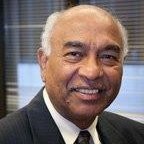
Vijendra Agarwal is a Ph.D. physicist from IIT Roorkee.
(The views and opinions expressed in this article are those of the author and do not necessarily reflect the official policy or position of New India Abroad.)
Discover more at New India Abroad.
Related






ADVERTISEMENT

ADVERTISEMENT
E Paper
Video

Comments
Start the conversation
Become a member of New India Abroad to start commenting.
Sign Up Now
Already have an account? Login