ADVERTISEMENT

ADVERTISEMENT



Interfaith thanksgiving: A night of unity and gratitude in Fort Bend
This year’s theme, “Giving Thanks as One,” resonated deeply in a county known for its religious and cultural diversity.
-
1749580004.png) Juhi Varma
Juhi Varma - Tue, 02, Dec 2025
- 17:33 EST
- 105
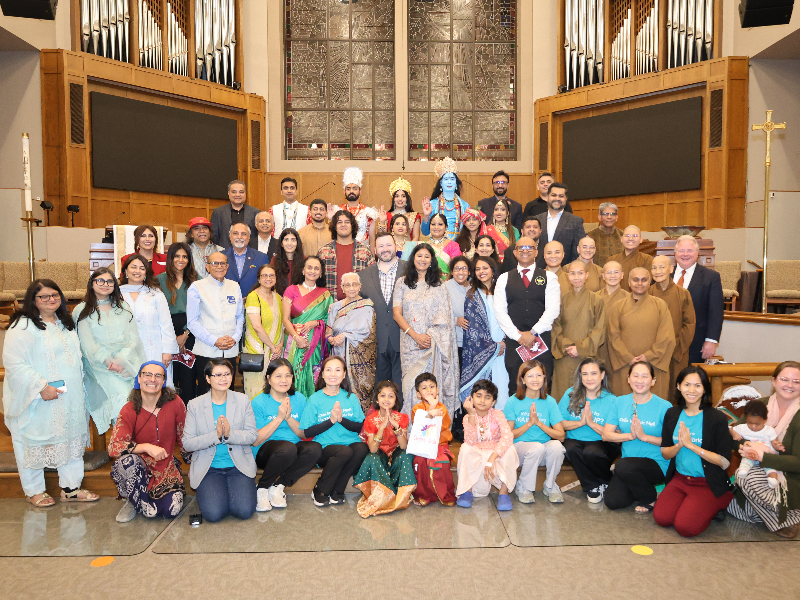 Fort Bend residents gathered at Christ Church Sugar Land for the annual Fort Bend Interfaith Council (FBIC) Thanksgiving service. This year’s theme, “Giving Thanks as One,” resonated deeply in a county known for its religious and cultural diversity. / Photos by Kranthi Namani
Fort Bend residents gathered at Christ Church Sugar Land for the annual Fort Bend Interfaith Council (FBIC) Thanksgiving service. The service was open to all.
This year’s theme, “Giving Thanks as One,” resonated deeply in a county known for its religious and cultural diversity.
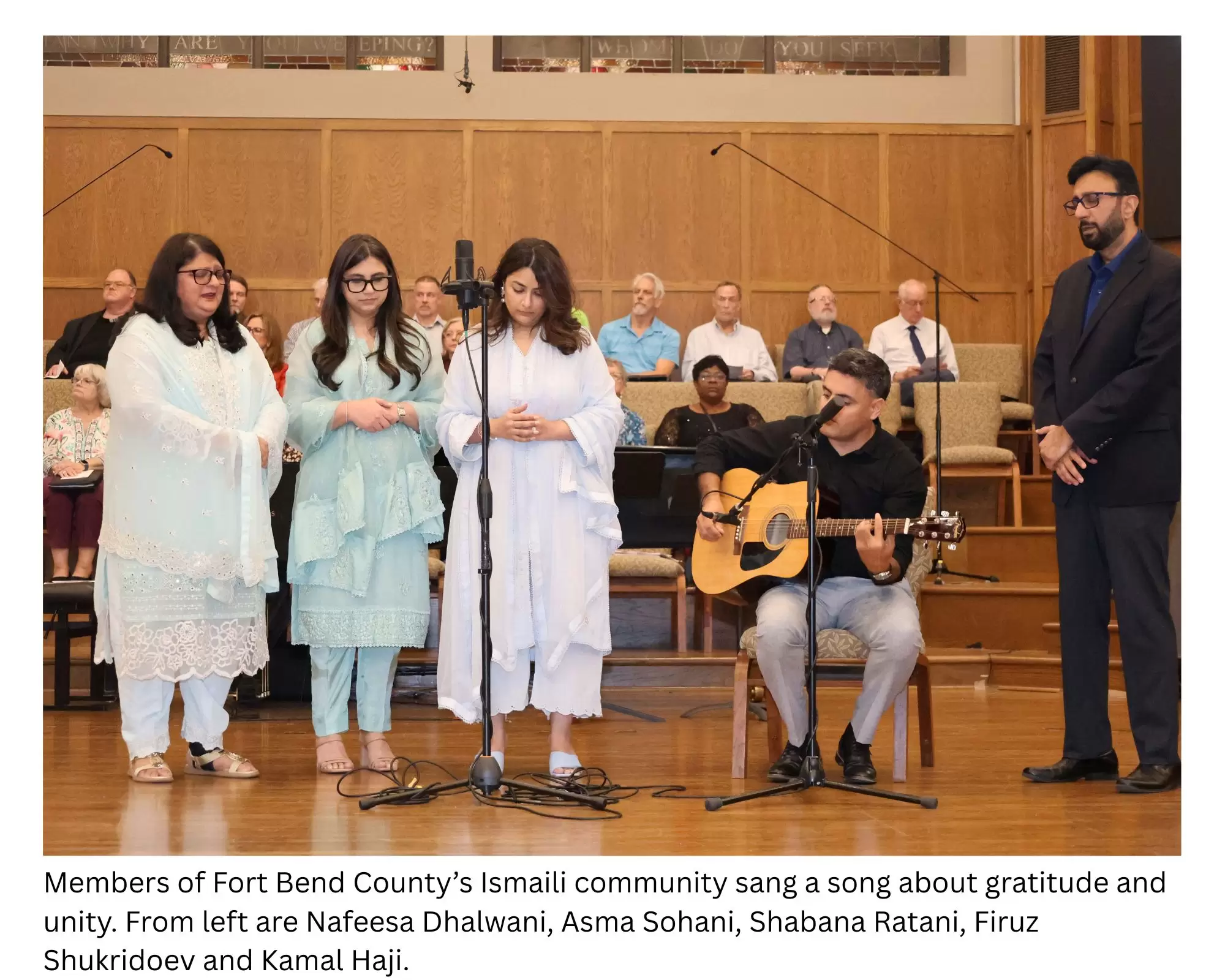
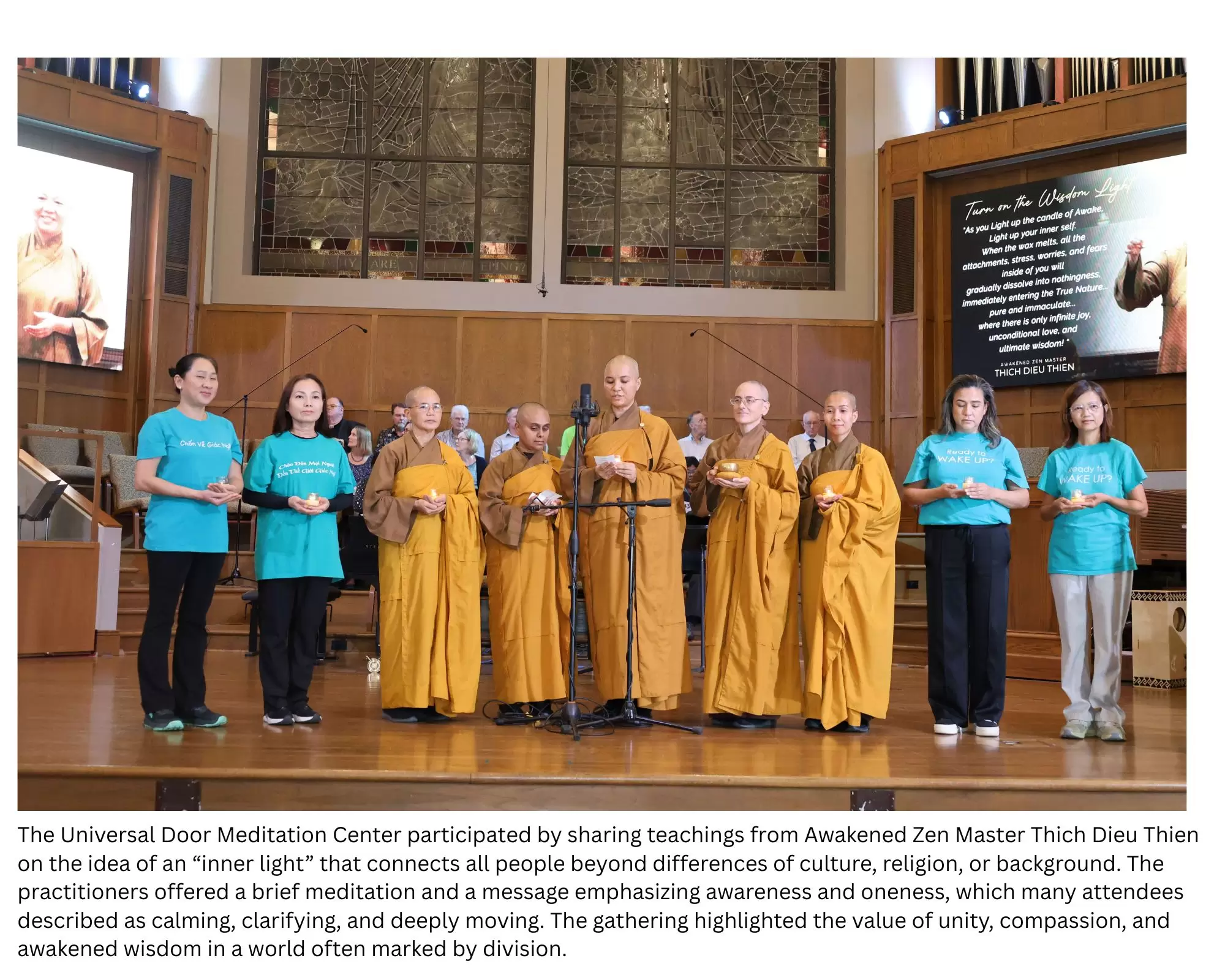
The service featured representatives from many religious communities: Baha’i, Buddhist, Christian, Hindu, Jain, Jewish, Muslim, Sikh, and others. As chair of the council, Pastor John Strader, explained, the evening was intentionally worshipful — not a debate or blending of beliefs — a space for each tradition to share its own voice while standing side by side in mutual respect.
“Someone once said that intelligence is like a map and wisdom is like a compass,” said Samaniji from Jain Vishwa Bharti Institute. “A map shows all the roads, but a compass shows the right direction. And right direction matters more than the number of roads. On a day like Thanksgiving, when we slow down and really look at our lives, this inner compass that helps us notice what truly matters.”
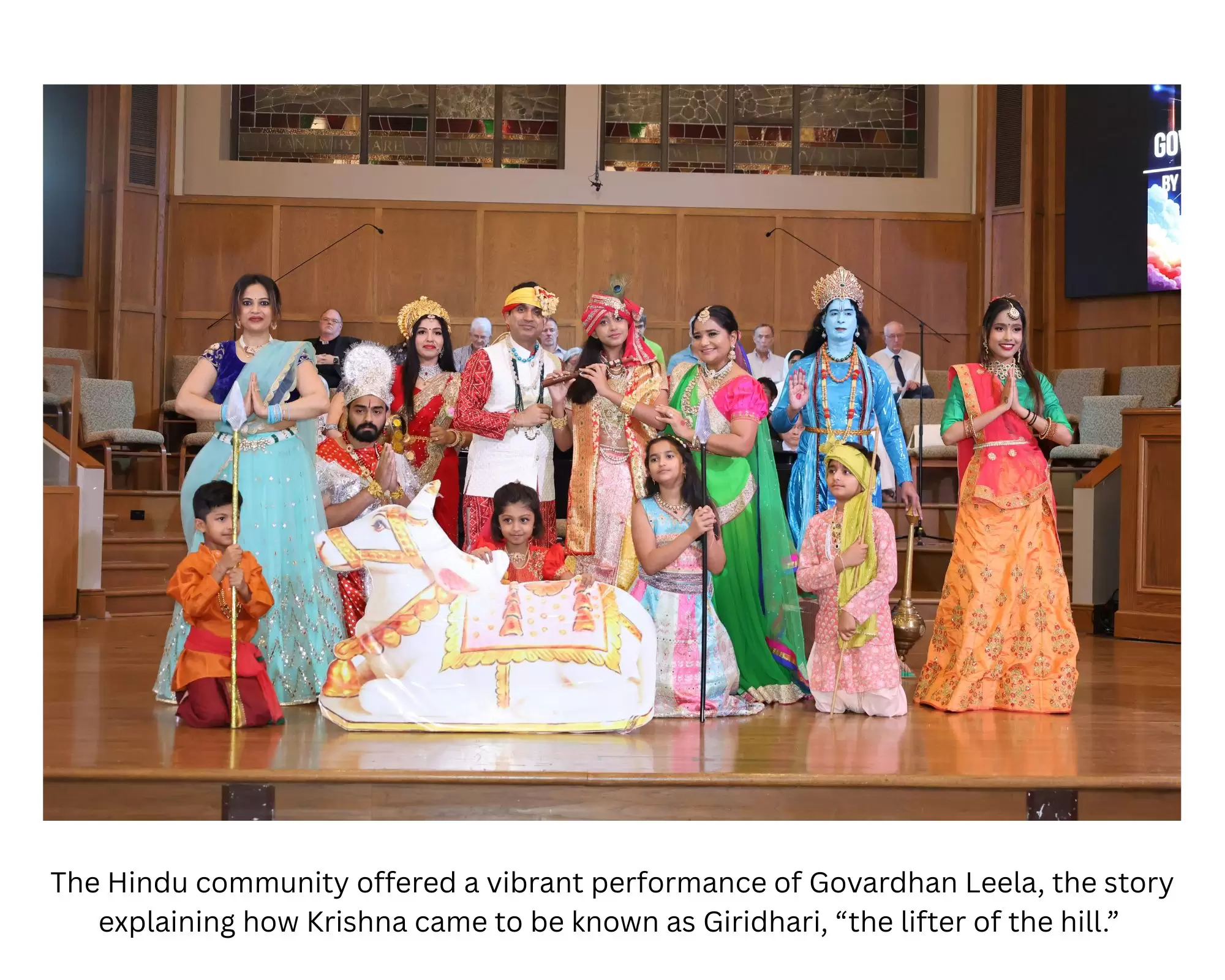
The Hindu community offered a vibrant performance of Govardhan Leela, the story explaining how Krishna came to be known as Giridhari, “the lifter of the hill.” The skit was organized by Geetha Ravula, founder of the nonprofit Ashirwad – A Blessing Temple, a longtime member of Hindus of Greater Houston, and a six-year board member of the Fort Bend Interfaith Council.
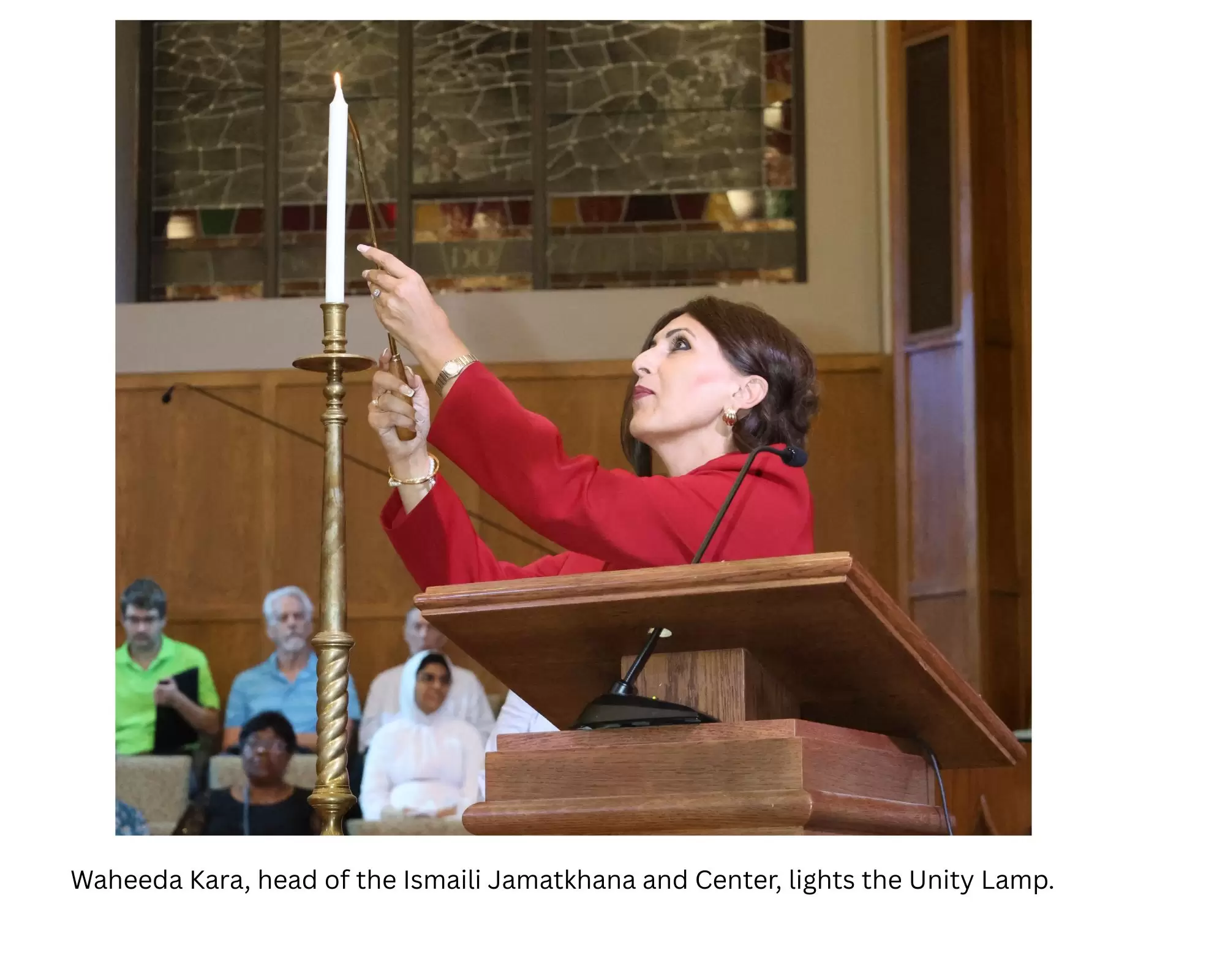
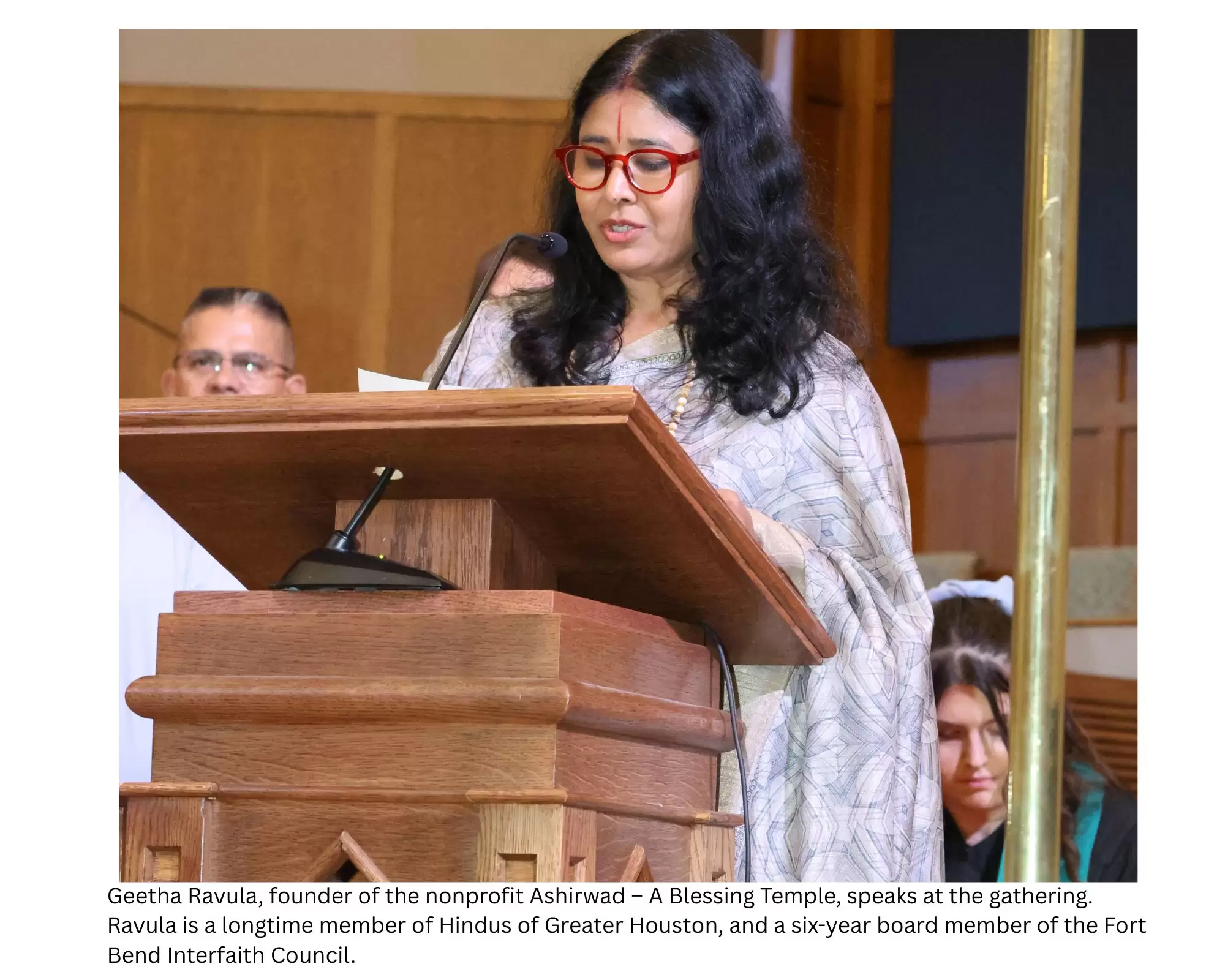
Children dressed in colorful traditional attire brought the tale to life through narration and movement. Their performance illustrated how gratitude, humility, and divine protection are woven into Hindu teachings.
In the story, Lord Krishna protects the village of Gokul from a devastating storm unleashed by Indra, the god of rain. After Krishna encouraged the villagers to honor the Govardhan Hill—believing it to be a more fitting symbol of natural protection—Indra, angered by the shift in devotion, sent torrential rains, thunder, and hail upon the village.
To safeguard the people and their cattle, Krishna lifts the entire Govardhan Hill with the little finger of his left hand, holding it aloft like an umbrella for seven straight days. Under its shelter, the villagers remain safe until Indra recognizes his error, halts the storm, and seeks forgiveness.
The story concludes with the tradition of Govardhan Puja, a festival in which devotees express gratitude through food offerings in honor of Krishna’s protection. It is through this act that Krishna is celebrated as Giridhari, the lifter of the hill.
Prayers, readings, music, and community prayers echoed throughout the sanctuary.
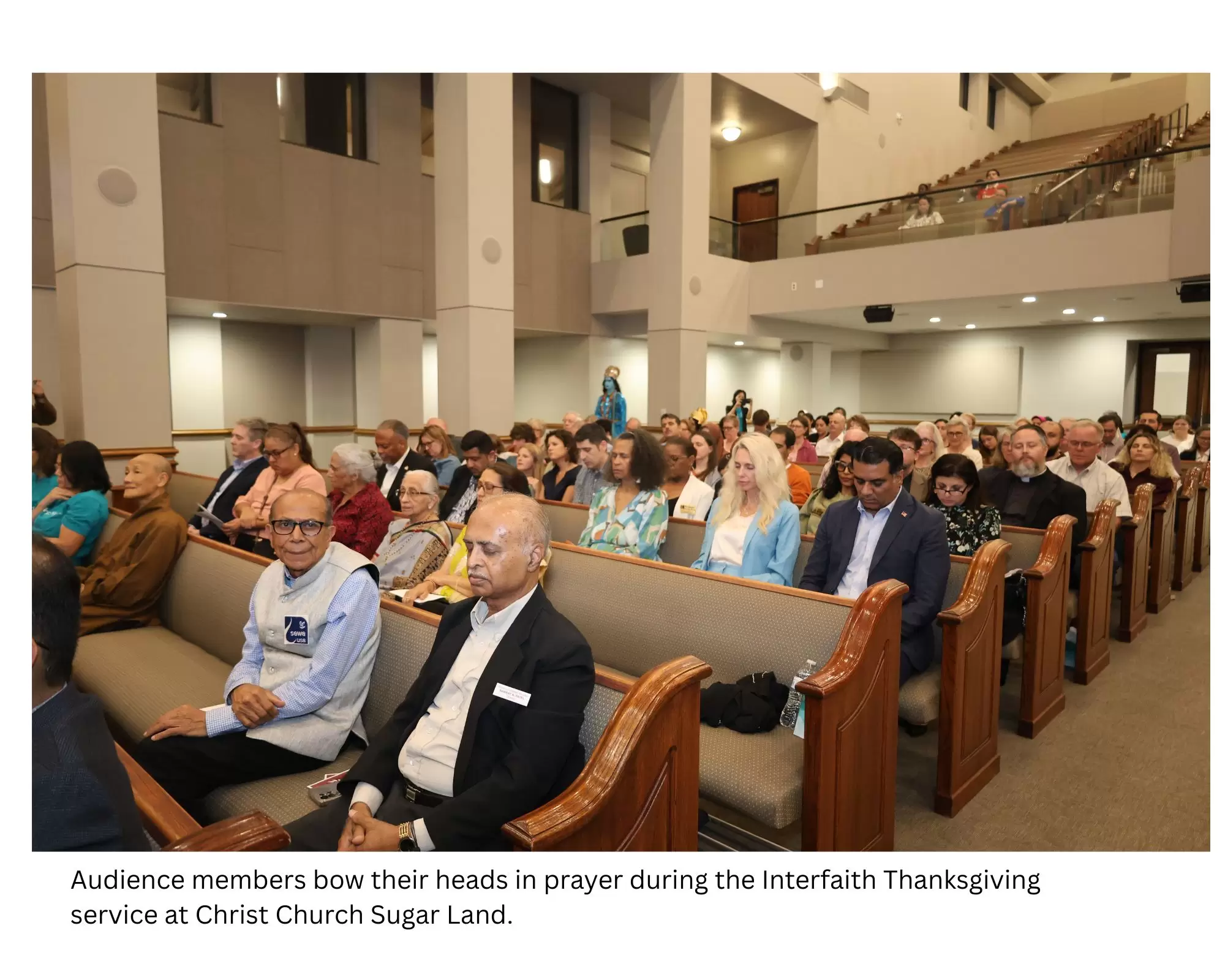
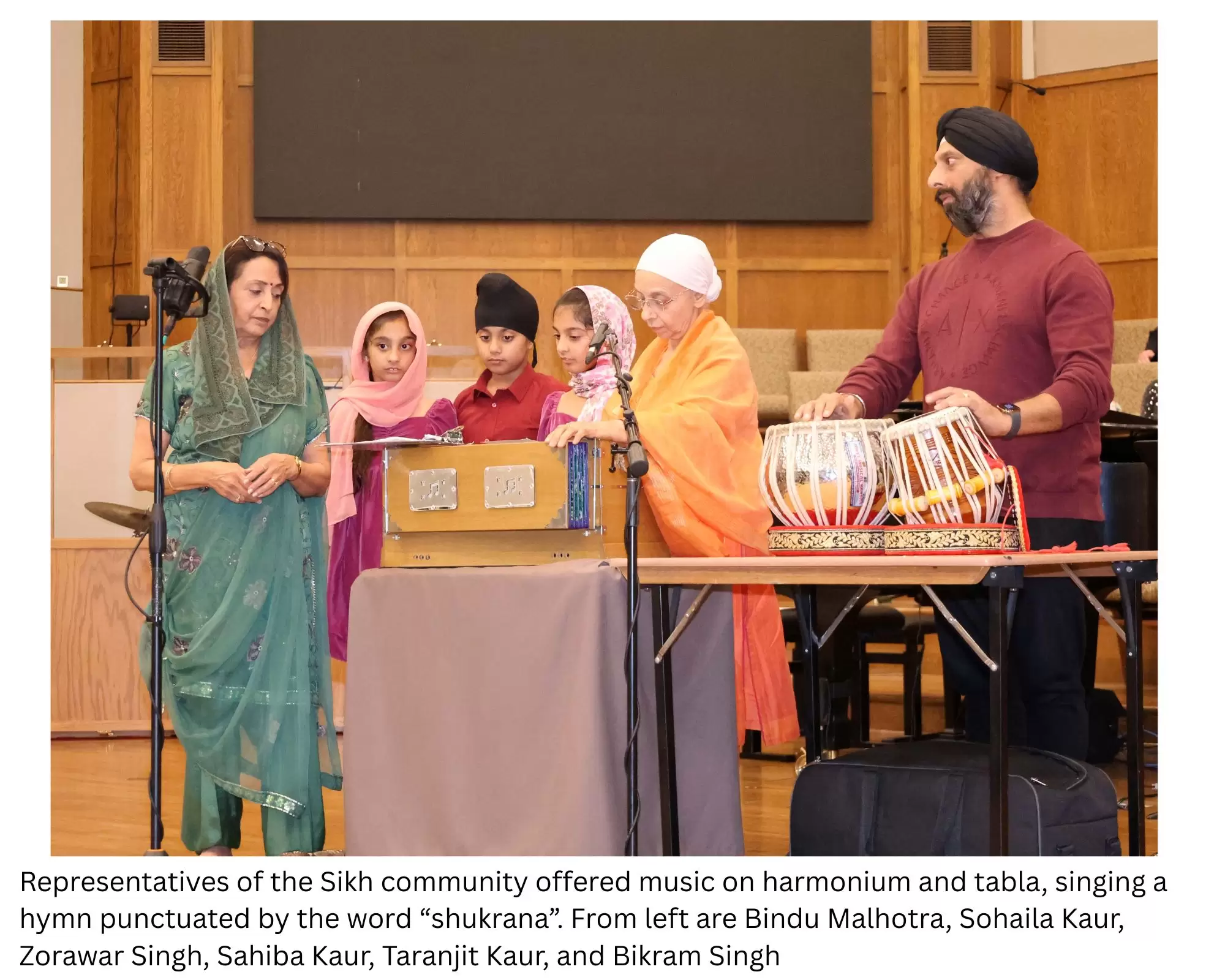
The Sikh contingent offered music on harmonium and tabla, singing a hymn punctuated by the word “shukrana” (gratitude), evoking a deep sense of thankfulness beyond words.
“We offer thanks for when we wake up in the morning, during our meal time, when we go to school or work, when we return home safely, for air and water, which are necessary, for shelter, for a sound body and mind, for well and respected community, for our parents, relatives, our siblings, friends, our educators. Let us give thanks for every person and every blessing that we person,” said Bindu Malhotra, about the song.
Sikhism is one of the world’s youngest major religions, emerging about 500 years ago in India from the teachings of Guru Nanak.
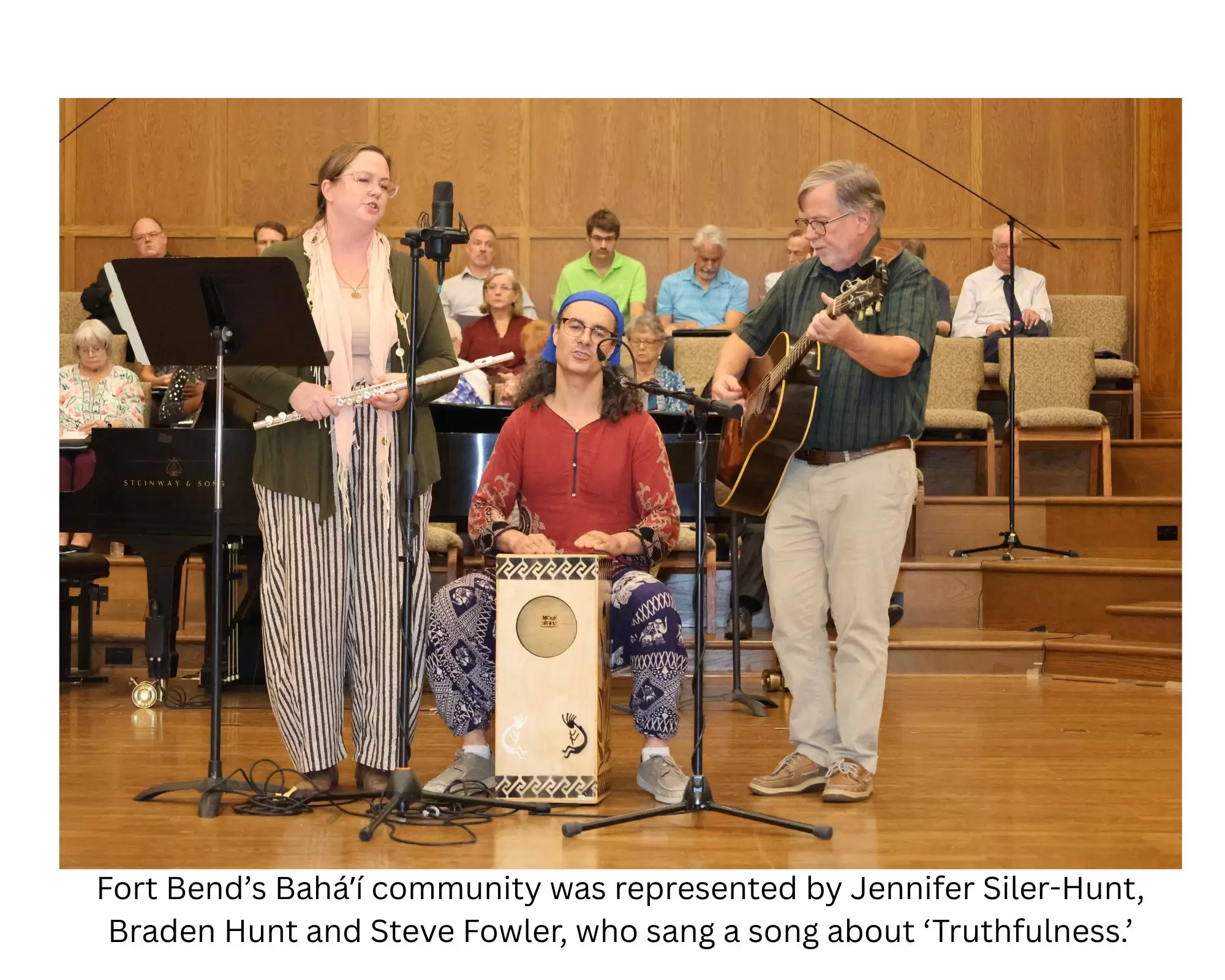
Fort Bend’s Baháʼí community was represented by Jennifer Siler-Hunt, Braden Hunt and Steve Fowler, who sang a song about ‘Truthfulness.’
The Baháʼí Faith, which emerged in the 19th century in Iran and the wider Middle East, centers on the unity of humanity and the shared value of all religious traditions.
A friendly reception followed, complete with a spread of samosas, stuffed grape leaves, cheeses, cakes, cookies — symbolic of the event’s spirit of shared gratitude and hospitality.
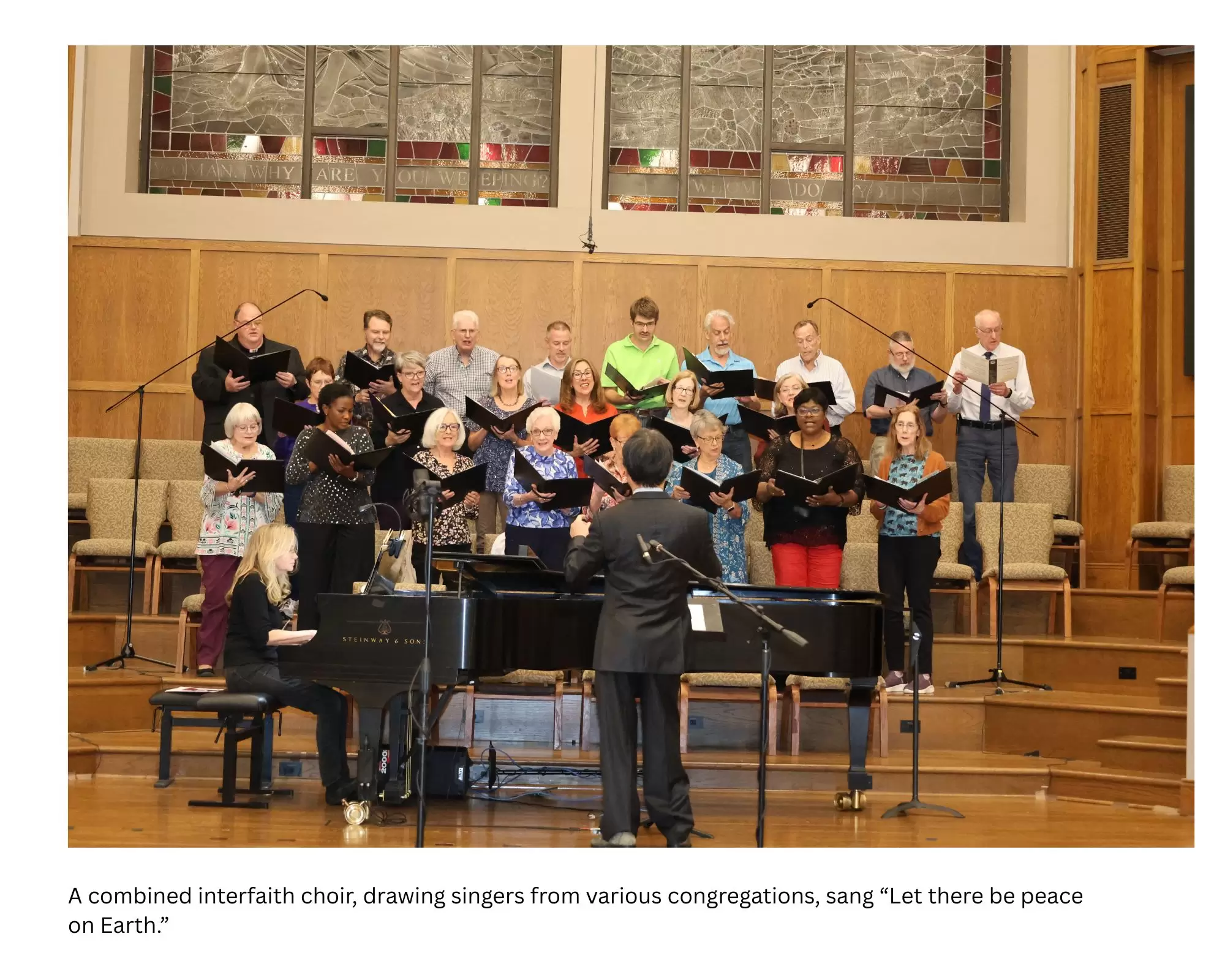
The program wove together a tapestry of faith-based expressions: prayers, readings, music — and culminated in a combined interfaith choir, drawing singers from across various congregations to close the evening with a shared song of thanks.
Related






ADVERTISEMENT

ADVERTISEMENT
E Paper
Video

Comments
Start the conversation
Become a member of New India Abroad to start commenting.
Sign Up Now
Already have an account? Login