ADVERTISEMENT

ADVERTISEMENT



India’s global and cultural heritage
India is a multicultural state, and through the contribution and partnership of its vast diaspora, Indian culture has emerged as a force that connects.
-
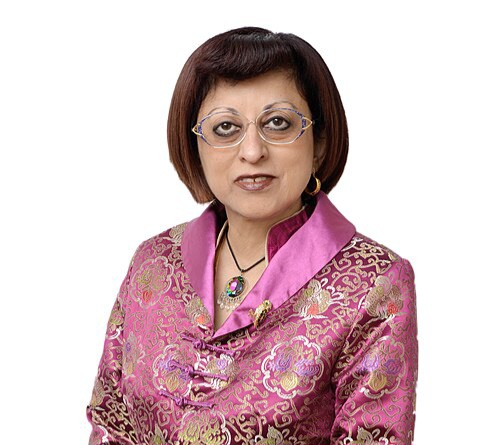 Bhaswati Mukherjee
 - Mon, 26, Jan 2026
- 00:11 EST
- 10
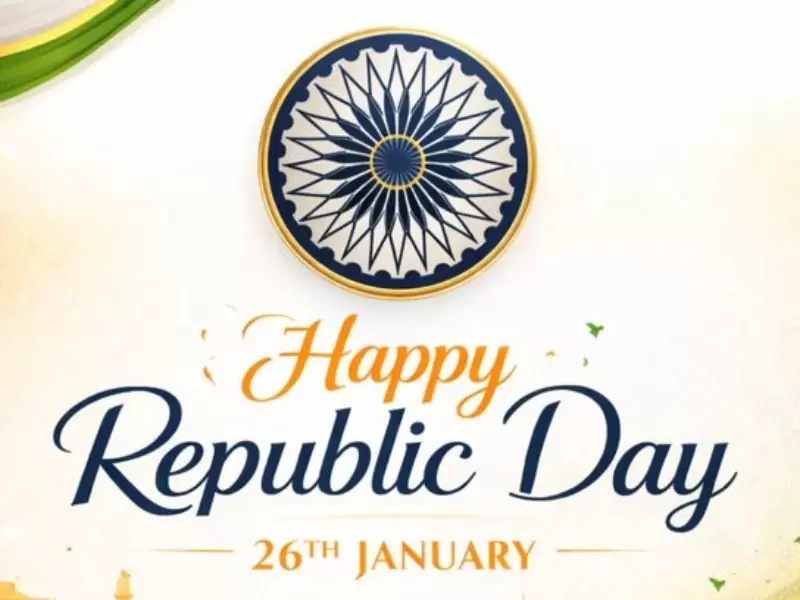
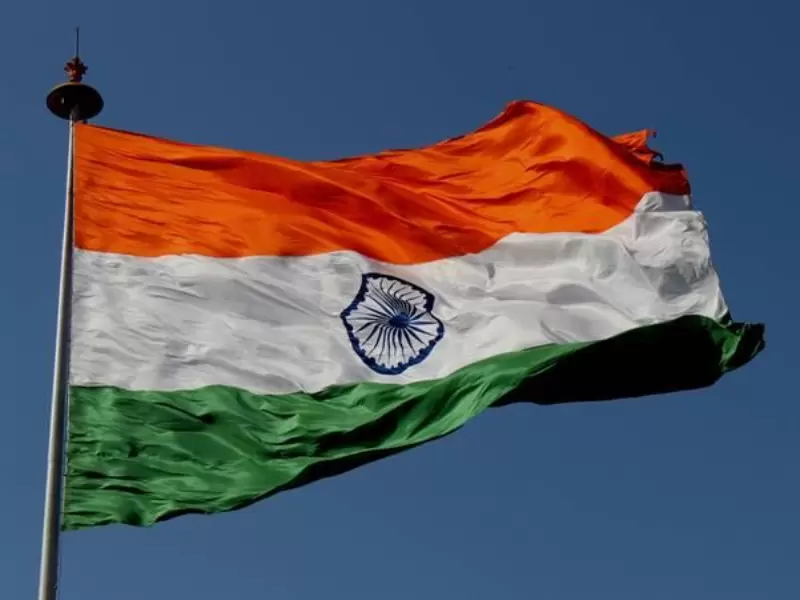 India Flag. / IANS
India’s cultural and civilisational heritage is her gift to the world. To understand what constitutes our culture and civilisation is to undertake a historical journey into our past.
Any serious discussion must begin with E.H. Carr. In 'What Is History', Carr concludes:“History is a continuous process of interaction between the historian and his facts, an unending dialogue between the present and past, a dynamic, dialectical process, which cannot be limited by mere empiricism or love of facts alone.”
Another essential dimension is the interlinkage between culture and imperialism in the nineteenth century. Dr. Edward W. Said, in his seminal work 'Culture and Imperialism', observed:
“Partly because of empire, all cultures are involved in one another; none is single and pure, all are hybrid, heterogeneous, differentiated and un-monolithic.”
This is an apt description of India’s own culture.
ALSO READ: Indian-Americans bag three Padma Awards
Efforts were made to belittle and downgrade India’s heritage after the arrival of the Dutch, Portuguese, French and British. This was the age of colonialism and imperialism. As Dr. Said noted, the notion of inferior races helped fuel imperial acquisition of territory. The culture of imperialism involved venerating the coloniser’s culture to the exclusion of others, a concept fundamentally opposed to the Indian worldview.
One of the most authoritative works on Indian civilisation, A.L. Basham’s 'The Wonder That Was India', rejects earlier Western interpretations that portrayed Indian civilisation as un-political, purely spiritual and unchanging. Basham demonstrates that India has always had a dynamic civilisation and a living cultural heritage, with oral traditions playing a vital role in its continuity.
The civilisation that developed in the valleys of the two great river systems, the Indus and the Ganges, though geographically demarcated by the Himalayas, was never isolated. Settlers and traders arrived by land and sea from both East and West. As a great maritime power, Indians themselves travelled widely. This constant interaction produced a complex, multidimensional culture, visible in art and traditions from ancient to modern India, from the dancing Buddhas of the Gandhara school influenced by Greek forms, to the monumental temples of North and South India.
The Aryan period witnessed the development of Vedic literature and the Puranas. The earliest literary source was the Rig Veda, followed by the two great epics, the Ramayana and the Mahabharata. Ancient Indian architecture and sculpture were dynamic rather than static. Through continuous cultural cross-fertilisation, Indian civilisation did not perish with the arrival of new influences.
That said, ancient Indian culture was severely impacted by invasions from the tenth century onwards. These invasions destroyed many elements of India’s cultural heritage and included barbaric acts such as repeated attacks on temples, most notably the multiple destructions of the Somnath temple.
Yet from this period also emerged an extraordinary syncretic tradition. Indo-Islamic Mughal architecture and miniature painting evolved through the adaptation of Indian resources, expertise, designs and motifs. The medieval period saw the development of an eclectic cultural synthesis, of which the Taj Mahal remains the finest example.
India’s culture and civilisation are also a gift to its diaspora. India is a multicultural state, and through the contribution and partnership of its vast diaspora, Indian culture has emerged as a force that connects, builds relationships and heals ruptures created by history and politics.
Internationally, one of India’s most significant global contributions has been its ancient civilisational philosophy. Vasudhaiva Kutumbakam, from the Maha Upanishads, stands among the earliest expressions of global citizenship:
“Udara charitanam tu,
Vasudhaiva kutumbakam.”
It is only for the generous-hearted that the world is one family. This principle forms the basis of UNESCO’s continuing dialogue among cultures, religions and civilisations.
India’s vibrant cultural heritage, carried worldwide through its diaspora, serves as a powerful reminder that values of tolerance, inclusiveness and cultural cross-fertilisation, intrinsic to Indian civilisation, are more relevant than ever in today’s increasingly chaotic global order.
Cultural diplomacy has become a vital instrument in disseminating these values. Indian arts, culture and spirituality have attracted people from across the world for centuries. Indian spirituality, in particular, has had a global presence, evident today in the spread of yoga centres worldwide. At the personal initiative of Prime Minister Narendra Modi shortly after his election in 2014, the UN General Assembly recognised June 21 as the International Day of Yoga.
Culture and cultural diplomacy have thus emerged as forces that connect societies, strengthen bilateral relations and heal ruptures created by history and politics.
The most challenging question, however, is how this culture is to be preserved. It is a living culture and can survive only if nurtured and strengthened by successive generations, including the diaspora. Unless India’s civilisation and heritage are presented in ways that are comprehensible and appealing to young India, they cannot endure.
Our composite culture is India’s gift to the world. It reflects the evolution of our history and the unique manner in which India absorbed other cultures without ever losing her own.
During a recent visit to Visva-Bharati University at Santiniketan, I was struck by Gurudev Rabindranath Tagore’s message at the entrance, which remains deeply relevant today. He wrote:
“India represents the wealth of mind which is for all.
We acknowledge India’s obligation to offer to others the hospitality of her best culture,
And India’s right to accept from others their best.”
We have done so, and we will continue to do so for generations to come. That is why we are Bharat, that is India.
Bhaswati Mukherjee is a retired Indian diplomat. She is an active commentator on international affairs.
(The views and opinions expressed in this article are those of the author and do not necessarily reflect the official policy or position of New India Abroad.)
Discover more stories at NewIndiaAbroad
Related
ADVERTISEMENT
ADVERTISEMENT
E Paper
Video

Comments
Start the conversation
Become a member of New India Abroad to start commenting.
Sign Up Now
Already have an account? Login