ADVERTISEMENT
ADVERTISEMENT



Indian-Origin researcher wins grant for cystic fibrosis gene therapy
The newly funded project aims to address a key barrier to durable gene therapy for CF: ensuring that corrected airway stem cells can expand and persist long enough to repair lung tissue.
-
1759953093.png) Staff Reporter
Staff Reporter - Sun, 16, Aug 2026
- 00:17 EDT
- 27
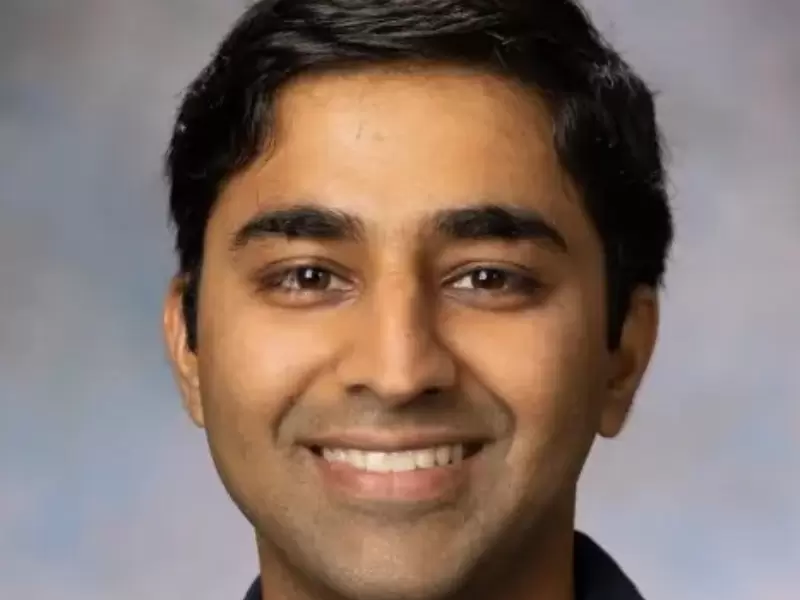 Sriram Vaidyanathan / Emily’s Entourage
Indian-origin researcher Sriram Vaidyanathan has received a $200,000, two-year translational research grant to advance a new approach aimed at making gene therapy for cystic fibrosis (CF) more durable.
Vaidyanathan, PhD, Principal Investigator at Nationwide Children’s Hospital and Assistant Professor of Pediatrics at The Ohio State University, earned the first 2026 Translational Research Grant from Emily’s Entourage (EE) along with Kyle Cromer, PhD, Assistant Professor at the University of California, San Francisco (UCSF).
ALSO READ: Ramesh Khanna receives Mizzou Distinguished Faculty Award
The newly funded project aims to address a key barrier to durable gene therapy for CF: ensuring that corrected airway stem cells can expand and persist long enough to repair lung tissue.
Gene-editing approaches that replace the faulty CFTR gene in people with CF have shown the potential to restore function in airway cells.
However, even when gene correction is successful, corrected airway basal stem cells—the long-lived cells responsible for regenerating airway tissue—do not naturally outcompete uncorrected cells.
As a result, corrected cells may fail to expand sufficiently to produce a lasting therapeutic benefit.
To overcome this challenge, Vaidyanathan and Cromer are developing engineered “synthetic receptors” designed to provide corrected cells with a temporary and controllable growth advantage.
These receptors can be activated using a small-molecule compound that has already been evaluated in clinical settings. When activated, the receptors signal to corrected cells to expand, helping them repopulate the airway epithelium. Once expansion is achieved, the signal can be turned off.
The project will focus on engineering and testing two families of synthetic receptors that mimic natural growth-factor pathways involved in airway cell regeneration. The team will evaluate whether these receptors can selectively enrich CFTR-corrected airway basal stem cells while preserving their ability to differentiate into healthy airway tissue.
What if corrected cells could be engineered to win️@UCSF's Kyle Cromer, PhD, and Sriram Vaidyanathan, PhD, of @OhioState earned a $200K @EmilysEntourage grant to explore just that—using synthetic biology to help corrected airway cells take hold and endure in #CysticFibrosis. pic.twitter.com/RE03hRduSB
— UCSF Surgery (@UCSFSurgery) August 13, 2026
By enabling selective expansion of corrected cells, this approach seeks to achieve durable repair of the airway, one of the most persistent challenges in CF gene therapy.
“Gene correction alone may not be enough if corrected cells can’t outcompete diseased tissue,” said Dr. Vaidyanathan. “We’re developing a system that temporarily tilts the balance—allowing repaired cells to expand and potentially improve the durability of gene-based therapies.”
This synthetic biology approach is designed to work alongside existing gene-editing strategies and could be compatible with both cell-based and in vivo gene therapy approaches.
“One of the biggest challenges in gene therapy isn’t just fixing the gene—it’s ensuring those corrected cells can persist and repair tissue over time,” said Chandra Ghose, PhD, Chief Scientific Officer at EE.
“This project introduces a creative synthetic biology strategy to address that challenge and help advance more durable treatment approaches for CF.”
Approximately 10% of people with CF do not benefit from current CFTR modulators. EE said it was committed to accelerating research that addresses both the underlying genetic causes of CF and the biological barriers that continue to limit treatment durability.
Emily’s Entourage’s (EE’s) Grant Program provides funding to accelerate research and therapeutic development for people with cystic fibrosis (CF) who do not benefit from existing mutation-targeted therapies. EE supports a range of funding mechanisms, including translational grants, collaborative grants, and preclinical exploratory grants, as well as venture philanthropy investments.
To date, EE has awarded millions of dollars to multi-disciplinary teams around the world and helped secure millions more in follow-on funding.
Discover more at New India Abroad.
Leave A Comment
Related







ADVERTISEMENT

ADVERTISEMENT
E Paper
Video

Comments
Start the conversation
Become a member of New India Abroad to start commenting.
Sign Up Now
Already have an account? Login