ADVERTISEMENT

ADVERTISEMENT


India pitches inclusive AI model rooted in sutras, chakras: Amb Kwatra
Outlining India's approach, he said the objective of the AI model is to democratize access and ensure that innovation reaches society at scale.
-
 IANS
IANS - Thu, 22, Jan 2026
- 15:32 EST
- 21
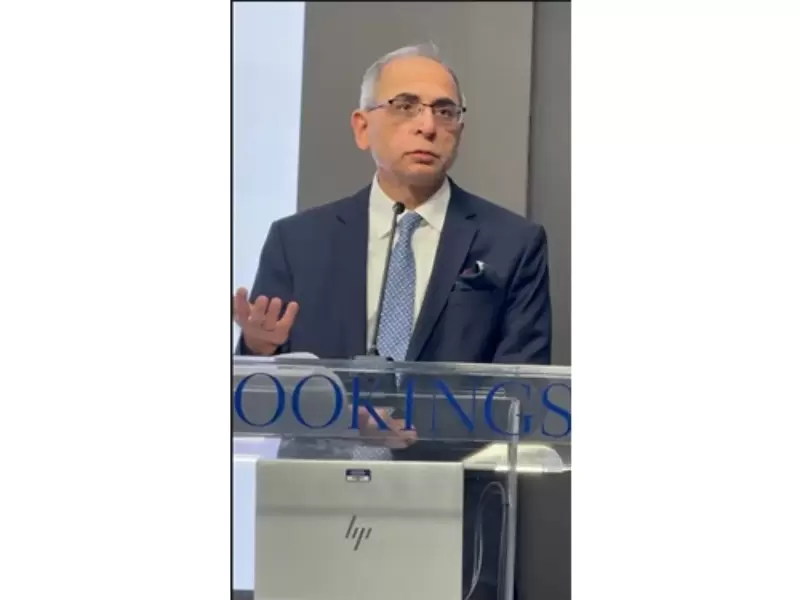 Vinay Mohan Kwatra, India's Ambassador to the U.S. / Courtesy: X/Brookings
India's Ambassador to the U.S., Vinay Mohan Kwatra, said on Jan. 22 that India is advancing an artificial intelligence (AI) vision anchored in an indigenous framework of "three sutras and seven interconnected chakras," with a focus on inclusivity, affordability, and population-scale impact.
Addressing a gathering of policy experts and researchers at the prestigious think tank Brookings, Ambassador Kwatra said India's relationship with technology offers a distinct model for developing and deploying artificial intelligence globally.
"We think that the way we adopt... we relate to technology, gives us a good blueprint for simple, inclusive, globally deployable, and innovative tools such as AI," he added, ahead of the major global AI summit being hosted by India next month.
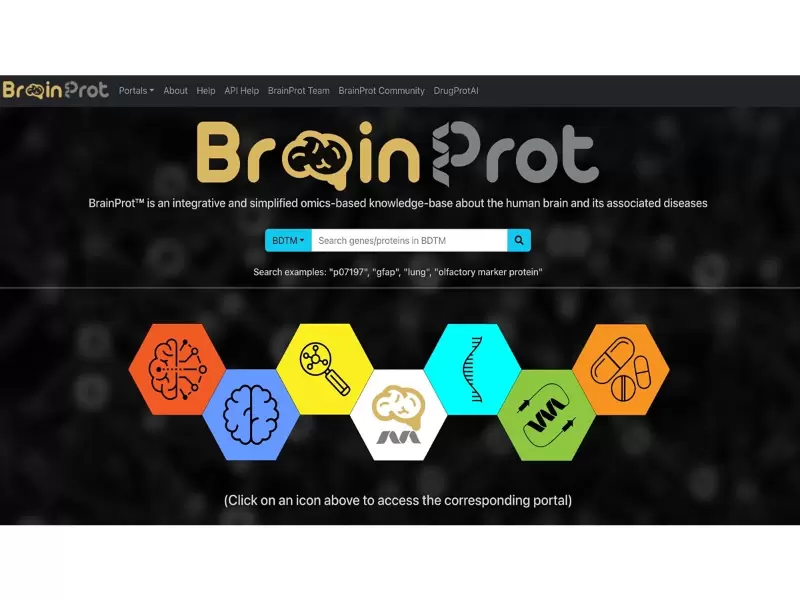
ALSO READ: IIT Bombay’s new smart platform to help decode brain diseases
Ambassador Kwatra was delivering the keynote address at a conference titled "On the road to the India AI Impact Summit: Global AI governance and the HAIP Reporting Framework," organized by Brookings.
Outlining India's approach, he said the objective of the AI model is to democratize access and ensure that innovation reaches society at scale.
"The goal is to make it open, affordable, and accessible to all, one and all, ensuring that innovation reaches every person and the population scale so that everybody's able to innovate," he added.
Ambassador Kwatra said that the three sutras form the overarching philosophy of India's AI framework, while seven interconnected chakras guide how AI products are deployed, adopted, and diffused.
These chakras, he said, focus on building human capital and talent pipelines, fostering inclusion for social empowerment, ensuring safe and trusted AI, promoting resilience, innovation, and efficiency, democratizing AI resources, and creating value for economic growth and social good.
India, Ambassador Kwatra said, brings "intrinsic strengths" to large-scale AI development, particularly its ability to diffuse technology rapidly across a vast and diverse population.
"For any technology to eventually scale up at the level of society and for the industry and enterprises to draw benefit from technology, it has to be diffused at the level of large society and large enterprises," Ambassador Kwatra added.
He cited India's digital public infrastructure as an example of population-scale platforms that reach the entire population while keeping marginal usage costs extremely low.
Ambassador Kwatra said India is building its AI ecosystem across all five layers of the architecture—applications, models, compute, data, and network infrastructure and energy—simultaneously.
He stressed the importance of developing sovereign AI models that reflect local data, culture, and context.
"We are trying to build firmly that we should build our own sovereign AI and sovereign large language models," he said, pointing to the need for data security, cultural relevance, and mitigation of bias.
"Several AI models are currently being developed under the India AI Mission, with some expected to be launched at the upcoming AI Impact Summit. One full-stack model trained from scratch on 22 Indian languages embeds deep contextual understanding, while another smaller model is being developed for industry-specific applications," he added.
On international cooperation, Ambassador Kwatra said India and the U.S. bring complementary strengths to the AI ecosystem.
"We think that our strengths are complementary," he said, noting that U.S. AI funds are expanding engineering and research centers in India.
He added that India's message to the world is that the future of artificial intelligence must be inclusive, transparent, and safe, with benefits extending beyond a handful of countries or social groups.
"We in India are building an ecosystem that strengthens the nation, uplifts our entire society, and gives us a template for building externalities of partnership of AI with other countries of the world," Ambassador Kwatra said.
"We think that the AI Impact Summit 2026 will be a pivotal platform to turn the vision into really a global collaborative action."
Discover more at New India Abroad.
Related






ADVERTISEMENT
ADVERTISEMENT
E Paper
Video

Comments
Start the conversation
Become a member of New India Abroad to start commenting.
Sign Up Now
Already have an account? Login