ADVERTISEMENT
ADVERTISEMENT



'India is no longer optional': Southern California business leaders hear case for engagement
India's scale, growth, and reform momentum have moved it from the "someday" column to the center of global business strategy.
-
1759953093.png) Staff Reporter
Staff Reporter - Fri, 03, Jul 2026
- 18:06 EDT
- 40
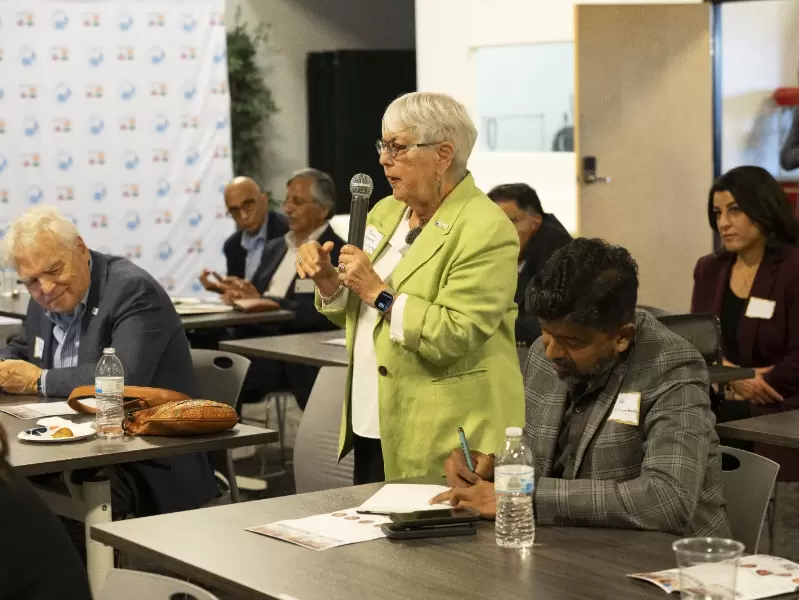 California India Chamber of Commerce eent on India's business potential for American companies / Francisco Madrid
For decades, American companies could treat India as a market to consider someday. That era, speakers at a recent Southern California business gathering made clear, is over.
Across three conversations — with India's Consul General, a manufacturer that built a plant in Pune in 14 months, and an engineer whose firms helped build the Delhi Metro — one message emerged: for companies serious about growth, supply-chain resilience, and the technologies of the next decade, India is no longer optional.
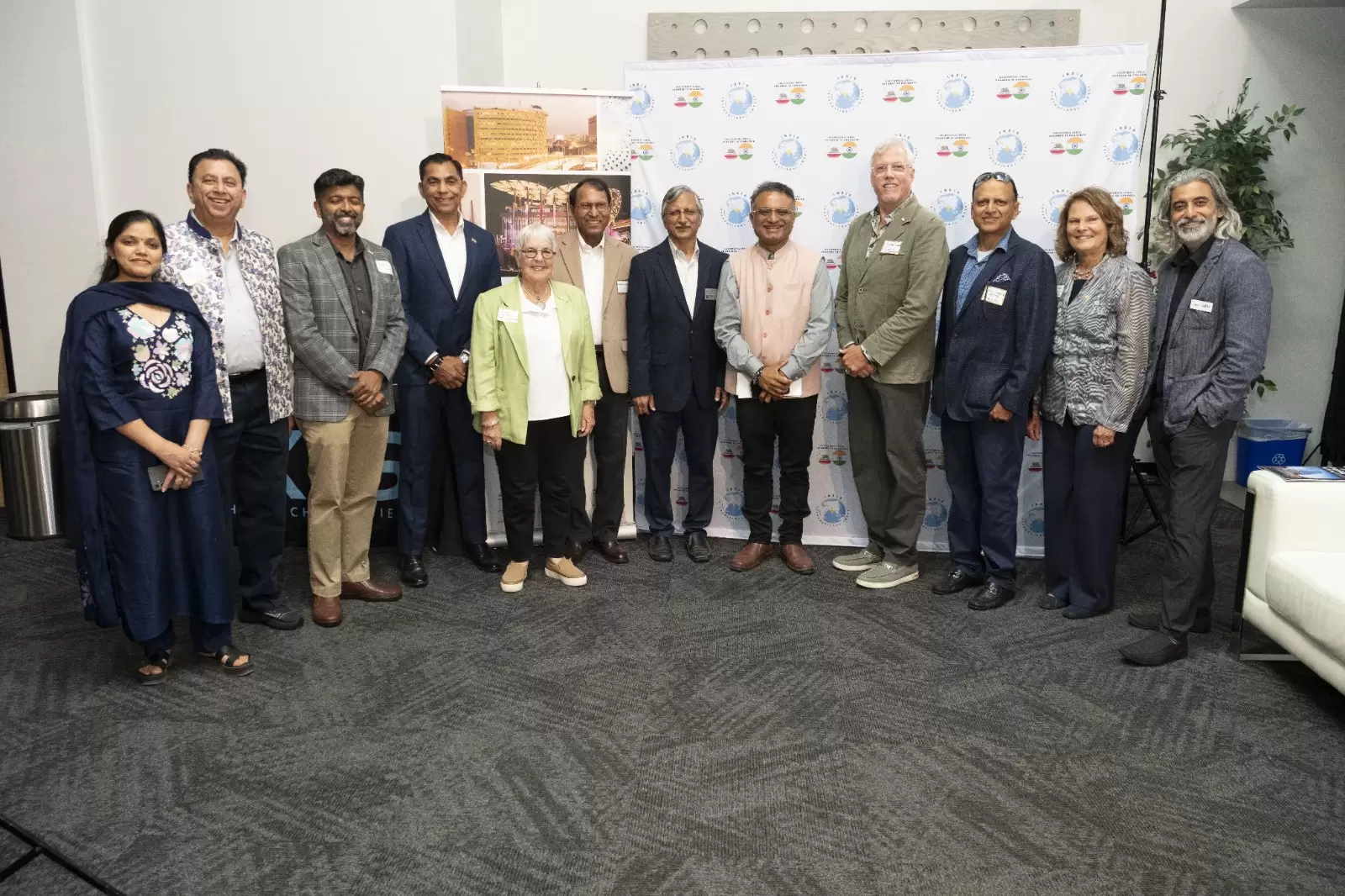
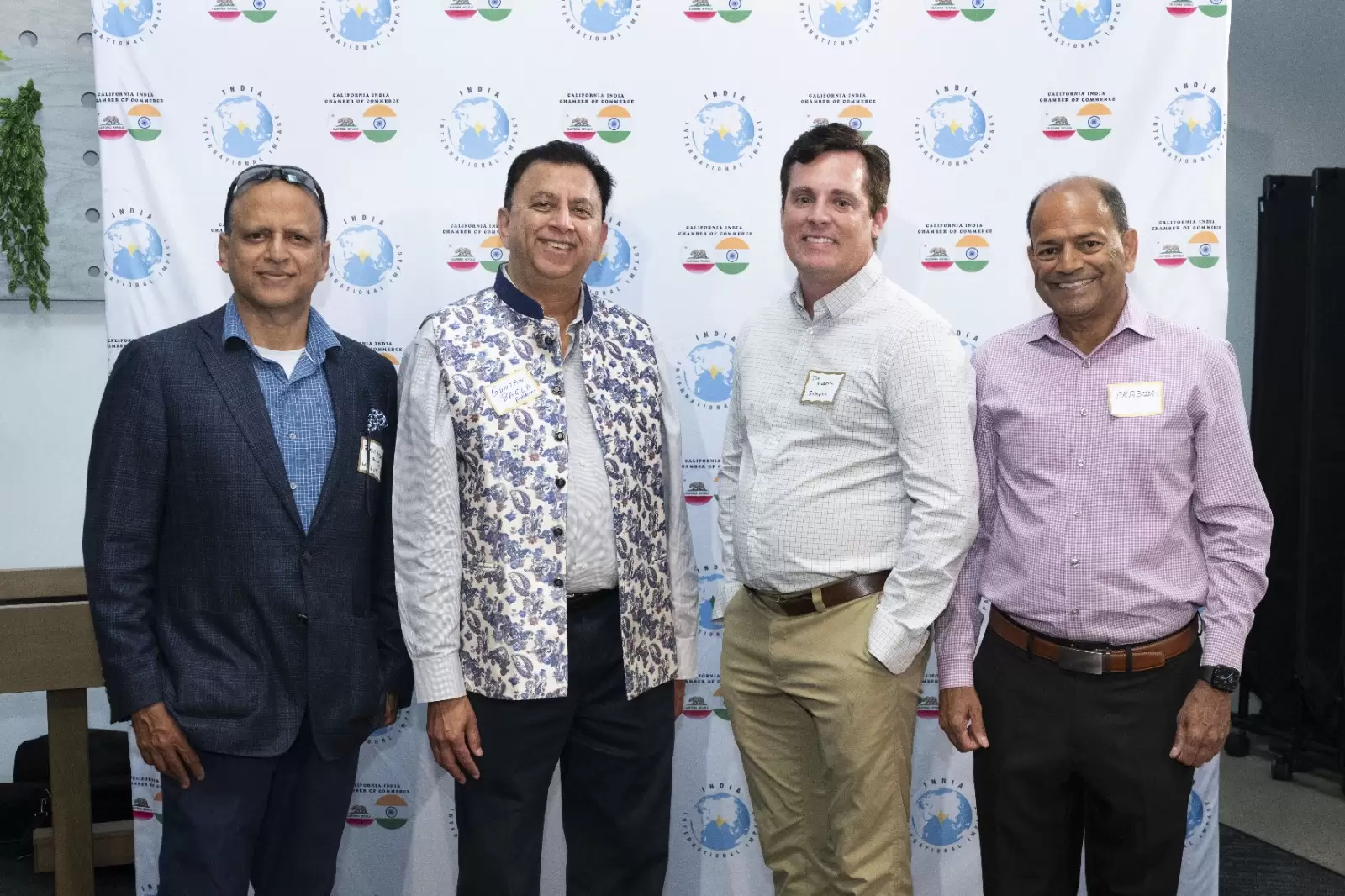
Organized by the California India Chamber of Commerce, the event was held in Irvine, California on June 25th, 2026 and attracted executives from medical devices, aerospace, biopharma, defense, trade logistics and more
The Consul General's Case
In a fireside chat moderated by Gunjan Bagla, who runs a consulting firm helping companies do business in India, Consul General Dr. K.J. Srinivasa framed India not as an emerging market but as a strategic partner shaping the global economy.
The numbers he cited speak for themselves: the world's fastest-growing large economy at roughly 7% annually, on track to become the third largest within a few years; a middle class of some 600 million — roughly the population of Western Europe; the world's third-largest startup ecosystem; and 2030 Paris climate goals achieved five years early.
On the long-awaited U.S.-India Bilateral Trade Agreement, Dr. Srinivasa said negotiations are down to "the commas and full stops," with the $500 billion bilateral trade target spanning defense, aerospace, pharmaceuticals, and services — flowing in both directions. Despite media portrayals of strained tariff talks, he noted, not a single planned collaboration missed a date over the past two years. He called U.S.-India ties "the most consequential relationship of the 21st century."
The Consul General sees Southern California as strategically distinct from the Bay Area, with strengths in defense, aerospace, semiconductors, logistics, biotech, clean energy, and quantum computing. A centerpiece of his agenda is a proposed India-U.S. "talent corridor," with funded exchange programs, R&D funding, and a dedicated task force — its first planning meeting is set for next month.
He also pointed to momentum on the ground: over $48 billion in data-center commitments from Microsoft, Google, and Amazon; a $3–5 billion surge in Indian drone orders following the May 2025 clash with Pakistan; and India's fast breeder reactor achieving criticality after three decades of research.
From Irvine to Pune in 14 Months
Marv Sepe, senior vice president of Irvine-based CTC Global, offered the practitioner's view in conversation with Nitin Bajaj. CTC Global, which makes high-efficiency conductors for power transmission lines, operates in some 70 countries — and South Asia is its single largest market. Nearly the entirety of Bangladesh's 400 kV transmission grid runs on CTC conductors.
CTC entered India around 2009, drawn by a familiar profile: massive power needs, overloaded lines, and electrification as a top national funding priority. The pivotal move came in 2011, when the company signed a multi-year deal with a strong Indian partner. In 2022, CTC decided to build a plant in Pune — and went from management decision to a qualified, operational facility in just 14 months, aided by supportive local government. The plant is now in its third expansion, capable of roughly $50 million in annual revenue.
Sepe's advice for market entrants was blunt: know why you're going, bring a genuinely differentiated product, and above all invest in partnerships — for delivery, promotion, and navigating government. CTC leverage India business consultants; going it alone, he said, is "a tough road." Notably, global expansion hasn't hollowed out the home base: CTC employs about 375 people in Irvine and keeps growing in California even as its overseas plants expand.
Building India's Infrastructure Backbone
The final conversation featured Dr. Ravindra "Ravi" Verma, CEO of the Mobility Infrastructure Group, whose India story began when his firm — project manager for the first LA Metro line — hosted Delhi's chief minister in Los Angeles more than 20 years ago. The firm went on to import India's first tunnel boring machine, dig the first tunnel beneath India's Parliament, and grow to thousands of engineers project-managing the Delhi, Bangalore, and Mumbai metros.
His signature project, a roughly 6-km privately financed toll bridge across the Ganges in Kolkata, was completed in 36 months — where an earlier bridge took 20 years — and remains India's oldest and largest privately financed toll bridge after 18 years of operation. Daily traffic has grown from 10,000 to 50,000 vehicles, with tolling now 98–99% electronic.
Dr. Verma described the transformation under India's PM Gati Shakti policy, which integrates 14 ministries to connect road, rail, ports, and airports: factory-to-port transit that took 15 days a decade ago now takes three to four. His group is channeling major U.S. investment into multimodal logistics parks — the first, near Kolkata, launches by year-end — and setting up a think tank with Google and two IITs to apply AI to Indian freight logistics.
The Takeaway
The through-line of the evening was unmistakable. India's scale, growth, and reform momentum have moved it from the "someday" column to the center of global business strategy. The companies that thrived — CTC Global, the engineering giants behind India's metros — moved early, chose partners carefully, and committed for the long term.
As the trade agreement nears completion, data-center billions flow in, and a talent corridor takes shape, the window for waiting has closed. For Southern California's business community, the message from all three speakers was the same: India is no longer optional.
Leave A Comment
Related





.jpg)
ADVERTISEMENT

ADVERTISEMENT
E Paper
Video

Comments
Start the conversation
Become a member of New India Abroad to start commenting.
Sign Up Now
Already have an account? Login