ADVERTISEMENT

ADVERTISEMENT



India and the South Caucasus
India’s ties with the South Caucasus are rooted in millennia of trade, connectivity, culture and people-to-people interactions.
-
 Ashok Sajjanhar
 - Mon, 26, Jan 2026
- 01:50 EST
- 11
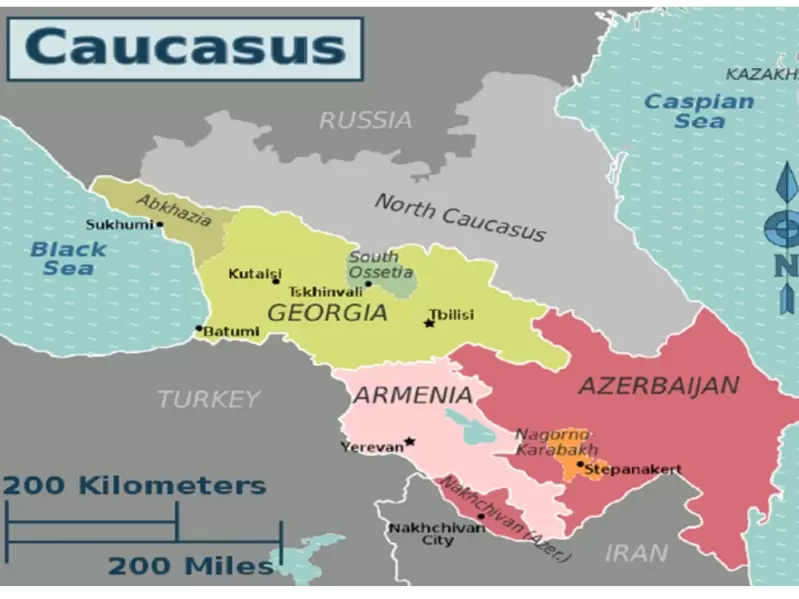 The South Caucasus – comprising Armenia, Azerbaijan, and Georgia. / Ambassador Ashok Sajjanhar
The South Caucasus – comprising Armenia, Azerbaijan, and Georgia – is a small but geopolitically significant region, susceptible to intense competition between regional and global powers. It is also at a strategic crossroads between Russia and Europe, the Middle East, and Asia.
The 2020 Nagorno-Karabakh War, which was followed by the expulsion of 120,000 ethnic Armenians from Nagorno-Karabakh and Azerbaijan’s forcible takeover of the entire region in September 2023, shifted the regional balance of power in favour of Azerbaijan.
India’s relationship with the South Caucasus is a blend of ancient silk-road connections and evolving geo-political realities of 21st century which present significant challenges but also opportunities. Over the last few years, this region has shifted from the periphery to a core strategic focus for New Delhi.
India's relations with South Caucasus nations are growing, focusing on strategic connectivity via the International North-South Transport Corridor (INSTC), defence cooperation (especially with Armenia as a major arms buyer), and economic links in energy, IT, trade, education and tourism, while balancing great power dynamics and regional stability. Armenia is currently India's closest partner, receiving significant development aid and defence support, but India also fosters ties with Azerbaijan on energy, tourism and trade, and with Georgia on investments, education and tourism. These partnerships promote win-win economic benefits and geopolitical leverage, supporting regional stability through infrastructure and increased connectivity.
Historical & Cultural Relations
India’s ties with the South Caucasus are rooted in millennia of trade, connectivity, culture and people-to-people interactions. Historical evidence suggests Indian settlements existed in Armenia as early as 149 BCE.
- Armenia: The Armenian community in India has a longstanding history. Emperor Akbar famously had an Armenian wife and granted commercial privileges to Armenians. Kolkata and Chennai still house historic Armenian churches. The world’s first Armenian journal, Azdarar, was published in Madras (Chennai) in 1794.
- Azerbaijan: The Ateshgah of Baku (Fire Temple) stands as a testament to the presence of Indian merchants (Hindus and Sikhs) who travelled by the Silk Road. Inscriptions in Devanagari and Gurmukhi scripts are visible on its walls.
- Georgia: Cultural links were highlighted in 2021 when India returned the holy relics of Saint Queen Ketevan to Georgia, nearly 400 years after they were brought to Goa. This "relic diplomacy" significantly boosted bilateral warmth.
ALSO READ: Thousands protest in Georgia as opposition challenges election
Political Relations
- Armenia: Strategic Partner: Armenia has emerged as India’s strongest ally in the region. The relationship has been significantly upgraded in recent years due to mutual concerns over the Azerbaijan-Pakistan-Turkey nexus.
- Azerbaijan: Pragmatic Ties: Relations are strained because Baku openly supports Pakistan’s stance on Kashmir. However, in pursuance of its policy of Multialignment, India maintains expedient ties with Azerbaijan based on energy and commercial partnership.
- Georgia: Growing Partner: India views Georgia as a gateway to the Black Sea. Relations have improved steadily since 2021 with Georgia remaining neutral on India's internal issues. As a sign of expanding bilateral ties, India opened its resident Mission in Georgia in July, 2024.
Economic & Defence Cooperation
The South Caucasus is a vital node in India’s quest for a trade route to Europe and Russia. A robust defense partnership with Armenia, supplying arms to strengthen its self-defense, is a key element reflecting geopolitical shifts and regional security concerns. New Delhi and Yerevan are also exploring the significant, untapped potential in developing bilateral trade in pharmaceuticals, information technology, culture, tourism, education, and diaspora ties.
India-Azerbaijan relations are based on civilizational linkages, cultural affinities and shared values of understanding and respect for other cultures. Energy trade and tourism form the bedrock of contemporary India-Azerbaijan ties.
Significant Indian investments have been made in Georgia in steel, infrastructure, agriculture and service sectors. Major Indian companies operating in Georgia are Tata Power, Geo Steel, Jindal Petroleum and KEC International Limited.
The Connectivity Factor: India is one of the original proponents of the INSTC.
Armenia & Georgia: India is promoting a "Persian Gulf–Black Sea" corridor. This route would take goods from India by the maritime route to Iran’s Chabahar Port and thereafter through Armenia and Georgia to the Black Sea, and onwards to Europe.
Azerbaijan: While the original INSTC route passes through Baku, India has diversified its options due to geopolitical considerations, though Azerbaijan remains a key node in the INSTC and energy supplies (crude oil).
Defence
The Armenia Pivot: In recent years, the India-Armenia defence partnership has evolved from a series of individual sales into a full-scale strategic alliance. Armenia is now India's largest customer for finished weapon systems, a shift driven by Armenia's need to diversify its defence procurement and India's "Make in India" export ambitions. Defence Cooperation Program today entails joint combat training, military education, and expert exchanges. For the first time, Military Attachés have been posted in each other’s embassies for technical and tactical coordination. While Armenia’s leadership pursues a peace agenda, it enhances its self-defence capacity to safeguard its borders and to deter any possible aggression from Azerbaijan. India-Armenia defence cooperation contributes to regional stability by helping strengthen the self-defence capacity of Armenia.
Major Deals: India has exported the Pinaka multi-barrel rocket launchers, Swathi weapon-locating radars, Akash surface-to-air missile systems, Brahmos supersonic cruise missiles and anti-drone technology to Yerevan. Since 2022, Armenia has signed weapons contracts with India worth more than $1.5 billion. These deals have been a primary driver in India hitting its $5 billion defense export target, with Armenia alone accounting for nearly 15–20 percent of India's total defense exports in recent years.
Significance: This marks India’s transition from an arms importer to a significant exporter, using the South Caucasus as a launch base for its proven indigenous defense industry.
People-to-People & Education
Education: Georgia and Armenia have become major hubs for Indian medical students. In Georgia, Indian students often constitute the largest segment of the international student body.
Tourism: Azerbaijan has seen a massive surge in Indian tourists, with India becoming its 3rd largest source of visitors by 2024–2025. Direct flights from Delhi and Mumbai to Baku and Yerevan have bolstered this trend.
IT & Labor: Indian tech professionals and agricultural workers have found opportunities in the region, particularly in Armenia’s growing tech sector and Georgia’s agricultural lands.
India-Armenia relations have developed at a rapid pace in recent years – there has been a high number of high-level visits, boosting bilateral trade and most importantly defense ties. Both countries are democracies. They support each other politically on international platforms. Yerevan has always supported India on Kashmir and, more recently, expressed its support to India in the India-Pakistan military conflict of 2025, condemning the Pahalgam attack.
While the International North-South Transport Corridor (INSTC) is the acknowledged parent project, India has increasingly pivoted toward a specific "sub-route" viz. Persian Gulf–Black Sea Corridor to bypass hostile neighbours and secure its strategic exports to Armenia.
Armenia has proposed the "Crossroads of Peace" initiative (2025–2026), which envisions reopening borders with Azerbaijan and Turkey. India supports this for regional stability but remains focused on the North-South axis (Iran-Armenia-Georgia).
Conclusion
India is moving from an observer to a strategic actor, leveraging defense, diplomacy, trade, energy, education, tourism and connectivity projects to secure its interests and promote a stable, multi-aligned South Caucasus. India's relationship with the South Caucasus region is strategically diverse, marked by a deepening, multifaceted partnership with Armenia, particularly in the defense and connectivity sectors, in conjunction with economic, tourism and energy ties with Azerbaijan (via ONGC investments and oil imports) and expanding engagement with Georgia (focused on education and trade, and connectivity potential through the Black Sea), reflecting a pragmatic, country-by-country approach rather than an omnibus regional strategy.
Ambassador Ashok Sajjanhar is a distinguished former Indian diplomat with over 34 years in the Indian Foreign Service (IFS), having served as India's Ambassador to Kazakhstan, Sweden, and Latvia.
(The views and opinions expressed in this article are those of the author and do not necessarily reflect the official policy or position of New India Abroad.)
Discover more at NewIndiaAbroad
Related

ADVERTISEMENT
ADVERTISEMENT
E Paper
Video

Comments
Start the conversation
Become a member of New India Abroad to start commenting.
Sign Up Now
Already have an account? Login