ADVERTISEMENT
ADVERTISEMENT


How Islamabad keeps denying Balochistan its rights?
It is hard for Islamabad, which remains dominated by the Punjabis, to reconcile with the reality that Balochistan has a different political history and identity
-
1744362597.jpeg) Arun Anand
Arun Anand - Tue, 11, Aug 2026
- 03:38 EDT
- 19
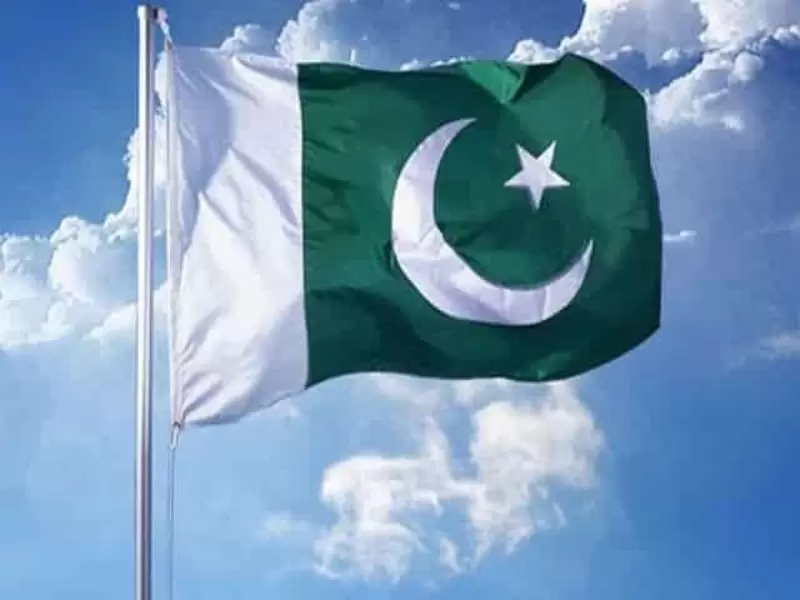 pakistan flag / IANS
Balochistan is increasingly becoming an intractable problem for Pakistan: Islamabad is clueless about the situation; it has no idea about a possible solution. Both the provincial and federal governments are dodging the challenge. They believe that the time may be on their side. But it is not; never has it been on the side of oppressors.
Afghanistan is an example worth mentioning. The time was on the side of insurgents, not the government or the foreign United States-led troops. All the strictest possible security measures and military operations, including dropping the Mother of All Bombs— GBU-43/B Massive Ordnance Air Blast (MOAB)— in 2017, could not facilitate their victory.
It is a fact that when the battle is between locals and what are seen as outsiders and exploiters, the locals have the edge on every indicator. Not to mention that the Baloch see the offensive control of the province by Islamabad as colonisation of Balochistan by the force that is led and determined by the Punjabis.
It is hard for Islamabad, which remains dominated by the Punjabis, to reconcile with the reality that Balochistan has a different political history and identity. From the outset, Islamabad has adopted an offensive policy towards Balochistan and rejected any political accommodation. The only free local government led by Chief Minister Sardar Attaullah Mengal was dissolved in 1973. Since then, partially free governments have been allowed; even then, they have been kept under control. In the controversial 2024 elections, Sarfarz Bugti became chief minister of Balochistan.
Bugti is completely disconnected from the local population. He speaks more for the military establishment than for the locals, their political or economic grievances. Since he owes his position to the powerful of the country, all his efforts seem to be meant to protect his position. He lives in denial. Even though there is no sign that the Baloch militants and the Baloch at large will stop fighting for their rights, Bugti seems to sell an imagination that exists only in his mind.
In his recent press conference, which was more of an attempt to present a hopeful picture but instead ended up raising more questions and exposing the helplessness of the government in Balochistan, Bugti said that the situation was “not as bleak as portrayed.” Reiterating his long-held position in which he clubs different sections of voices of Baloch together, he said that there was no point in talking to armed Baloch. Instead, dialogue remains an option for the youth, elected representatives and political parties.
Even the former chief minister of Balochistan and head of the Balochistan National Party (Mengal) (BNP-N), Akhtar Mengal, was criticised by Sarfaraz Bugti a few months ago for the former’s demand that the situation in Balochistan needs to be taken seriously, rather than living in denial that no problem exists. For Bugti, the only solution to the Balochistan conflict is violence. Like in the latest press conference in which he said that no talks with militants, in the presser in which he had lashed out at those who, according to him, were “rationalising this violence in the name of ethno-nationalism was a direct support to BLA,” he had emphasised that “As a result of dialogue, they want us to surrender? We will not. We will fight this war for a thousand years.”
As tragic as it may sound, this approach of the provincial government is in continuity with the long-held policy of the military establishment towards the Baloch. The policy is to suppress and stifle the voices that question the Pakistani state’s policy towards Balochistan and demand accountability for the human rights violations committed by the Pakistan Army in the region. They are highly unwelcome.
Having become entirely clueless about the situation, the response of the provincial government, with the support of the military establishment, is not only baseless and assumptive, but it aims to label and punish the voices that only seek redressal to the wrongs committed against the Baloch. As Mengal had pointed out, these grievances or demands have been supported by the political leaders, judiciary, laws of the country and various reports.
However, those in power don’t believe in such arguments. The provincial government, with the support of the military establishment, either doesn’t want the conflict to end or thinks that it can be managed by force. For that, the denial tactics seem to be working. To justify that, various narratives are rolled out: it is said that only one side of the story is being presented by the media. He accepts that the situation is not good, but in the same breath, he claimed it is not that bad.
Furthermore, Bugti made it clear that talks with what he called “terrorists” were not possible. The question is who, according to him, is a terrorist? Are the people like Akhtar Mengal or the leaders of the Baloch Yekjehti Committee (BYC) terrorists? Did they ever openly support violence? If not, why are the BYC and its leaders being targeted? Aren’t they political groups and representatives of Baloch? If Akhtar has been the chief minister and elected leader of the National Assembly, BYC’s popularity is known not only in Balochistan, but across Pakistan. What makes them the target of the state’s highhandedness?
Bugti will not be able to answer these questions. He is loving the post of chief minister; he is supported by the military establishment. Therefore, he doesn’t worry about the falling rating of his image and the deteriorating security situation in Balochistan. In fact, the more attacks by the armed militants, the more it creates legitimacy for the military actions. More, subsequently, sufferings for the Baloch. More he will be needed to justify such violence, like he is justifying the actions against BYC leaders. Like many other leaders, Bugti’s utility for the military establishment is known. Once it ends, he will be sent packing. And he knows it as well.
In its 2023 fact finding report, Balochistan's Struggle for Hope, the Human Rights Commission of Pakistan (HRCP) stated that attention needs to be paid “to the legitimate demands of the Baloch people” including, but not limited to, an end to enforced disappearance, extrajudicial killings, torture, ensuring press freedom in the province, giving the Baloch people due share in the rich natural sources of Balochistan, development and welfare in the province. Numerous such calls, from Baloch and non-Baloch alike, have been spurned disdainfully by the Pakistani state.
Common Baloch are not safe in their own land, not even in their homes. Not only have their rights as citizens of the Pakistani state been violated but, worse, they appear to violate the rights of the Baloch community because of its identity. And the people, like the Chief Minister, who are supposed to support the people of the province, instead support the military policies and state highhandedness.
None of the various civilian governments, military rulers or interim governments has ensured the rights of the Baloch in the country, living under the domineering presence of the Pakistani state. With most of the Baloch leaders either discredited or sent to jail, the situation is such that the narrative of the powerful is synonymous with that of right. Bugti and his general masters decide who gets to talk and talk about. There is no space for the people of Balochistan that, as the novelist Mohammad Hanif had said long back in an interview, “is considered a remote part of Pakistan not just geographically but in our imagination as well.” The Baloch remain as outsiders in Pakistan and are treated as such.
(The views and opinions expressed in this article are those of the author and do not necessarily reflect the official policy or position of New India Abroad.)
Discover more at New India Abroad.
Leave A Comment
Related





ADVERTISEMENT

ADVERTISEMENT
E Paper
Video

Comments
Start the conversation
Become a member of New India Abroad to start commenting.
Sign Up Now
Already have an account? Login