ADVERTISEMENT
ADVERTISEMENT



Gurdwara Makindu Sahib “Sachkhand Asthan” of Africa
Not only Sikhs, but the sacred complex is also frequented by people of other faiths, beliefs, and religions, including Hindus, Buddhists, Sindhis, Christians, and Muslims.
-
 Prabhjot Paul Singh
 - Wed, 06, May 2026
- 05:23 EDT
- 44
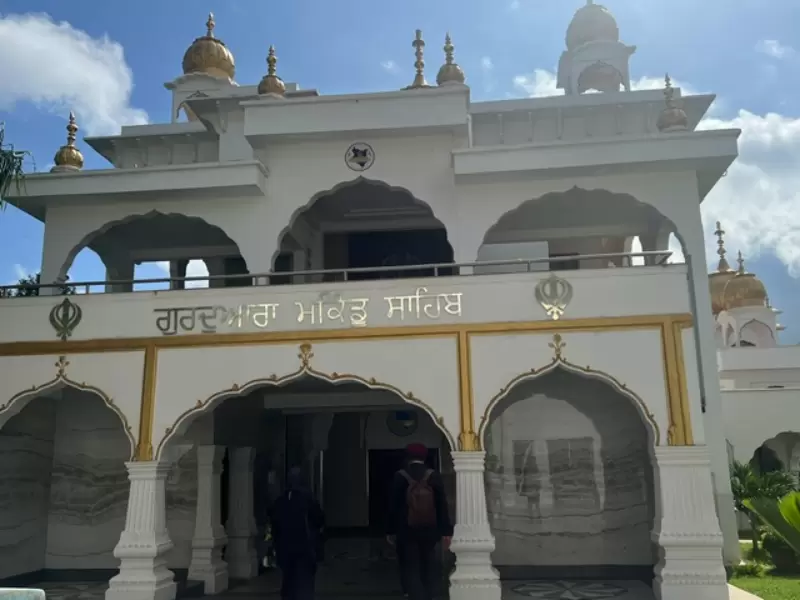 Gurdwara Makindu Sahib / Maninder K. Chandhoke
They say your visit to Amritsar is not complete if you have not paid obeisance at the Golden Temple, organised by the Sri Darbar Sahib. And if you are in Africa in general and Kenya in particular, the same is said if you do not pay a visit to Gurdwara Makindu Sahib on the Nairobi-Mombasa Road.
Since hundreds of Sikhs from all over the globe are converging on Nairobi to join the centenary celebrations of the oldest club of expatriate Indians outside India, the Sikh Union Club, most of them are making it a point to make a same-day return journey of 350 km to pay obeisance at the most revered Sikh shrine in Kenya, Gurdwara Makindu Sahib.
The drive is through picturesque valleys. Because of the incessant rain, everything is green, serene, and beautiful. The entire route is dotted by small roadside vendors who offer water, apples, oranges, and maize cobs.
Not only Sikhs, but the sacred complex is also frequented by people of other faiths, beliefs, and religions, including Hindus, Buddhists, Sindhis, Christians, and Muslims.
Also Read: Fatherhood helped my cricket over the last year: KL Rahul
It is one of the oldest Sikh temples in Kenya. It is believed that this Sikh temple was established in a tin-sheet structure in 1898 by members of the workforce the British brought with them to lay the famous Mombasa-Nairobi rail line.
Mata Gujari Hall was the first concrete structure that replaced a steel structure.
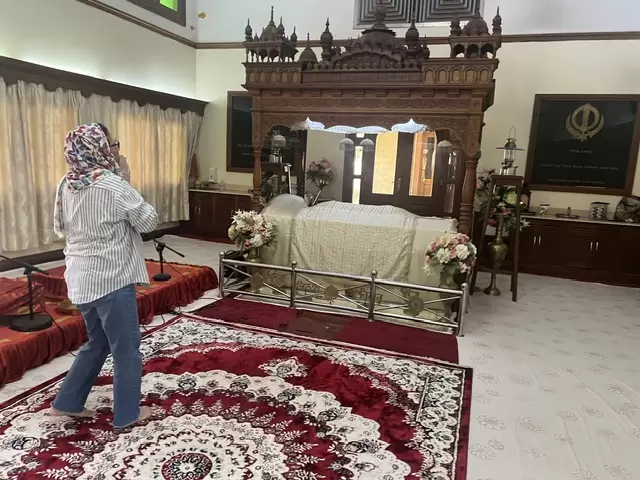
Members of the workforce would make their morning prayers at the makeshift gurdwara in the morning before going to work and reassemble in the evening to put the sacred Guru Granth Sahib to rest (Sukhasan). Members of the group managed to get a sacred handwritten version of Sri Guru Granth Sahib. Interestingly, they have preserved it, and visitors can have “darshan” of this antiquated version of the sacred Granth.
After completing the work at Makindu, the group moved to the next site without disturbing the makeshift gurdwara.
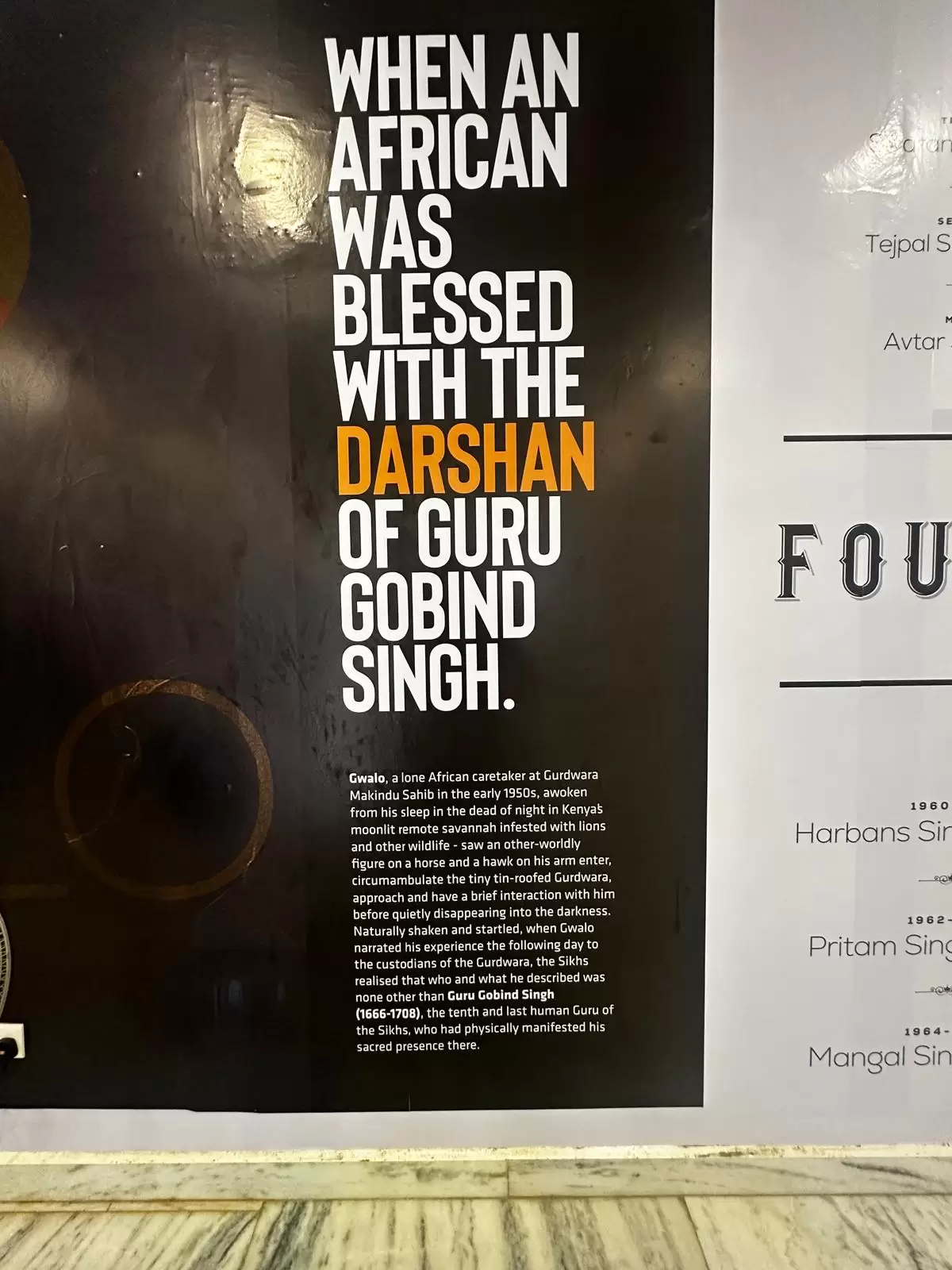
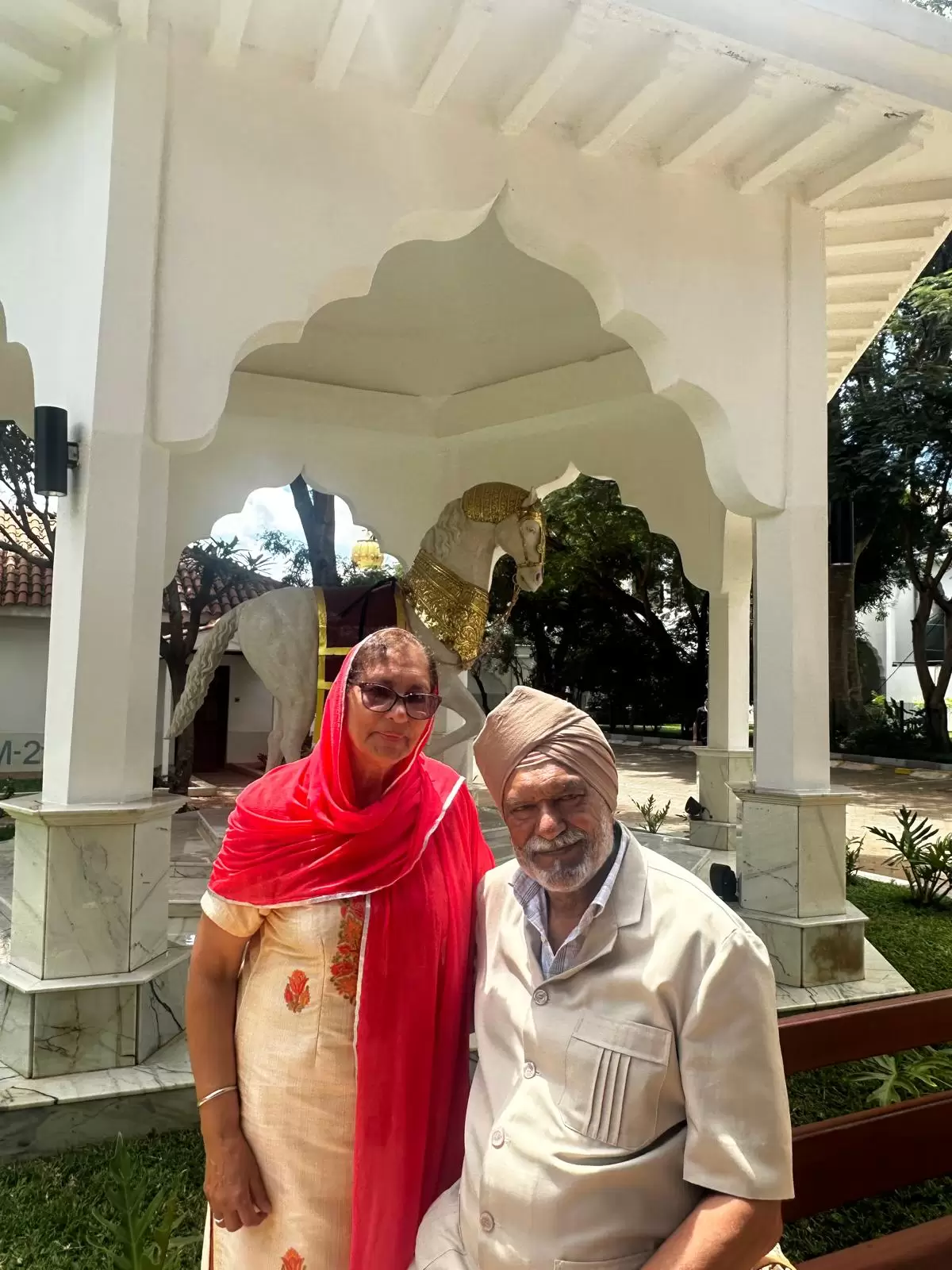
The legend is that one evening, a worker mandated to perform the “Sukhasan” ritual forgot to do it. "Gowala," a local African assigned to look after the makeshift Gurdwara, was pleasantly shocked when he woke up to see a divine figure, armed with traditional Sikh weapons, arrive on the back of a white horse and perform the “Sukhasan” ceremony and then disappear.
"Gowala," who did not believe his eyes to see the whole ceremony being performed by the “divine horse rider," ran to the nearby colony of Sikh expatriates, who had settled down in the area as farmers. Hearing his story, they accompanied “Gowala” to the Gurdwara, where the whole sequence of events was re-enacted by the African watchman. Since he could not give an exact description of the “Divine” force he witnessed perform the sacred ceremony, he was shown a painting of Sikh gurus. He pointed towards the painting of Guru Gobind Singh and said, "It was he who came on a horse."
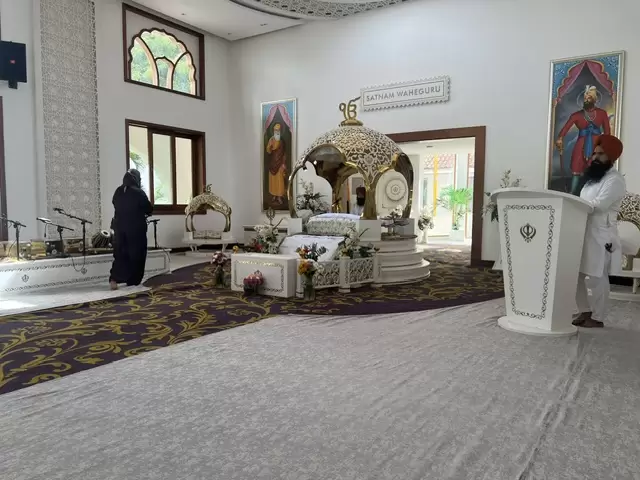
As the legend goes, many started believing that there was some divine power in and around the Gurdwara that was protecting it and blessing the devout.
Gradually, the Sikh population, convinced by the “Gowala” story, started paying pilgrimage to his temple, which within a few years assumed the sanctity of “Sachkhand Asthan”—the sancta sanctorum—of Sikhs.
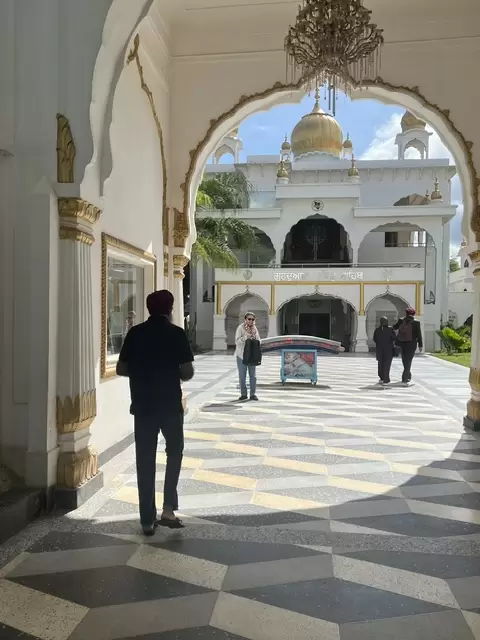
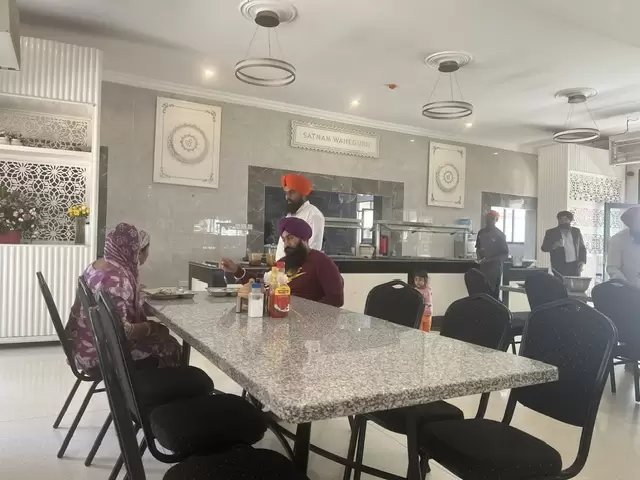
The present-day Gurdwara Makindu Sahib complex has not only several “Darbar” halls where religious congregations are held but also an ultra-modern dining hall or Langar Hall, a modern kitchen that can feed several hundred people at a time. Most of the Sewadars engaged for upkeep and maintenance of the huge complex are local Africans who have, over the years, evinced their deep interest in Sikh culture. values. It is one reason that some of the sewadars sport black turbans, in the same style that the African Sikhs do.
With the passage of time, Gurdwara Makindu Sahib has become a sacred Sikh shrine, and its management has set up a Guru Nanak Dev Memorial Mult-speciality hospital at the temple. The management committee of Gurdwara Makindu Sahib has also set up a huge organic farm, the produce of which is utilised in the preparation of “Langar” every day.
The complex has a huge ultramodern residential complex where more than a hundred families can be accommodated. A thick green cover makes the entire complex a serene, picturesque and perfect place for meditation. Several peacocks have made the Gurdwara complex their home. On overcast days, they spread their wings to dance to the great amusement of devotees visiting the shrine.
A group of Sikhs from various parts of the world—the United Kingdom, the United States, Canada, New Zealand, and Australia—took time out of Sikh Union Club centenary celebrations to visit the "Sachkhand Asthan” of Sikhs in Africa, Gurdwara Makindu Sahib. The group included Tarlochan (Tochi) Panesar and his wife
Talvinder; Nirmal (Nimma) Phlora and his wife Balbir; Jasvir (Jass) Phlora and his wife Maninder Phlora; Benny Sembi; Raghbir Notta and his wife Bhopinder; Devinder Kalsi and his wife Harjit Kalsi; Dr Karandeep Lall and his wife Maninder.
The high priest or chief Granthi of the temple took the group around and also organised a special “Ardas” for its members.
This historic temple, with a rich history and heritage, beckons one and all to give a message of universal brotherhood, peace, and communal harmony.
People of the surrounding areas hold this Sikh temple in high esteem and appreciate the Sikh community for its yeoman service in uplifting living standards in the area.
Discover more at New India Abroad.
Related









ADVERTISEMENT

ADVERTISEMENT
E Paper
Video

Comments
Start the conversation
Become a member of New India Abroad to start commenting.
Sign Up Now
Already have an account? Login