ADVERTISEMENT
ADVERTISEMENT



Blind spot of western media: Why Europe misreads modern India
This distinct lack of curiosity isn't an editorial oversight. Call it what it is, a deliberate disinterest in knowing the truth about the real India.
-
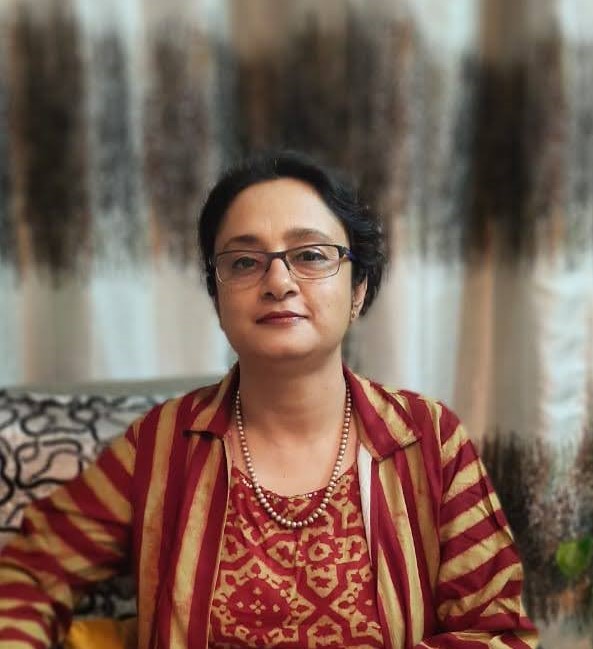 Dr. Vinay Nalwa
 - Tue, 26, May 2026
- 17:28 EDT
- 39
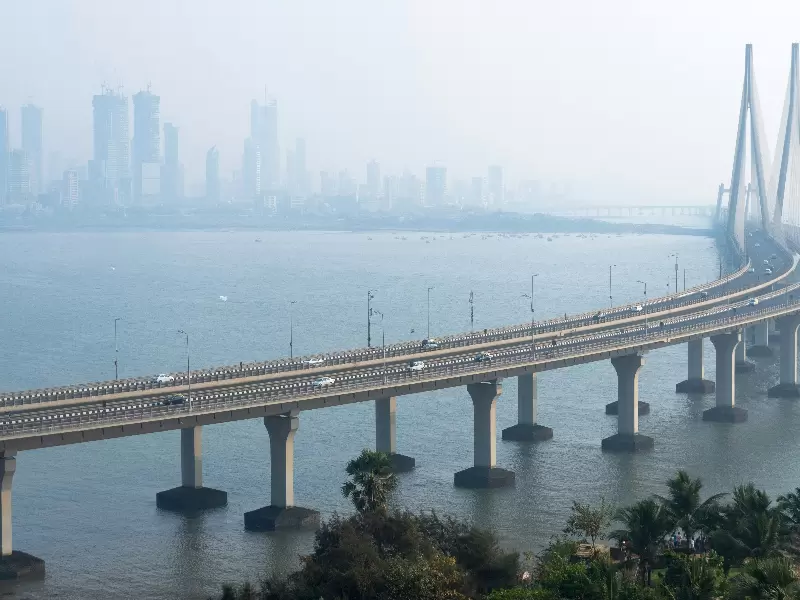 Representative Image / Unsplash
The recent high-level diplomatic engagement between New Delhi and Northern Europe in May 2026 exposed an unusual disconnect.
While European governments and business leaders rolled out the red carpet to engage with India as a leading global economic and technological pillar, as documented by the Observer Research Foundation's analysis on Europe-India ties, mainstream Western media responded with lack of basic curiosity.
From premium Scandinavian newspapers resorting to outdated colonial-era caricatures of snake charmers to state broadcasters openly questioning the geopolitical importance of hosting India's leadership, the foreign press seemed entirely out of sync with realpolitik.
This gap between economic reality and media coverage is a classic product of 'Western-lens' journalism, defined by a systematic, deeply ingrained refusal to understand India on its own terms.
When we begin to hope that the Western media, the vanguard of informed, objective journalism, is finally ready to see and understand India correctly, it takes an absolute pleasure in proving us wrong. It seems the old leopard simply refuses to change its spots.
Why does this hostility keep happening? Go back to Edward Said’s work on Orientalism. Said argued that Western institutions have long relied on a patronizing, warped view of the East.
They historically framed non-Western societies as chaotic, backward, irrational and entirely unable to run themselves. That old software still runs modern international newsrooms. Look no further than how the global press covered the peaceful, constitutional return of the Ram Mandir.
The Western press completely ignored a decades-long judicial process. They refused to acknowledge a Supreme Court verdict backed by rigorous archaeological science. Instead, major outlets chose headlines that were deeply wounding and reductive to a community celebrating a historic moment of faith.
Premier publications systematically reframed a civilizational restoration through a narrow, hyper-politicized lens as evidenced by The New York Times focusing heavily on a legacy of conflict, the Associated Press reducing the sacred site to a political symbol, and The Washington Post repeatedly framing the event around majoritarian nationalism.
As I argued recently in New India Abroad regarding the lens of condescension facing Indian cinema, any expression of cultural confidence or civilizational assertion is immediately pathologized by foreign gatekeepers. For a community that waited generations and followed the rule of law to the letter, this inaccurate reporting was highly insensitive.
By flattening a massive moment of faith into a simplistic democratic crisis, foreign editors kept their comforting, old colonial hierarchy safe.
And it doesn't stop with cultural reporting!
This bias stands out even more in the global rankings. Western media loves to splash these indexes across front pages. Sweden’s V-Dem Institute labels India an "electoral autocracy." Meanwhile, the World Happiness Index ranks India below active warzones and collapsing states.
Mainstream outlets pass these metrics off as objective, mathematical truths. But they aren't. As Firstpost’s media analysis highlights, publications like The Economist uncritically pump out these numbers. They never explain the actual methodology. These rankings don't rely on hard operational data. Instead, they come from the subjective opinions of tiny, self-referential panels of Western-trained analysts.
Look at what happens when nearly a billion Indian voters make choices that don’t align with Western political preferences. The think-tanks simply change the definition of democracy itself. It matches exactly what Edward Said described. The West simply assumes it holds the exclusive, universal right to sit in judgment over the rest of humanity.
A similar, deeply frustrating pattern emerges in how European dailies cover social issues. Mainstream outlets routinely run sensationalized features using the Global Hunger Index to paint a rising economic engine as a desperate landscape of primal deprivation. In doing so, they systematically filter out the reality of India’s public food distribution network, the largest and most complex social safety net in human history.
The truth is, the West has a structural appetite for "poverty porn" because it satisfies the colonial-era expectation that the Global South must remain a perpetual object of pity and charity.
When India acts with complete independence—whether by exporting millions of vaccines to developing nations during a global crisis or choosing its own energy alliances during European conflicts—it breaks the traditional subaltern script.
The Western media apparatus responds with defensive ridicule and an inverted sense of geopolitical scale. A case in point was the Norwegian state broadcaster, NRK, framing the visit around why their Prime Minister was "clearing his desk" to host India's leadership. This local administrative skepticism completely missed the global picture.
While the foreign press parochially questioned the domestic convenience of hosting an emerging power, any objective global observer could see the sheer absurdity of the scale inversion: a public broadcaster from a nation of five million people wondering if they should make space for the leader of a hyper-complex civilizational engine of 1.4 billion people.
Unable to process a partner that acts with unsanctioned confidence, the Western media apparatus resorts to defensive ridicule, condescension, and a manufactured "democracy panic."
This distinct lack of curiosity isn't an editorial oversight. Call it what it is, a deliberate disinterest in knowing the truth about the real India.
Foreign editors actively ignore ground realities because a self-confident, thriving India breaks their favourite storytelling templates.
Ultimately, this echo-chamber journalism doesn't stall India's rise. It simply destroys the intellectual credibility of the West itself. In a multi-polar Asian century, Western newsrooms need to drop the lecturing tone and grow up. It's time they learn to engage with India as it actually is, a sovereign, self-contained civilization-state defining democracy on its own terms.
The writer is an author and columnist.
(The views and opinions expressed in this article are those of the author and do not necessarily reflect the official policy or position of New India Abroad.)
Discover more at New India Abroad.
Related



.jpeg)


ADVERTISEMENT

ADVERTISEMENT
E Paper
Video

Comments
Start the conversation
Become a member of New India Abroad to start commenting.
Sign Up Now
Already have an account? Login