ADVERTISEMENT

ADVERTISEMENT



Bessent says Australia, India invited to G7 meeting on critical minerals
Bessent said he had been pressing for a separate meeting on the issue since last summer's summit of G7 leaders, and finance ministers had already held a virtual meeting in December.
-
 Reuters
 - Fri, 09, Jan 2026
- 23:25 EST
- 23
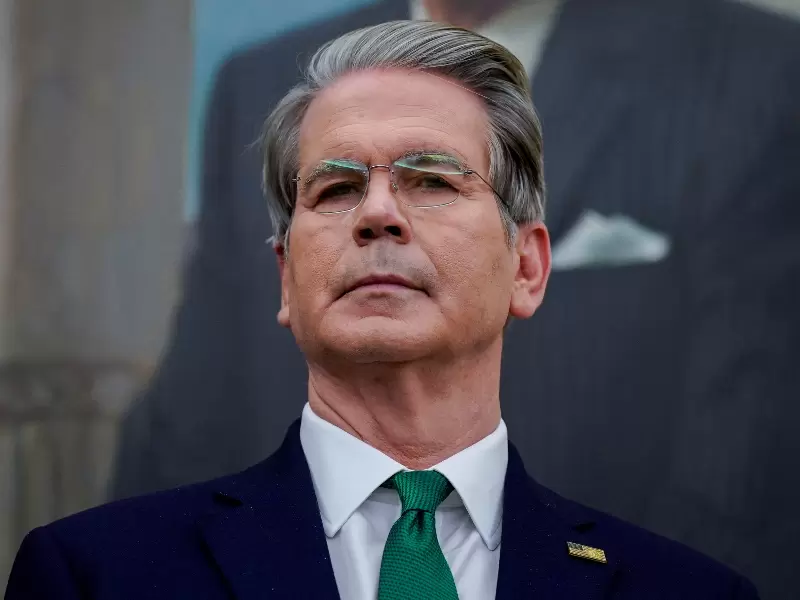 U.S. Treasury Secretary Scott Bessent listens prior to U.S. President Donald Trump (not pictured) signing an executive order on AI in the Oval Office at the White House in Washington, D.C., U.S. December 11, 2025. / REUTERS/Al Drago
U.S. Treasury Secretary Scott Bessent said Australia and several other countries would join a meeting of finance ministers from the Group of Seven advanced economies that he is hosting in Washington on Jan. 12 to discuss critical minerals.
Bessent said he had been pressing for a separate meeting on the issue since last summer's summit of G7 leaders, and finance ministers had already held a virtual meeting in December.
India was also invited to attend the meeting, Bessent told Reuters in an interview after touring the Minneapolis-area engineering lab of RV and boat maker Winnebago Industries. He said he was unsure if it had accepted the invitation.
ALSO READ: Bessent sees more private contributions flowing into 'Trump accounts' for children
It was not immediately clear which other countries had been invited.
The G7 includes the United States, Britain, Japan, France, Germany, Italy and Canada, as well as the European Union, most of whom are heavily dependent on rare earths supplies from China. The group last June agreed on an action plan to secure their supply chains and boost their economies.
Australia signed an agreement with the U.S. in October aimed at countering China's dominance in critical minerals. It included an $8.5 billion project pipeline and leverages Australia's proposed strategic reserve, which will supply metals like rare earths and lithium that are vulnerable to disruption.
Canberra has said it has subsequently received interest from Europe, Japan, South Korea and Singapore.
China dominates the critical minerals supply chain, refining between 47% and 87% of copper, lithium, cobalt, graphite and rare earths, according to the International Energy Agency. These minerals are used in defense technologies, semiconductors, renewable energy components, batteries and refining processes.
Western countries have sought to reduce their dependence on China's critical minerals in recent years, given moves by China to impose strict export controls on rare earths.
Jan 12's meeting comes days after reports that China had begun restricting exports to Japanese companies of rare earths and powerful magnets containing them, as well as banning exports of dual-use items to the Japanese military.
Bessent said China was still living up to its commitments to purchase U.S. soybeans and ship critical minerals to U.S. firms.
Read more stories on NewIndiaAbroad
Related









ADVERTISEMENT
ADVERTISEMENT
E Paper
Video

Comments
Start the conversation
Become a member of New India Abroad to start commenting.
Sign Up Now
Already have an account? Login