ADVERTISEMENT
ADVERTISEMENT



Ambassador Kwatra says India-U.S. ties remain strong
Kwatra pointed to India’s economic transformation since 2014 as a major driver of expanding engagement with Washington.
-
 IANS
IANS - Tue, 19, May 2026
- 01:07 EDT
- 20
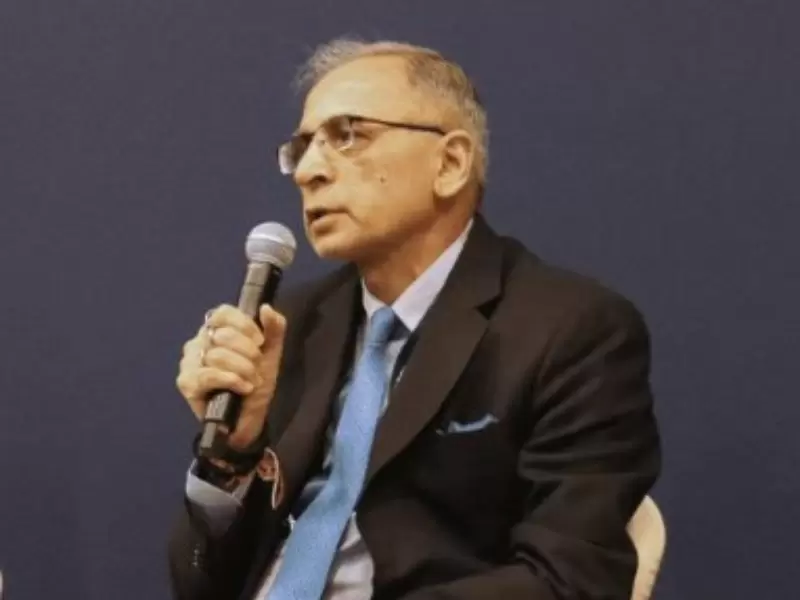 Amb. Vinay Mohan Kwatra / IANS
India’s Ambassador to the United States Vinay Mohan Kwatra pushed back against concerns over strains in the U.S.-India relationship, asserting that ties between the two countries continue to enjoy strong bipartisan support and are expanding across trade, technology, defense and critical minerals.
Addressing the Capitol Hill Summit 2026 organized by the U.S.-India Friendship Council, Kwatra said many perceptions about tensions in the relationship were “not informed by the actual facts on the ground.”
“We are natural partners not because of geography or compulsions of geography, but because of our shared values,” Kwatra said, recalling Prime Minister Narendra Modi’s address to the U.S. Congress.
The ambassador said every U.S. administration over the past two decades had built upon the achievements of its predecessor in strengthening ties with India.
“If you look at the thread of the relationship over the previous decades and through the successive administrations, you will find that each administration has tried, sought and successfully built on the achievements of the previous administration,” he said.
ALSO READ: U.S.-India ties at ‘inflection point,’ American lawmakers say
Kwatra pointed to India’s economic transformation since 2014 as a major driver of expanding engagement with Washington.
“One of the drivers, I must point out, is a set of transformational journeys that are currently taking place in India,” he said.
Highlighting economic ties, Kwatra noted that India and the U.S. had set a target of increasing bilateral trade from about $220 billion annually to $500 billion by 2030.
He described defense and security cooperation as one of the fastest-growing pillars of the partnership, citing operational coordination and renewed long-term defense frameworks between the two countries.
“Today, India is the largest user of a couple of American platforms outside the U.S.,” he said.
Kwatra also highlighted progress in semiconductors, critical minerals and civil nuclear cooperation, saying India’s recently passed legislation in the civil nuclear sector had “unlocked” opportunities for private-sector collaboration.
On technology cooperation, he pointed to major American investments in India’s semiconductor and electronics sectors, including projects involving Micron and other U.S. companies.
The ambassador also strongly defended India’s intellectual property protections during a brief question-and-answer session following his remarks.
“There are about 2,000 global capability centers in India, roughly half of them are actually of the U.S. companies,” Kwatra said in response to a question on patent and trademark protection. “That gives you a sense of patent, trademark protection and the IP protection which is there in India.”
Responding to another audience question about educational cooperation, Kwatra said India was moving toward creating institutions of “global excellence” capable of attracting international students and scholars.
“India is definitely on a path to build institutions of global excellence when it comes to the field of education,” he said.
Kwatra described the Indian diaspora in the United States as a “foundational anchor” of the bilateral partnership and credited Indian Americans with helping deepen political, economic and cultural ties between the two democracies.
The summit brought together lawmakers, diplomats, policy experts and business leaders at a time when trade disputes, visa restrictions and geopolitical shifts have prompted renewed debate over the future direction of the U.S.-India relationship.
Discover more at New India Abroad.
Related

ADVERTISEMENT

ADVERTISEMENT
E Paper
Video

Comments
Start the conversation
Become a member of New India Abroad to start commenting.
Sign Up Now
Already have an account? Login