ADVERTISEMENT
ADVERTISEMENT



Beyond the Mughal Myth: Why India’s Identity is Not a "Gift" of the 16th Century
The claim that the Mughals "gave" India a language of scholarship is a profound erasure of a far older, more sophisticated reality.
-
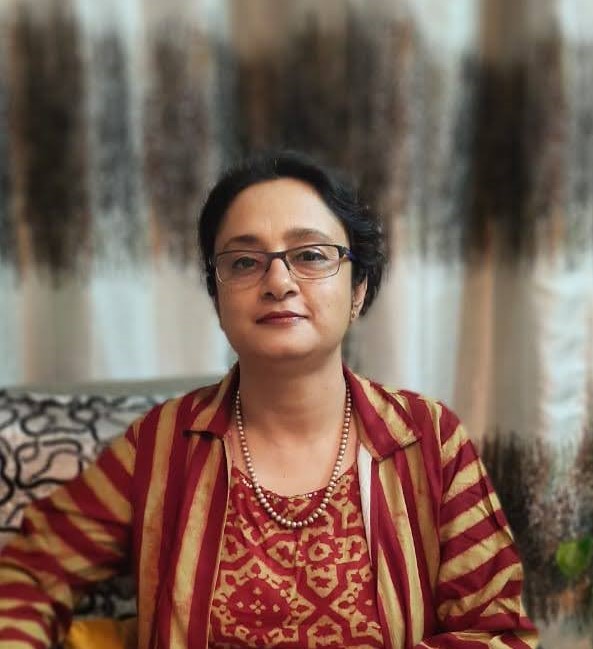 Dr. Vinay Nalwa
 - Tue, 28, Apr 2026
- 00:43 EDT
- 1469
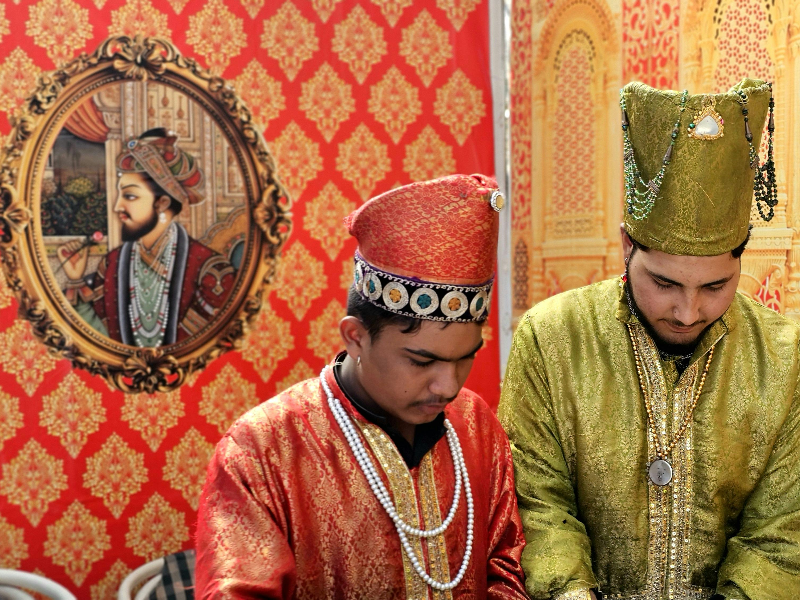 Representative image / Pexels
The recent Economist essay, "What have the Mughals ever done for us?", attempts a clever bit of historical gaslighting. Borrowing a satirical trope from Monty Python, the author suggests that India’s food, language, and very self-image are "gifts" from its medieval invaders. It is a narrative that treats one of the world's oldest living civilizations as a vacuum, a blank slate that was empty until the first Mughal set foot on its soil in 1526.
But to a civilizational researcher, this is akin to looking at a thousand-year-old banyan tree and crediting its life to the vines that climbed its trunk last summer. When Prime Minister Narendra Modi speaks of "1,200 years of subjugation," he is referencing a factual, calculated ledger of de-institutionalization. As the historian Will Durant noted in The Story of civilization vol.1: Our oriental heritage(page 459)the Islamic conquest of India was "probably the bloodiest story in history." The Mughal era was not a starting point, it was a middle chapter in the dismantling of a sophisticated society that had been the world's intellectual and economic engine for millennia.
The claim that the Mughals "gave" India a language of scholarship is a profound erasure of a far older, more sophisticated reality. It ignores the smoke that rose from Nālandā University (founded 427 CE) centuries before the first Sultanate was imagined.
Reflecting on the 23-hectare remnant of the original campus, modern accounts of Nālandā University underscore its legacy as the "university that changed the world." Nalanda was sustained by the Gupta Empire. These devout Hindu monarchs championed an intellectual ecosystem that sent professors to China, Korea, Japan, and Indonesia long before the first Mughal brick was laid.
This was the seat of Āryabhaṭa, the father of Indian mathematics, who likely headed the university in the 6th Century CE. It was here that the world was given the number zero, the literal foundation of modern computation. Aryabhata’s pioneering work in extracting square and cubic roots, his mastery of spherical geometry, and his discovery that the moon’s radiance is reflected sunlight established a scientific peak that was not "amalgamated," but extinguished.
When the 12th-century invader Bakhtiar Khilji set ablaze Nalanda’s libraries, the fire reportedly burned for three months, consuming nine million manuscripts on medicine, logic, and astronomy. To praise a later imperial court for its "culture" while ignoring the ashes of Nālandā is to celebrate a candle while forgetting the sun that was put out.
The Economist further romanticizes "syncretism" and Sufism as the glue of India. However, the historical record reveals a reality of systemic iconoclasm – An analysis of the writings of Amir Khusro, often projected today as a leading symbol of India’s peaceful Sufi tradition, is revealing. When the Somnath Temple was again desecrated in 1299 during Alauddin Khilji’s campaign, Khusro wrote: “So the temple of Somnath was made to bow towards the Holy Mecca... thus, one may say that the building first offered its prayers and then took a bath." He gleefully recorded the destruction, describing the temple as being "made to bow towards Mecca." Furthermore, Sir Jadunath Sarkar in The History of Bengal (Vol. II) observed that the "warrior saints" of this era were the "Knights Templars of Islam," entering territories as "squatters" only to summon regular armies to punish indigenous kings. This was not a "blending", it was a long-term siege of a civilization that was forced to translate its eternal identity into a foreign vocabulary just to survive a hostile bureaucracy.
Yet, despite this millennium of disruption, the essential spirit of the subcontinent was never truly uprooted, it merely retreated into its sovereign spiritual fortresses. While global media points to the Taj Mahal as India’s symbol, they miss the living heartbeat of the Meenakshi Amman Temple in Madurai. As we speak, the city is celebrating the Meenakshi Tirukalyanam, a celestial wedding festival that has been the center of life for nearly 2,000 years.
Long before the Mughal "gift," the Hindu Mandir was the world's most sophisticated "micro-state." Temples like the Brihadeeswara and the centres of Vijayanagar were "economic powerhouses." They were trade regulators, central banks, and social safety nets. Crucially, they were handed to the community to manage; the State was afforded no role.
This model of "Temple Sovereignty" sustained India’s massive share of global GDP nearly 25% to 30%, according to the late economist Angus Maddison in The World Economy: A Millennial Perspective. The "Mughal wealth" the West admires was largely the result of stripping these autonomous institutions of their revenue and centralizing it into an imperial treasury, a process later finalized by British policy, which systematically dismantled the temple land endowments that funded education and welfare.
The ultimate refutation of the "amalgamation" theory is written in the blood-soaked maps of 1947. If this era truly "permeated the blood and soil" as a unifying force, why did it culminate in the violent Partition of the subcontinental body? A culture that truly blends should act as a glue; instead, the 1,200-year disruption created civilizational fault lines that eventually saw our cradle, the Indus, and our lungs the Bengal delta, severed from the motherland.
We lost millions of lives and the territorial integrity of a 5,000-year-old entity. True Indian identity is not found in the monuments the invaders left behind, but in the resilience of the people who outlasted them. We see it today in the revival of Nālandā and the reconstruction of Sri Ram Mandir, Somnath. We are not a product of the last 500 years, we are the civilization that lived through them.
(The writer is an author and columnist)
(The views and opinions expressed in this article are those of the author and do not necessarily reflect the official policy or position of New India Abroad.)
Discover more at New India Abroad.
Leave A Comment
Related




.png)



ADVERTISEMENT

ADVERTISEMENT
E Paper
Video

Comments
Start the conversation
Become a member of New India Abroad to start commenting.
Sign Up Now
Already have an account? Login