ADVERTISEMENT
ADVERTISEMENT



Ancient wisdom, modern science: Dr. Rosa Vásquez Espinoza on saving the Amazon rainforest
Scientific research is also uncovering remarkable medicinal properties in stingless bee honey, long valued by Indigenous communities throughout the Amazon.
-
 Ritu Marwah
 - Mon, 03, Aug 2026
- 15:56 EDT
- 18
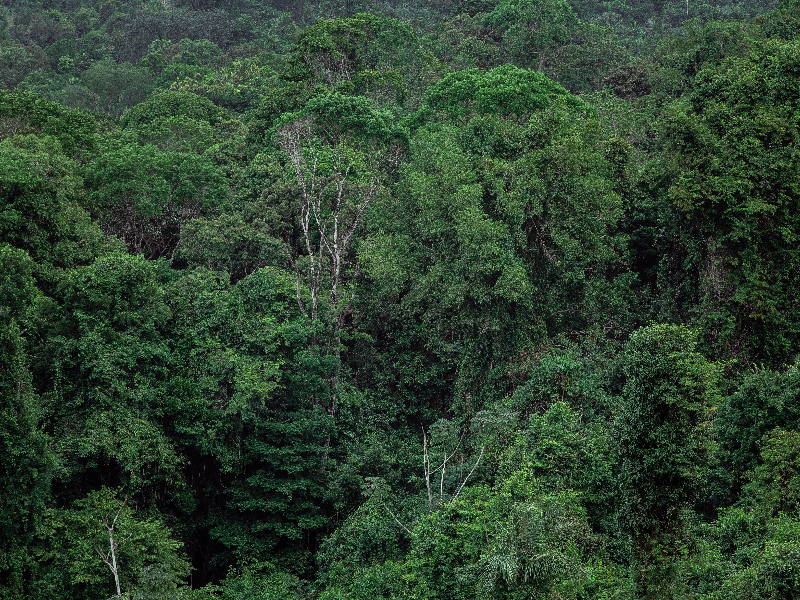 Representative Image / Pexels
For centuries, Indigenous communities have viewed the Amazon rainforest not merely as a collection of trees and wildlife, but as a living, interconnected system where every species, from towering trees to tiny insects, plays an essential role. Today, modern science is beginning to validate what these communities have always known.
At a recent American Community Media briefing, Dr. Rosa Vásquez Espinoza, a Peruvian chemical biologist of Indigenous Andean-Amazonian heritage, described how ancient Indigenous knowledge and cutting-edge scientific research are converging to reshape conservation, advance biomedical discovery, and protect one of the world’s most vital ecosystems.
“The solutions to many of today’s environmental and health challenges already exist in the knowledge that Indigenous peoples have safeguarded for generations,” she said.
Dr. Espinoza’s work bridges ancestral wisdom with modern chemistry and biology, demonstrating that conservation is not simply about preserving forests but also about protecting the intricate relationships that sustain life within them.
Giving Legal Rights to the Smallest Creatures
While global conservation efforts have traditionally focused on protecting vast forests, rivers, and endangered mammals, Dr. Espinoza has shifted attention to one of the rainforest’s smallest but most indispensable inhabitants: the stingless bee.
Her groundbreaking research helped secure Peru’s first legal protections for native stingless bees and led to the world’s first legal recognition of an insect’s rights. The landmark municipal legislation grants legal protection to 175 species of native stingless bees, acknowledging their indispensable role in maintaining the Amazon ecosystem.
These tiny pollinators sustain nearly 80 percent of the Amazon’s flowering plants. Without them, countless plant species, and the animals and people who depend upon them, would struggle to survive.
“Protecting biodiversity means protecting every link in the ecological chain,” Dr. Espinoza explained. “Even the smallest species can determine the health of an entire ecosystem.”
The Healing Power of Stingless Bee Honey
Scientific research is also uncovering remarkable medicinal properties in stingless bee honey, long valued by Indigenous communities throughout the Amazon.
Unlike conventional honey produced by honeybees, stingless bee honey contains higher moisture levels and is naturally rich in antioxidants and bioactive compounds. Indigenous peoples have traditionally used it to treat infections, soothe sore throats, promote wound healing, and strengthen overall health.
Modern laboratory studies are increasingly supporting these traditional practices, suggesting that the honey possesses antimicrobial, anti-inflammatory, and antioxidant properties that may hold promise for future biomedical applications.
Although stingless bees produce much smaller quantities of honey than commercial honeybees, the product is highly prized for both its flavor and therapeutic potential.
A Connection to India
The story of stingless bees is not confined to the Amazon.
India is home to several native species of stingless bees, particularly in Kerala, Tamil Nadu, West Bengal, the Northeastern states such as Nagaland and Tripura, and many coastal regions.
Known locally as cheruthen in Kerala, stingless bee honey has been used in traditional medicine for generations. It is thinner in consistency, slightly acidic, exceptionally rich in antioxidants, and commands a premium price, often selling between ₹2,000 and ₹3,500 per kilogram.
Researchers in India are also exploring its medicinal value, creating an intriguing parallel with Indigenous practices in South America. Although separated by continents, both regions have long recognized the extraordinary properties of these tiny pollinators.
Indigenous Knowledge Meets Modern Science
For Dr. Espinoza, these discoveries reinforce an important lesson: Indigenous knowledge should not be viewed as folklore but as a sophisticated body of scientific observation accumulated over centuries.
Her research demonstrates how traditional ecological knowledge can guide modern discoveries in medicine, conservation, and climate resilience.
As the Amazon faces accelerating threats from deforestation, mining, and climate change, protecting Indigenous communities and respecting their knowledge has become increasingly urgent.
“The rainforest is not simply a place,” Dr. Espinoza said. “It is a living library.”
Every species lost, she noted, represents not only an ecological tragedy but also the disappearance of unique biological knowledge that may never be recovered.
By bringing together Indigenous wisdom and modern science, researchers like Dr. Rosa Vásquez Espinoza are showing that some of humanity’s most innovative solutions may come from its oldest traditions.
In protecting the smallest creatures of the Amazon, they are helping safeguard the future of one of Earth’s greatest natural treasures, and perhaps discovering new pathways to human health along the way.
Discover more at New India Abroad.
Leave A Comment
Related









ADVERTISEMENT

ADVERTISEMENT
E Paper
Video

Comments
Start the conversation
Become a member of New India Abroad to start commenting.
Sign Up Now
Already have an account? Login