ADVERTISEMENT
ADVERTISEMENT



House Republicans block bid to rein in Trump Iran war powers
The White House says Trump's actions are legal and within his rights as commander-in-chief to protect the U.S. by ordering limited military operations.
-
 Reuters
 - Thu, 09, Apr 2026
- 15:47 EDT
- 76
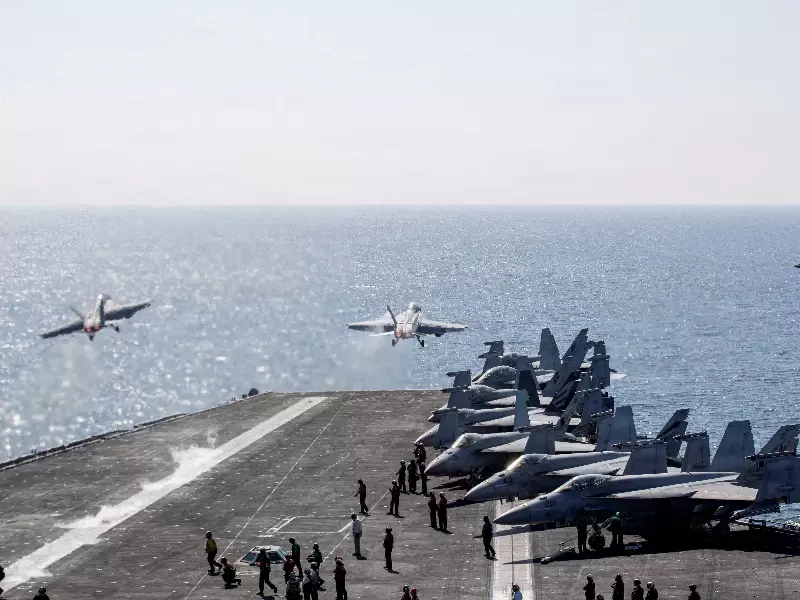 FILE PHOTO: Two F/A-18 Super Hornets launch from the flight deck of the U.S. Navy Nimitz-class aircraft carrier USS Abraham Lincoln in support of the Operation Epic Fury attack on Iran from an undisclosed location March 3, 2026. / U.S. Navy/Handout via REUTERS
U.S. House of Representatives Republicans on April 9 blocked a Democratic effort to end U.S. attacks on Iran, as Donald Trump's party continued to prevent efforts to rein in the Republican president's war powers.
Representative Chris Smith, a New Jersey Republican, presided over an abbreviated "pro forma" House session, ending it before a group of Democrats could seek to pass the resolution via unanimous consent.
Also Read: Rep. Thanedar urges cabinet to force Trump’s removal
Democrats in the Senate and House of Representatives have tried and repeatedly failed in recent months to pass war powers resolutions to force Trump to obtain lawmakers' authorization before launching military operations, in both Venezuela and Iran.
Trump's threat early this week that "a whole civilization will die" intensified concern from Democrats, dozens of whom called for Trump's removal from office. The 1949 Geneva Conventions on humanitarian conduct in war prohibit attacks on sites considered essential for civilians.
"Threatening genocide is not a negotiating tactic," Representative Sara Jacobs, a California Democrat, told a news conference outside the Capitol after the pro forma session, held because Congress is out of Washington for the two-week Easter recess.
Trump announced that he had agreed to a ceasefire in the U.S.-Israel war on Iran on Tuesday, less than two hours before his deadline for Tehran to reopen the blockaded Strait of Hormuz or face devastating attacks on its civilian infrastructure.
The White House says Trump's actions are legal and within his rights as commander-in-chief to protect the U.S. by ordering limited military operations.
Iran says its nuclear program is peaceful. The Trump administration has sought to portray the war as a decisive victory, although the top U.S. general said U.S. troops stood ready to resume fighting.
Trump's fellow Republicans hold slim majorities in both the Senate and House, and have almost unanimously backed all of his policies.
Although the U.S. Constitution says that Congress, not the president, can declare war, that restriction does not apply for short-term operations or if the country faces an immediate threat.
Discover more at New India Abroad
Leave A Comment
Related









ADVERTISEMENT

ADVERTISEMENT
E Paper
Video

Comments
Start the conversation
Become a member of New India Abroad to start commenting.
Sign Up Now
Already have an account? Login