ADVERTISEMENT
ADVERTISEMENT



Thirty Years Of Giving Back: A Personal Journey
Thirty years ago, I made a bet — not on a company or a market, but on the idea that a community of successful people could be organized around giving rather than getting.
-
1771697217.JPG) MR Rangaswami
MR Rangaswami - Sat, 04, Jul 2026
- 13:21 EDT
- 56
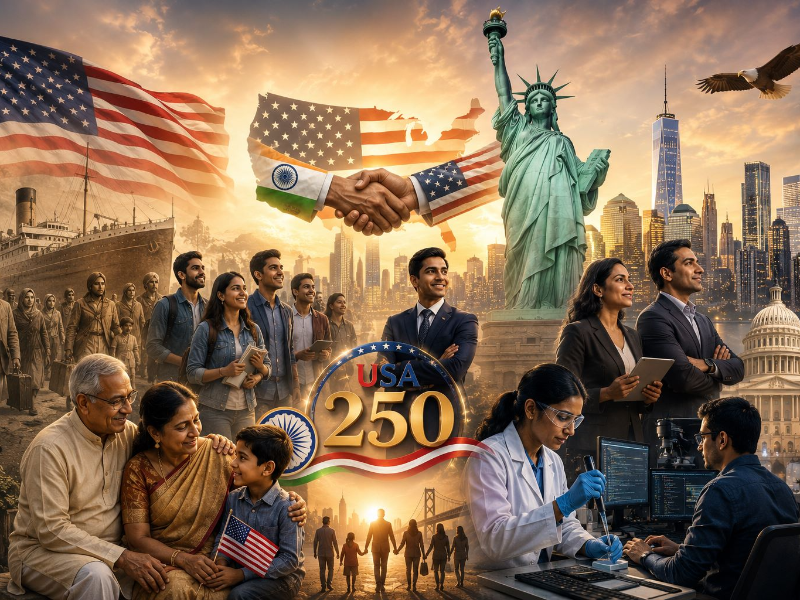
 Representative Image / Generated using AI
I spent fifteen years in the tech industry. Everyone thinks that Silicon Valley is the road to riches and fame, but the road is also strewn with failures and heartbreak.
I had a few of my own along the way, but was fortunate enough to be part of a successful IPO. When that chapter closed, I wanted to do something different. I became one of the early angel investors — early enough that it earned me a front-page profile in the Wall Street Journal and a spot on the Forbes Midas list of top investors. By any measure, it was a successful run.
But I kept coming back to a simple realization: I was a people person. The deals and the returns weren’t what energized me — the relationships did. So I stepped out again, this time to ask a different question: what could that instinct for connecting people actually build?
Thirty years ago, I made a bet — not on a company or a market, but on the idea that a community of successful people could be organized around giving rather than getting.
Also Read: SPECIAL EDITION on America 250
That instinct took shape in 1997, when I organized Enterprise - a retreat for the top hundred CEOs in software. I put in several months of my own time building it, and we structured it around a simple idea: all the surplus money would go to nonprofits. We focused on small nonprofit organizations with founders still at the helm — the kind where a meaningful gift could genuinely change their trajectory.
Over fifteen years, the retreat directly gave away more than $2.5 million. The real multiplier was the CEOs themselves, who went on to contribute their own funds, direct their companies’ Corporate Social Responsibility (CSR) resources, and become mentors and board members to those organizations. They became a community of givers, not just check writers.
The second community was the Corporate Eco Forum (CEF), which I founded in 2008 — an invitation-only network of Chief Sustainability Officers from 85 of the world’s largest companies, with combined revenues of over $6 trillion. CEF wasn’t built around panels and presentations; it was built around candid, peer-to-peer exchange.
CSOs could share what was actually working, what wasn’t, and where they were struggling, without the constraints of a public forum. Sustainability leadership can be a lonely role. CEF was designed to change that.
Trust, it turns out, is the real infrastructure. CEF works because members know the room is safe — that what is shared stays amongst peers. When that trust is present, people bring their real problems. And real problems, worked on together, produce real progress.
Fourteen years ago, I founded a third community - Indiaspora. The goal was to bring together the global Indian diaspora around the principle of Seva — selfless service to be a “Force for Good”. That ethos shone during Covid, when Indiaspora and its partners raised $15 million for relief efforts in India and $1 million for food banks here in the United States.
The community also got the USPS to issue a Diwali postage stamp — a small but resonant symbol of belonging. Today, Indiaspora spans Canada, the UK, Singapore, the UAE, Australia, and India, connecting 35 million members of the global diaspora in a shared commitment to doing good.
None of this was built alone. Each of these efforts succeeded because others — business leaders, philanthropists, community members across continents — brought their own energy, resources, and generosity. My role was simply to create the conditions for that to happen.
As we mark America’s 250th birthday this July 4th, I find myself reflecting on the impact when communities become a force for good! The journey continues.
The writer is Founder of Indiaspora.
(The views and opinions expressed in this article are those of the author and do not necessarily reflect the official policy or position of New India Abroad.)
Discover more at New India Abroad
Leave A Comment
Related








ADVERTISEMENT

ADVERTISEMENT
E Paper
Video

Comments
Start the conversation
Become a member of New India Abroad to start commenting.
Sign Up Now
Already have an account? Login