ADVERTISEMENT
ADVERTISEMENT


What America Gave Me, Quietly
Space to learn, to make mistakes, and to begin again without being permanently defined by those mistakes.
-
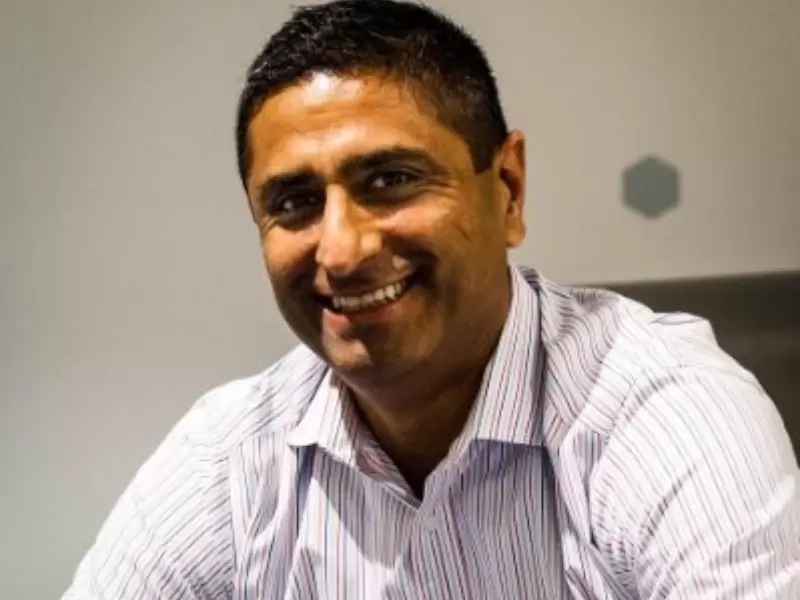
1783171723.jpg) Rakesh Malhotra
Rakesh Malhotra - Sat, 04, Jul 2026
- 16:29 EDT
- 393
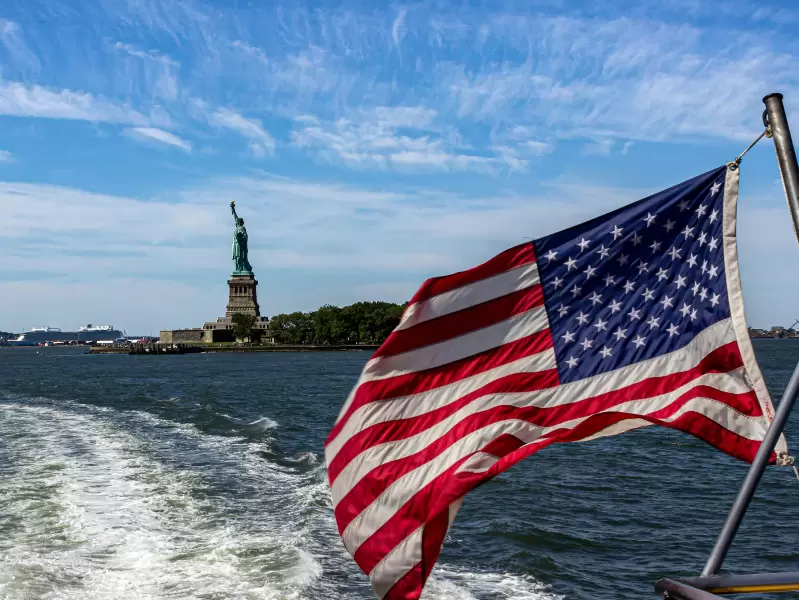 Representative image / canva
The first thing I remember about my first morning at work in America is the smell of burnt coffee.
It was still dark outside. I stood in a small office kitchen in Chicago, turning a plastic lid in my hands, trying to figure out how it fit on the cup. Someone had brewed coffee hours before, and it had been sitting there long enough to pick up that bitter, overcooked smell I would soon connect with rushed mornings and long days.
A colleague walked in and said something quickly, too quickly for me to catch. I nodded as if I understood, but I didn’t. Not fully. Not yet.
I had arrived from Delhi only months earlier with my wife and our young son. At twenty-nine, I carried a degree, some professional experience, and a quiet belief that hard work would eventually create opportunity. What I did not carry was confidence.
Also Read: SPECIAL EDITION on America 250
I knew English. I studied it for years. But speaking English in Delhi classrooms and using it in an American workplace were completely different experiences. In those first months, I practiced simple sentences in my head before saying them out loud. Conference calls made me nervous. Even ordering lunch sometimes felt like taking a test.
What America gave me first was not success.
It gave me space.
Space to learn, to make mistakes, and to begin again without being permanently defined by those mistakes.
I enrolled in a business program that would have been a huge financial burden for my family if I had done it in India. Thanks to student loans, part-time work, and a system that made education possible even for newcomers, I was able to finish my degree.
I still remember long evenings in the university library, surrounded by students from all over: China, Nigeria, Poland, Iowa. We came from different places, spoke with different accents, and had different dreams. Still, we all believe that education could change the course of our lives.
The libraries themselves felt like a quiet miracle. Free. Open. Warm during Chicago winters.
On weekends, I often bring my son with me. While I studied case analyses and financial statements, he sat cross-legged in the children's section, sounding out words from picture books. Looking back, those afternoons taught me something important about America. Not perfection. Not privilege. Access.
Like many immigrants, I first looked for stability above all else: a steady paycheck, health insurance, and a predictable future.
For several years, I worked in corporate America and learned the rules of business culture very different from the one I had left behind. The opportunities were real, but so were the pressures.
Sales targets came every quarter, each time with higher expectations. Meetings turned into talks about numbers, forecasts, and performance metrics. Success was measured all the time, and job security often felt uncertain. Missing one target could change the mood of a conversation. Missing two could change the direction of a career.
Then came the financial crisis of 2007–08.
The headlines were impossible to ignore. Markets collapsed. Banks failed. Retirement accounts shrank. Good people with impressive resumes suddenly found themselves unemployed.
In office hallways, conversations became quieter.
People stopped talking about promotions and started talking about survival.
Every announcement from leadership seemed to trigger a new round of speculation.
Who would be next?
Which department would be cut?
Would there be layoffs?
For the first time, I realized that the security I had been chasing might be more fragile than I had imagined.
I remember driving home one evening after another difficult quarter-end review. The pressure to hit sales goals had become relentless, and the uncertainty surrounding the economy seemed to amplify everything. I sat in my car outside my house longer than usual, staring at the steering wheel.
That evening, I asked myself a question that would eventually change my life:
If stability is never guaranteed, why not take a risk on something I truly believe in?
The answer did not arrive immediately.
It took months of reflection, conversations with my wife, spreadsheets, sleepless nights, and more than a little fear.
Entrepreneurship was not the obvious choice.
For immigrants, risk often feels different. We don't have generations of family safety nets. We carry responsibilities that go beyond ourselves. Failure is rarely something we face alone.
Yet the idea would not leave me.
Eventually, I stepped away from the comfort of a corporate path and started building something of my own.
The early years were difficult.
There were months when customers were scarce and uncertainty abundant. There were moments when I questioned my decision and wondered whether the predictable paycheck I had left behind had been the wiser choice.
But there was also something else.
Freedom.
The freedom to build.
The freedom to create.
The freedom to bet on myself.
That journey taught me something that no classroom ever could: resilience is not the absence of fear. It is the willingness to move forward despite it.
Over time, entrepreneurship opened doors I never expected. It led me to community leadership, nonprofit work, mentoring, and eventually teaching. When I stood in front of students, I often saw myself in them: hopeful, uncertain, and eager to prove they belonged.
At home, our life unfolded through smaller moments.
Our first Diwali in America was modest. A handful of diyas rested on a windowsill. The sweets were made from memory because the ingredients we needed were difficult to find.
Each year, however, the celebration grew.
Neighbors stopped by.
Questions were asked.
Stories were shared.
Children played together.
In return, we joined Christmas dinners, Fourth of July gatherings, and backyard barbecues.
Without realizing it, we were building a life that belonged to more than one tradition.
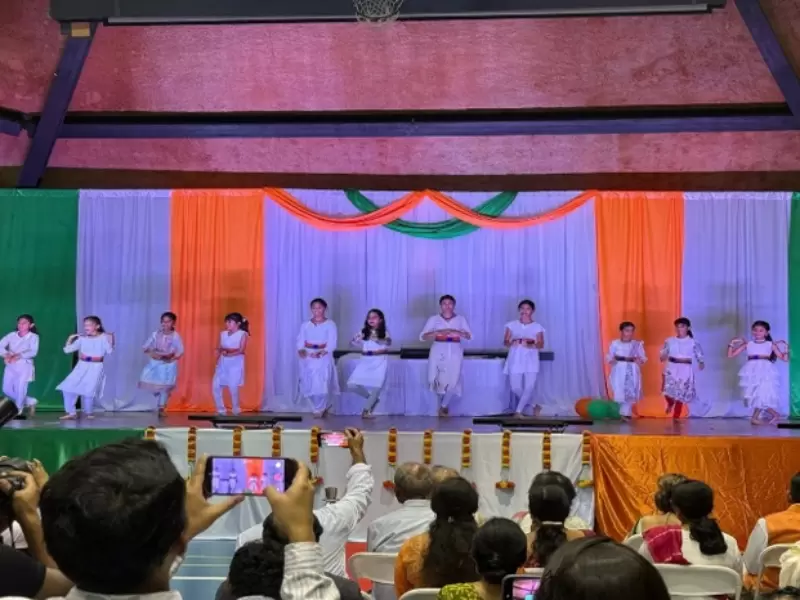
I remember attending one of my son's school cultural events. He stood on stage explaining Diwali to classmates whose families came from dozens of different backgrounds. Watching him move effortlessly between cultures, I felt something I had never experienced during my own childhood.
Possibility.
Not because he was choosing between identities, but because he didn't feel compelled to choose at all.
America also gave me something more subtle and perhaps more valuable than opportunity.
It gave me the ability to question.
Over the years, I have disagreed with policies, worried about divisions, and shared concerns about the country's future. Like many Americans, I have felt frustration and disappointment.
Yet criticism and gratitude are not opposites.
They can coexist.
Even with disagreements, I still have a deep appreciation for a system that, despite its flaws, let someone like me—who arrived with an accent, uncertainty, and limited resources—build a meaningful life.
Today, Indian Americans are woven into nearly every aspect of American society. We see it in hospitals, universities, businesses, public service, and neighborhoods across the country.
The remarkable thing is that much of it no longer feels remarkable.
It feels ordinary.
And perhaps that is the greatest sign of belonging.
If I think about what shaped my journey, it was not one set of values replacing another.
It was two sets meeting somewhere in the middle.
From India, I carried respect for education, commitment to family, and a willingness to work patiently toward long-term goals.
From America, I learned that starting over is not just possible; it is expected. Where you begin does not have to decide where you end up.
Now, at fifty, I find myself thinking less about what I have received and more about what comes next.
My son is entering a world that will ask different questions of him than it asked of me. I do not expect his path to resemble mine. In fact, I hope it doesn't.
What I hope instead is that his generation inherits the best of what this country can offer: openness to new voices, confidence in possibility, and the belief that effort still matters.
And I hope they preserve the gifts they bring with them as well—their histories, languages, traditions, and ways of seeing the world.
America has given me a life I could not have fully imagined on that first morning with the burnt coffee.
Not a perfect life.
Not an easy life.
But it is a life with space for growth, for change, for differences, and for a sense of belonging that does not mean forgetting where you came from.
For an immigrant, that is no small gift.
The writer is a Chicago-based entrepreneur, and Founder and President of the Global Indian Diaspora Foundation
(The views and opinions expressed in this article are those of the author and do not necessarily reflect the official policy or position of New India Abroad.)
Discover more at New India Abroad
Leave A Comment
Related




ADVERTISEMENT

ADVERTISEMENT
E Paper
Video

Comments
Start the conversation
Become a member of New India Abroad to start commenting.
Sign Up Now
Already have an account? Login