ADVERTISEMENT
ADVERTISEMENT


ISRO packs space firsts onto one rocket
PSLV-C62 rocket lifts off with 16 satellites, including experimental Indian and international payloads.
-
 Pranavi Sharma
 - Mon, 12, Jan 2026
- 03:17 EST
- 97
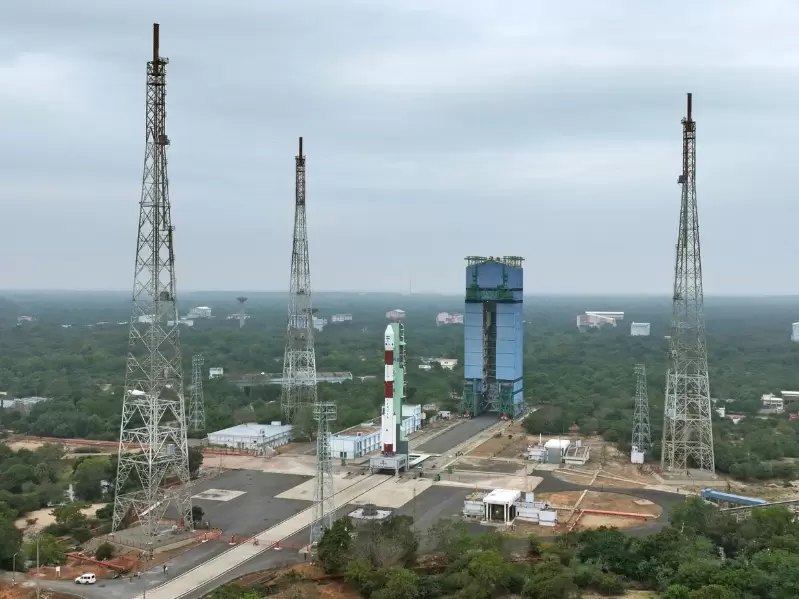 PSLV-C62 - the 64th flight of PSLV. / ISRO
The world watched on Jan. 12 as the Indian Space Research Organisation (ISRO) launched its Polar Satellite Launch Vehicle (PSLV), opening India’s space calendar for 2026 with a mission focused on experiments and technology tests.
The PSLV-C62 rocket lifted off from the Satish Dhawan Space Centre in Sriharikota at 10:17 a.m. IST on Jan. 12, 2026 marking a crucial flight for the launch vehicle after its failure in 2025. The mission carried 16 satellites, marking the 62nd flight of ISRO’s PSLV rocket.
One of the main payloads is MOI-1, described as India’s first satellite designed to process images using artificial intelligence while in orbit. Built by Hyderabad-based startups TakeMe2Space and Eon Space Labs, the satellite is meant to analyze data about 500 kilometers above Earth instead of sending raw images back for processing.
ALSO READ: ‘Proud moment for India’: Union Ministers on ISRO
The companies say MOI-1 will support a commercial model similar to a cybercafe in space. Users would pay only for satellite usage time. “Developers don't pay for the data captured by the satellite, they only pay for satellite time,” the company said, at a cost of $2 per minute.
MOI-1 also carries Mira, a small optical telescope weighing 502 grams. Made from a single piece of fused silica glass, the telescope is designed to avoid alignment problems caused by launch vibrations. A developer said Mira is a made-from-scratch Indian product, though some core optical elements are still imported.
Another payload, AayulSAT, will test India’s first on-orbit refueling system. Developed by Chennai-based OrbitAID Aerospace, it aims to demonstrate the transfer of fuel, power and data between spacecraft.
The mission also includes Munal, Nepal’s first satellite built by high school students, several Brazilian satellites, and a Spanish capsule that will test atmospheric re-entry over the South Pacific Ocean.
Read more stories on NewIndiaAbroad
Leave A Comment
Related







ADVERTISEMENT

ADVERTISEMENT
E Paper
Video

Comments
Start the conversation
Become a member of New India Abroad to start commenting.
Sign Up Now
Already have an account? Login