ADVERTISEMENT
ADVERTISEMENT



Election law experts warned of “wild cards” weeks before Iran crisis erupted
They emphasized that, despite escalating political messaging around election integrity, the mechanics of U.S. elections remain firmly in state hands.
-
 Ritu Marwah
 - Mon, 02, Mar 2026
- 14:36 EST
- 100
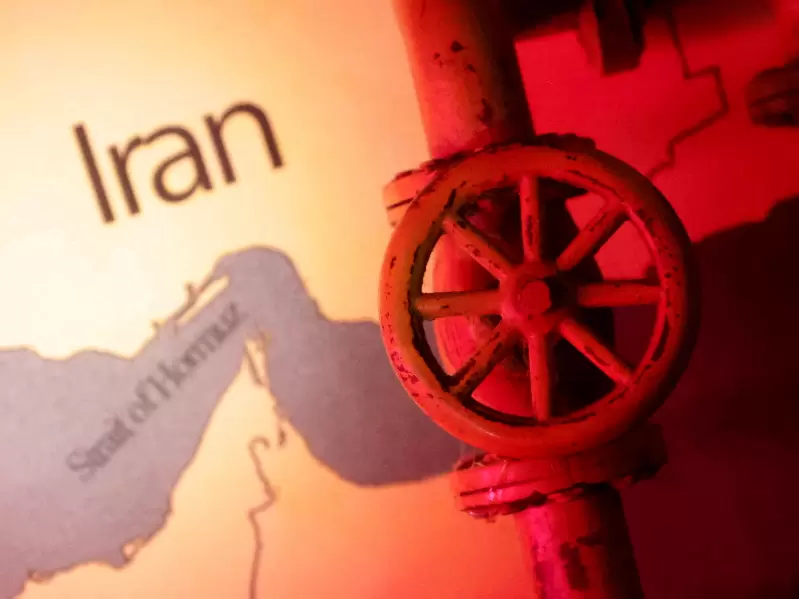 FILE PHOTO: A map showing the Strait of Hormuz and Iran is seen behind a 3D printed oil pipeline in this illustration taken June 22, 2025. / REUTERS/Dado Ruvic/Illustration/File Photo
Weeks before Iranian missiles began streaking across Gulf skies and U.S. forces came under direct attack, election law experts gathered at an American Community Media briefing to deliver what they described as a sober assessment of the 2026 midterm landscape: loud rhetoric, limited federal power over elections, and the possibility that an unforeseen international crisis could upend everything.
At the briefing, associate editor for ACOM, Pilar Marrero moderated speakers Justin Levitt, election law expert at Loyola Law School, Danielle Lang, voting rights attorney, and John C. Yang, civil rights leader. They emphasized that, despite escalating political messaging around election integrity, the mechanics of U.S. elections remain firmly in state hands.
“The Constitution gives states primary authority over election administration,” Levitt said at the time, describing recent federal interventions as more rhetorical than operational. Courts, he noted, had repeatedly blocked executive efforts to assert control over voter registration systems or ballot procedures.
The discussion largely centered on domestic developments: litigation over voter rolls, proposals in Congress affecting identification requirements, and concerns about misinformation targeting language-minority communities.
Yet even then, speakers acknowledged that the political environment could shift quickly.
A Warning About the Unpredictable
During the question-and-answer session, panelists were asked what could truly disrupt the midterms. Levitt cautioned that while redistricting and voting legislation shape the structural environment, “external shocks”, economic collapse, national security crises, or foreign interference, have historically proven more destabilizing.
At the time of the briefing, tensions between the United States and Iran were simmering but had not yet erupted into direct military confrontation. Regional skirmishes and proxy activity were ongoing, but few predicted how rapidly the situation would escalate.
In the weeks that followed, the conflict intensified dramatically. Iran launched waves of ballistic missiles and drones across parts of the Gulf region after U.S. and Israeli strikes inside Iranian territory, targeting energy infrastructure and military installations. The crisis has since drawn in U.S. forces and disrupted commercial aviation and oil markets.
Elections vs. Executive Power
One of the key distinctions emphasized at the February briefing now appears especially striking: while presidential authority over domestic election administration is sharply constrained by federalism and court oversight, foreign policy powers, particularly in moments of crisis, are far broader.
“States run elections,” Lang said during the briefing. “That’s not something that changes because of executive messaging.”
However, panelists acknowledged that public perception can shift quickly when international events dominate headlines. A national security emergency can reshape voter priorities, alter turnout dynamics, and redefine campaign messaging, even if ballot procedures themselves remain unchanged.
Yang warned specifically about misinformation during times of instability, noting that communities with limited English proficiency are often disproportionately targeted by false claims about voting rules.
Stability—For Now
Despite their concerns, speakers were cautiously optimistic that the 2026 midterms would resemble recent cycles in practical terms: early voting, mail ballots and in-person Election Day procedures administered by state and local officials.
They pointed to consistent federal court rulings reinforcing the decentralized nature of U.S. elections and rejecting attempts at executive overreach.
What the panel could not fully anticipate was how quickly the geopolitical environment would shift.
As missiles now cross Gulf airspace and energy markets react to instability in the region, the “wild card” once discussed hypothetically has become tangible. Whether the crisis ultimately produces a short-term rally effect, economic backlash, or deeper political polarization remains unclear.
But the core message of the briefing endures: the structural integrity of election administration may be stable, even as the political climate surrounding it grows far more volatile.
Discover more at New India Abroad.
Leave A Comment
Related








ADVERTISEMENT

ADVERTISEMENT
E Paper
Video

Comments
Start the conversation
Become a member of New India Abroad to start commenting.
Sign Up Now
Already have an account? Login