ADVERTISEMENT
ADVERTISEMENT



Can India Meet Battery Demand Despite Scarce Domestic Lithium Resources?
Current projections indicate that India's LIB demand will increase steeply from approximately 45 GWh in 2026 to nearly 250 GWh by 2035
-
 Jebasingh Bhagavathsingh
 -
 Sundar Manoharan
 -
 Badri Narayanan Gopalakrishnan
 - Fri, 10, Jul 2026
- 02:27 EDT
- 40
 Representative image / Pexels
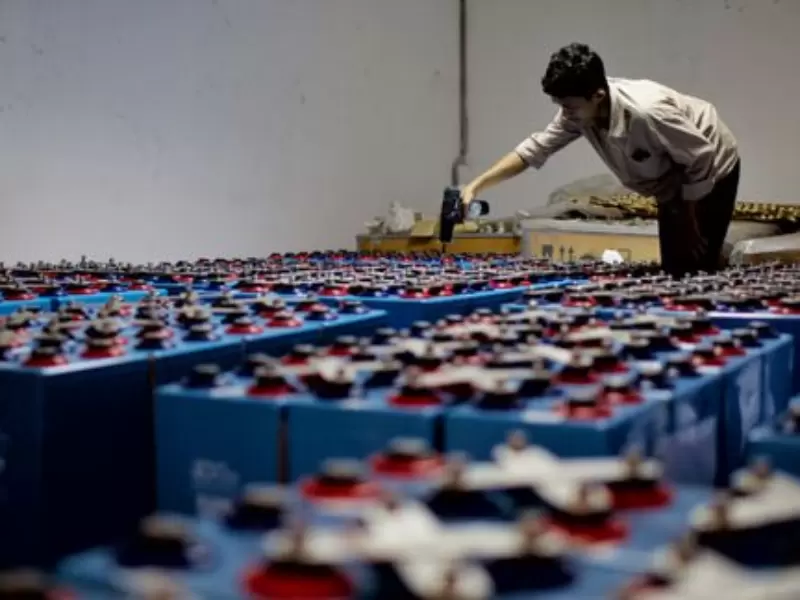
The demand for energy storage is increasing exponentially due to the rapid expansion of electric mobility and grid-scale energy storage systems, driven primarily by India's transition toward renewable energy integration and electric transportation. Consequently, the demand for lithium-ion batteries (LIBs) is rising sharply, not only in India but across the globe, significantly influencing both the energy sector and the economy.
Current projections indicate that India's LIB demand will increase steeply from approximately 45 GWh in 2026 to nearly 250 GWh by 2035. Electric vehicles (EVs) are expected to remain the dominant driver of this demand, accounting for nearly 80% to 90% of total battery consumption, with a projected compound annual growth rate (CAGR) of approximately 48%. Energy storage systems (ESS) and consumer electronics are also expected to contribute significantly, with projected CAGRs of approximately 14% and 3%, respectively.
Despite this remarkable growth, India faces several critical challenges. The foremost limitation is the country's heavy dependence on imported lithium resources, owing to the limited availability of domestic lithium reserves. At present, India relies largely on imports from Australia, Chile, Argentina, and China, making the battery supply chain vulnerable to price fluctuations, geopolitical uncertainties, and disruptions in global supply chains. Furthermore, limited indigenous battery technologies, despite substantial government investments, continue to increase manufacturing costs.
India's climatic conditions present another major challenge. High ambient temperatures exceeding 40 degrees Celsius across many regions significantly reduce battery life, compromise safety, and hinder large-scale deployment. In addition, the country's battery recycling ecosystem remains underdeveloped due to low collection efficiency, insufficient recovery infrastructure, and the absence of standardized operating procedures (SOPs) for material recovery, thereby limiting the circular economy of battery materials.
Currently, India imports nearly 100% of its lithium-ion cell requirements, predominantly from China. However, the establishment of domestic gigafactories is expected to reduce import dependence by approximately 20% by fiscal year 2027. Several major industrial players, including Reliance New Energy, Ola Electric, Exide Industries, Tata Agratas, Adani Group, and Amara Raja, have announced substantial investments in domestic cell manufacturing. Complementing these efforts, the Government of India has launched the Advanced Chemistry Cell (ACC) Battery Storage Production Linked Incentive (PLI) Scheme, with a financial outlay of 18,100 crore rupees, targeting 50 GWh of domestic manufacturing capacity.
The rapid scale-up of battery production, accelerated EV adoption, expansion of grid-scale energy storage, and increasing renewable energy integration are expected to drive LIB demand to nearly 190 to 200 GWh by 2030, with an overall annual growth rate of approximately 22% to 40% CAGR during the period from 2026 to 2035.
Nevertheless, achieving the projected demand of 250 GWh by 2035 using the current infrastructure, investment levels, and indigenous technologies remains an enormous challenge. One of the major bottlenecks is expanding domestic cell manufacturing capacity from the currently planned 50 GWh to nearly 150 to 200 GWh through the accelerated implementation of the PLI scheme and related industrial initiatives.
Based on current estimates, approximately 450 metric tons of lithium resources are required to manufacture 1 GWh of lithium-ion battery capacity. Accordingly, India would require nearly 22,500 metric tons of lithium to support 50 GWh of battery production, while achieving the projected 250 GWh demand by 2035 would require approximately 112,500 metric tons of lithium resources.
Bridging this enormous gap requires coordinated policy and technological interventions. Simplified industrial approval processes, accelerated prototype-driven research and development, commercialization of innovative battery technologies, and the establishment of integrated battery manufacturing clusters across Gujarat, Maharashtra, Tamil Nadu, Telangana, and Karnataka would substantially strengthen domestic production capacity and facilitate faster gigafactory deployment. Simultaneously, indigenous manufacturing of critical battery components, including electrode fabrication systems, battery management systems (BMS), advanced functional materials, and battery manufacturing equipment, would significantly reduce production costs and improve supply chain resilience. The development of advanced battery materials, such as lithium iron phosphate (LFP) cathodes, functionalized graphene-based anodes, and solid-state electrolytes, would further enhance battery performance, safety, and manufacturing efficiency.
In parallel, alternative battery chemistries such as sodium-ion batteries have the potential to partially replace lithium-ion batteries in stationary energy storage applications. Large-scale adoption of sodium-ion technology could reduce projected LIB demand by approximately 20 to 30 GWh, thereby lowering India's dependence on imported lithium while improving long-term resource security.
In conclusion, meeting India's projected energy storage requirement of 250 GWh by 2035, despite limited domestic lithium resources, will require a comprehensive, multipronged national strategy. This strategy should combine international resource acquisition, rapid expansion of domestic cell manufacturing, accelerated development of indigenous battery technologies, large-scale battery recycling through urban mining, and commercialization of alternative battery chemistries such as sodium-ion batteries. Collectively, these measures will strengthen India's energy security, reduce import dependence, improve supply chain resilience, and support the nation's long-term transition toward a sustainable and self-reliant energy ecosystem.
(The views and opinions expressed in this article are those of the author and do not necessarily reflect the official policy or position of New India Abroad.)
Discover more at New India Abroad.
Leave A Comment
Related








ADVERTISEMENT

ADVERTISEMENT
E Paper
Video

Comments
Start the conversation
Become a member of New India Abroad to start commenting.
Sign Up Now
Already have an account? Login