ADVERTISEMENT

ADVERTISEMENT

Indian American judge Surendran Pattel clears major Texas court backlog

Now in his fourth year on the bench, Pattel said his focus is no longer eliminating old cases but ensuring new filings continue moving efficiently

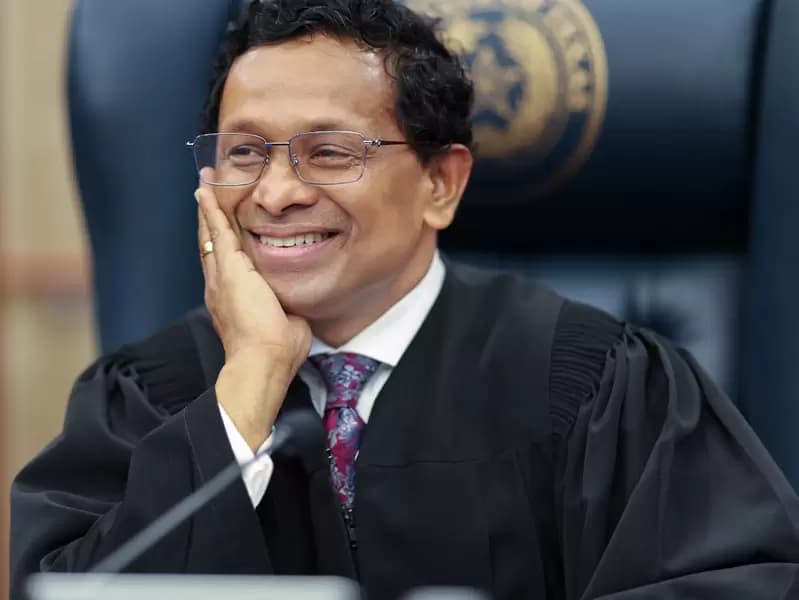
 Judge Surendran K. Pattel Judge Surendran K. Pattel / fortbendcountytx.gov

When Judge Surendran K. Pattel started on the bench in January 2023, Fort Bend County’s 240th District Court was in rough shape. The backlog was overwhelming— more than 4,500 pending cases. Some trials were from as far back as 2016, 2017, and 2018.

Fast forward three years, and the picture looks completely different. 

Also Read: Bharti Sharma named executive director of NYC data center

"My promise during my first campaign was that I would reduce the backlog during my first term," Pattel said. "Within two years, I cleared the backlog."

The 240th District Court is now primarily hearing cases filed in 2024 and 2025, a shift Pattel says reflects a dramatic improvement in how quickly cases move through the court system.

“I inherited the highest pendency in the county,” Pattel said. 

Pattel, who immigrated to the United States from India and became the first Indian American elected as a district judge in Fort Bend County, is seeking a second term in November. He says his focus remains on improving access to timely justice through an efficient court system.

While a handful of older cases remain because of their complexity--including two capital murder cases--the court has scheduled those matters for trial and expects to resolve them this year.

Located about 30 minutes southwest of downtown Houston, Fort Bend County is part of the greater Houston metropolitan area. It is the eighth-most populous county in Texas and one of the state's fastest-growing and most diverse. That diversity is increasingly reflected in its elected leadership.

How did they make it happen?

Pattel attributes the turnaround to disciplined case management, close cooperation with attorneys and court staff, and maintaining a pace of resolving more cases each month than are newly filed.

He credited the court's staff for helping improve efficiency despite limited resources.

"Our staff is very efficient, very loyal and very committed," Pattel said. "They are overwhelmed at times, but because of their hard work we have been able to achieve these results."

The court processes cases at a pace that exceeds the number of new filings each month, Pattel said. They now clear about 230–250 cases monthly, compared to roughly 200 new filings.

“Two-thirds of our caseload is civil,” he noted. “I’ve presided over many complex civil and criminal cases, and that experience will be vital as we keep this momentum going in the next four years.”

Beyond the bench, Pattel has been actively giving back to the legal community. He has conducted several Continuing Legal Education (CLE) programs for lawyers in partnership with the Fort Bend County Bar Association, Fort Bend County Criminal Bar Association, and Fort Bend County Young Lawyers Association. He has also mentored more than 40 interns, giving them real courtroom experience and helping them prepare for their future careers through mock trials and hands-on training.

"I made a conscious effort to build a strong bench-bar relationship," Pattel said. "I meet with civil and criminal bar leaders every year, explain the court's expectations, and ask attorneys to be prepared. If there are legitimate reasons for delay, we work with them. But unnecessary delays are not acceptable."

Pattel said reducing delays benefits not only the court system but also taxpayers, crime victims, defendants and civil litigants.

"If a case is pending for five years, the county is paying for those legal expenses for five years," Pattel said. "If that case is resolved in two years, those costs are significantly reduced."

He said faster case resolution also reduces legal expenses for residents and allows victims, defendants, plaintiffs and other parties to receive their day in court sooner.

According to Pattel, the court has disposed of more than 8,000 cases since he assumed office.

He said he has also presided over more than 80 jury trials and more than 300 bench trials, figures he believes are the highest recorded by any Fort Bend County district judge over a comparable period. 

Challenges remain

Despite the progress, Pattel said staffing remains one of the court's biggest challenges.

District courts operate with a relatively small staff despite handling complex felony and high-value civil cases.

"But the people we do have are committed, and they've made this possible,” Pattel said

Now in his fourth year on the bench, Pattel said his focus is no longer eliminating old cases but ensuring new filings continue moving efficiently through the system so another backlog does not develop.


Discover more at New India Abroad

Comments

Leave A Comment

Required fields are marked (*).

Related