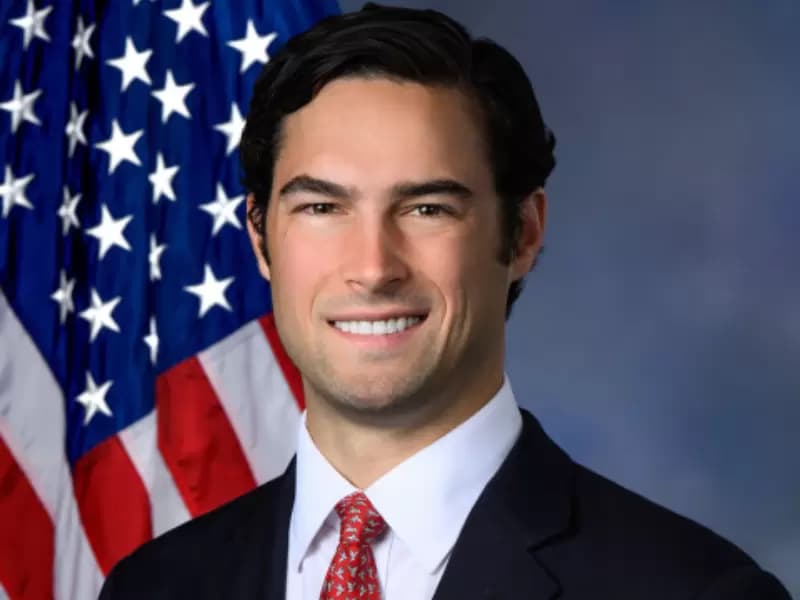
Brandon Gill / House.gov
Rep. Brandon Gill (TX-26) introduced a bill that would require all citizenship applicants through naturalization to demonstrate basic English proficiency, regardless of age.
The English Language Proficiency Act, introduced on July 16, would eliminate existing age-based exemptions from the English language requirement and special accommodations on the civics test.
Also Read: Texas launches probe into CDL schools over English requirements
Under current law, applicants aged 50 or older who have been lawful permanent residents for at least 20 years, and those aged 55 or older who have held permanent resident status for at least 15 years, are exempt from the English language requirement.
I have officially introduced the 'English Language Proficiency Act,' a bill that will mandate basic proficiency in English in order to become a naturalized American citizen.
— Brandon Gill (@realBrandonGill) July 16, 2026
English is the common tongue that holds American communities together. Under our current laws, there are… pic.twitter.com/aGsA2LdwxZ
Applicants aged 65 or older who have been permanent residents for at least 20 years also receive additional consideration on the civics examination.
The legislation would require all naturalization applicants to meet the same English language and civics standards, regardless of age.
In a post on X, Gill said English is "the common tongue that holds American communities together" and argued that prospective citizens should be required to "speak the same language as your fellow countrymen."
According to Census Bureau data cited by supporters of the legislation, the number of people who speak a language other than English at home increased from 23.1 million to 67.8 million over roughly three decades. Spanish remains the most widely spoken non-English language in U.S. households, followed by Chinese, Tagalog, Vietnamese and Arabic.
The bill is co-sponsored by Republican Reps. Randy Fine of Florida, Barry Moore of Alabama and Beth Van Duyne of Texas. It is also backed by the Immigration Accountability Project and ProEnglish.
Discover more at New India Abroad.
ADVERTISEMENT
ADVERTISEMENT
Comments
Start the conversation
Become a member of New India Abroad to start commenting.
Sign Up Now
Already have an account? Login