ADVERTISEMENT
ADVERTISEMENT



Bridging Two Democracies: The Rise of the India-U.S. Friendship
The story of how India and the U.S. moved from cautious acquaintances to genuine partners is, in many ways, the story of the people who moved between them.
-
 Sanjeev Joshipura
 - Sat, 15, Aug 2026
- 01:41 EDT
- 25
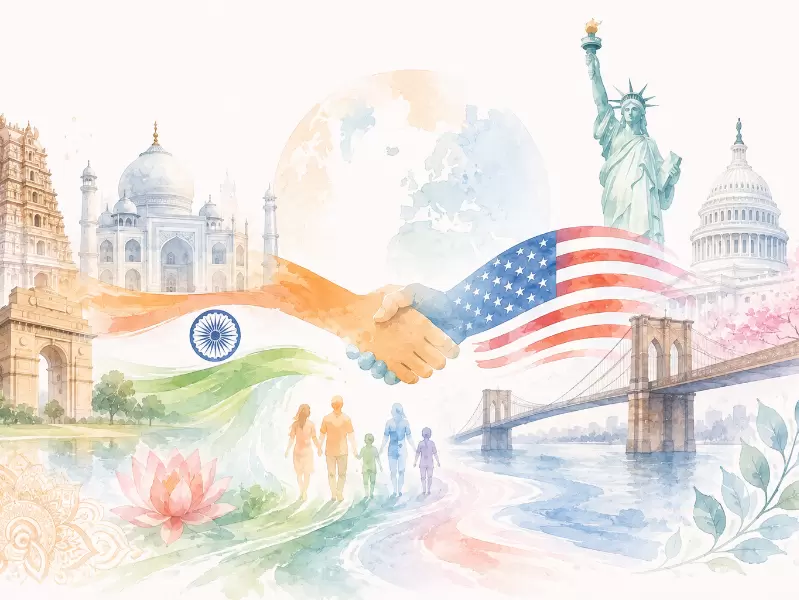
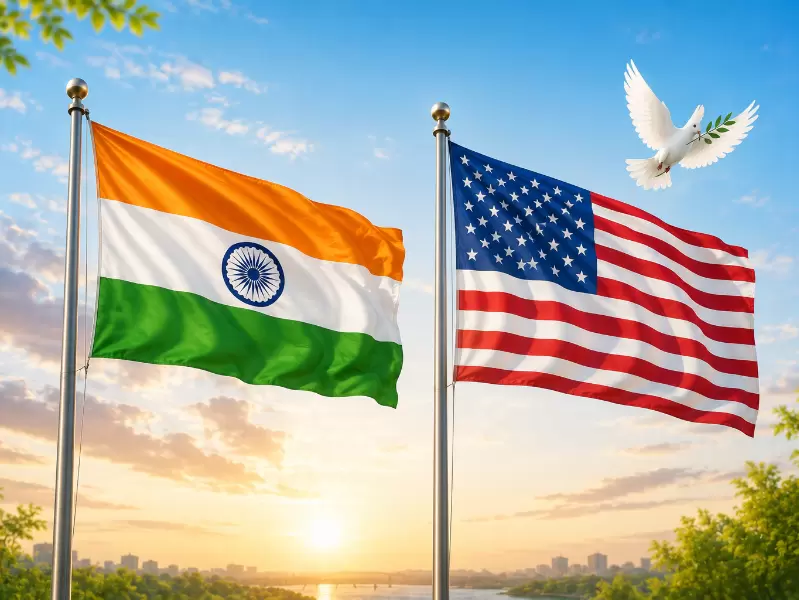
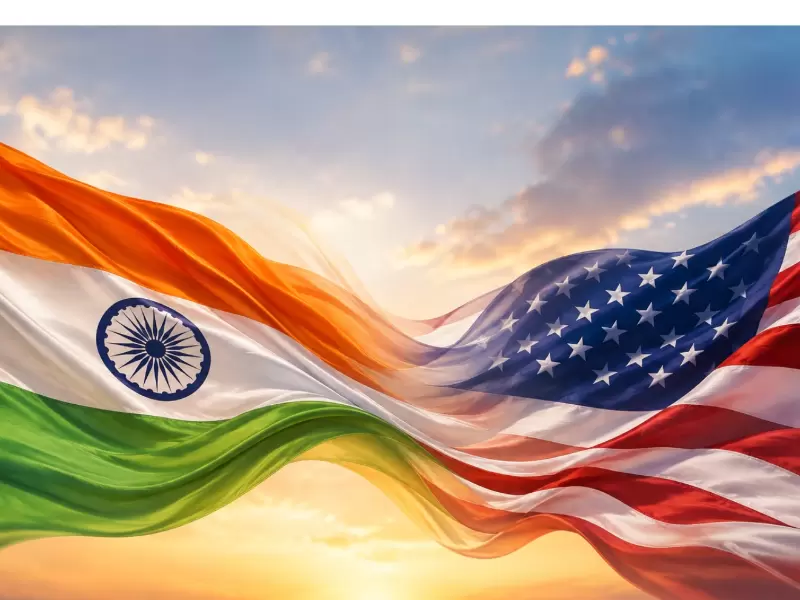 Representative image / AI Generated
There was a time, not so long ago, when India and the United States eyed each other with polite caution rather than warmth. Cold War alignments kept the two nations at arm's length, and mutual trust had to be built from scratch rather than inherited. Today, that early wariness has given way to something far deeper: a partnership rooted not just in shared strategic interest, but in the millions of personal relationships that now bind the two countries together, but challenges remain.
The story of how India and the U.S. moved from cautious acquaintances to genuine partners is, in many ways, the story of the people who moved between them. Decades ago, the United States needed what India had in abundance: a highly educated, English-speaking workforce ready to contribute in science, technology, engineering and health care. As Indian professionals arrived and thrived, they became the connective tissue of a relationship that governments alone could never have built.
That human bridge only grew stronger as India itself transformed. Once an entirely closed economy, India began to open its markets to American businesses, creating new avenues for investment and collaboration. And because both nations are, at their core, democracies, they found something rarer than a strategic alliance: mutual respect between sovereign nations who answer to their own citizens. Language and culture did their part too. India's English-speaking population, its multicultural and multireligious society, and its long practice of accommodating diverse ethnicities gave Indians a natural fluency in navigating American life.
I once opined on CNBC that ‘the United States and India would never be allies but would always be friends’, and I have asked the question of whether friendship might carry more value and flexibility for both nations than a formal alliance as they work together on complex, shared global challenges. That framing captures something essential: the relationship has evolved from friendly and respectful to a genuine, closer partnership spanning politics and commerce, without losing the personal warmth that friendship implies.
Recent shifts in American foreign policy have adversely impacted trust in America, both within India and among Indian Americans themselves. Anti-immigration rhetoric and trade policies have left many Indian Americans, including those born in the United States, wondering whether they are truly welcome. There has been a marked uptick in hostility toward Indian Americans, not only online, where such sentiment is becoming disturbingly normalized, but in physical hate crimes as well. This hostility inevitably erodes confidence in the broader U.S.-India relationship. India views the treatment of its diaspora abroad as a component of its foreign policy calculus, which could strain U.S.-India relations. It is up to both the diaspora and each nation to bridge the gap to secure an enduring friendship.
The Indian diaspora in America is changing, from its erstwhile exclusive focus on establishing financial security in traditional corporate careers. The community is diversifying into politics, the arts and sports, with many now prioritizing societal good over individual success. This marks diaspora leadership coming into its own, extending well beyond the corporate world into government, charitable work and community engagement.
That leadership has been most visible in moments of crisis. When COVID-19 devastated communities in both countries, diaspora leaders mobilized resources, expertise and compassion across borders. Time and again, in humanitarian emergencies and charitable causes alike, Indian-American leaders have stepped forward, driven by a shared desire to see both nations succeed together rather than separately.
It's worth noting and celebrating that this achievement belongs to no single person or party. But bipartisan, cross-party commitment is only part of the picture. Countless business leaders, academics, philanthropists and social impact pioneers have also played their part, building enterprises and institutions over the decades that have enriched both nations in turn.
Beneath the policy and the politics lies something simpler and perhaps more durable: culture. Yoga, meditation and even cricket are beginning to become part of American life. Indian cuisine, music and film have found enthusiastic audiences far beyond South Asian communities, just as American culture has left a strong imprint across India. This soft power doesn't make headlines the way summits do, but it does something summits cannot: It makes the relationship feel personal to millions of ordinary citizens on both sides.
Perhaps the truest measure of this relationship isn't found in trade figures or joint statements, but in smaller things: a grandmother teaching her American-born grandchildren a recipe passed down for generations, a college roommate who becomes a lifelong friend, a colleague who becomes family. These are the quiet, unheralded moments where two nations actually become close, one relationship at a time. Governments will keep negotiating and diplomats will keep meeting, as they ought to, but it is this accumulated warmth, personal, patient and enduring, that will carry India and the United States forward long after any single headline fades.
The writer is the executive director of Indiaspora.
(The views and opinions expressed in this article are those of the author and do not necessarily reflect the official policy or position of New India Abroad.)
Discover more at New India Abroad.
Leave A Comment
Related

ADVERTISEMENT

ADVERTISEMENT
E Paper
Video

Comments
Start the conversation
Become a member of New India Abroad to start commenting.
Sign Up Now
Already have an account? Login