ADVERTISEMENT
ADVERTISEMENT


Traditional medicine can help restore balance in life, health, and work: PM Modi
PM also released a commemorative postal stamp on Ashwagandha, symbolising the global resonance of India’s traditional medicinal heritage.
-
 IANS
IANS - Fri, 19, Dec 2025
- 10:10 EST
- 92
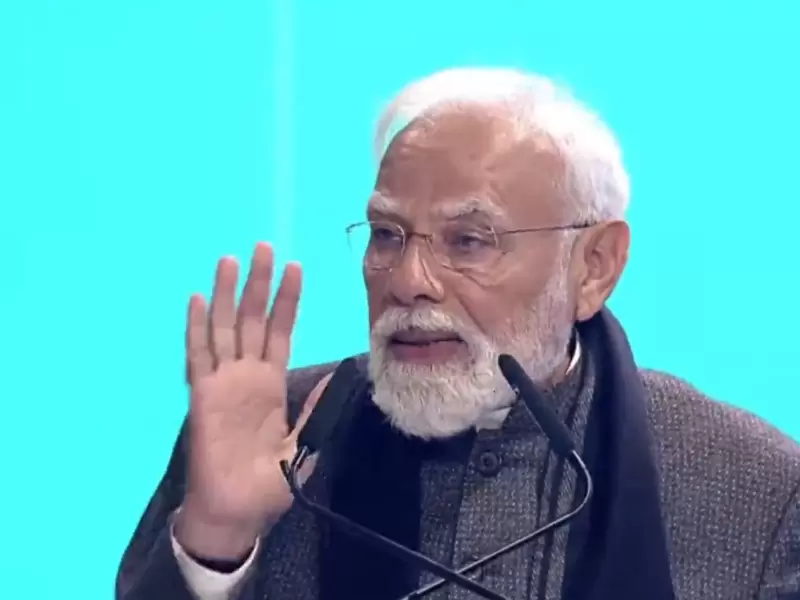 PM Narendra Modi addresses concluding ceremony of the second WHO Global Summit on Traditional Medicine / X @narendramodi
While imbalances in life, gut health, sleep, and workplace are creating significant global health challenges, implementing traditional medicine can help restore balance and harmony and boost health, Prime Minister Narendra Modi said on Dec. 19.
Speaking at the concluding ceremony of the second WHO Global Summit on Traditional Medicine at the Bharat Mandapam in New Delhi, the Prime Minister underscored India’s growing leadership and pioneering initiatives in shaping a global, science-based, and people-centered traditional medicine agenda.
The Summit, held from December 17 to 19, was jointly organized by the World Health Organization (WHO) and the Ministry of Ayush.
Emphasizing the theme of the event, “Restoring balance: The science and practice of health and well-being”, PM Modi noted how India’s age-old wisdom, Ayurveda, is centred around balance.
"In Ayurveda, balance, that is, equilibrium, has been called the synonym of health. The one whose body maintains this balance is healthy," the PM said.
"Today, we see imbalances in work-life, gut microbiome, sleep, and emotions creating global health challenges. Both studies and data indicate this. Thus, restoring balance is a global urgency," said PM Modi.
At the 2nd WHO Global Summit on Traditional Medicine, Prime Minister Shri Narendra Modi underscored the rich and meaningful deliberations among global experts, reaffirming India’s steadfast commitment to providing a strong global platform for Traditional Medicine, in close… pic.twitter.com/NVogcZo9fA
— Ministry of Health (@MoHFW_INDIA) December 19, 2025
He added that in the 21st century, maintaining life balance is more important, as advanced technologies like artificial intelligence and robotics are rapidly changing human lives.
"The sudden and massive changes in lifestyle due to the convenience of resources and facilities, which come without physical labour... are going to create unprecedented challenges for human bodies. Therefore, in traditional healthcare, we cannot focus only on the current needs. Our shared responsibility is also towards the coming future," he said.
PM Modi further noted that when it comes to traditional medicine, the question of safety and evidence arises.
To counter this, "India is continuously working in this direction."
"Here, in this summit, you all have seen the example of Ashwagandha. For centuries, it has been used in our traditional medical systems. During Covid-19, its global demand increased rapidly, and its use began in many countries. India is authentically promoting Ashwagandha through its research and evidence-based validation," PM Modi said.
He noted that at the Summit, traditional medicine and modern practices converged, creating a unique platform for innovation.
Numerous new initiatives were launched that have the potential to transform the future of medical science and holistic health.
Further, to empower traditional medicine, the Prime Minister urged the need to "strengthen research, increase the use of digital technology, and create regulatory frameworks that the entire world can trust."
During the event, the Prime Minister also launched several landmark Ayush initiatives, including My Ayush Integrated Services Portal (MAISP), a master digital portal for the Ayush sector, and unveiled the Ayush Mark, which is envisioned as a global benchmark for the quality of Ayush products and services.
He also released a commemorative postal stamp on Ashwagandha, symbolizing the global resonance of India’s traditional medicinal heritage.
The Prime Minister also inaugurated the new WHO-South East Asia Regional Office complex in Delhi, and called it a "humble gift from India."
Leave A Comment
Related

ADVERTISEMENT

ADVERTISEMENT
E Paper
Video

Comments
Start the conversation
Become a member of New India Abroad to start commenting.
Sign Up Now
Already have an account? Login