ADVERTISEMENT
ADVERTISEMENT


A Son of South Asia Charts a New Path in Maryland
Mukunda, 33, defeated longtime Senate Majority Leader Nancy King in the Democratic primary for Maryland’s 39th Legislative District.
-
1759953093.png) Staff Reporter
Staff Reporter - Fri, 10, Jul 2026
- 01:08 EDT
- 388
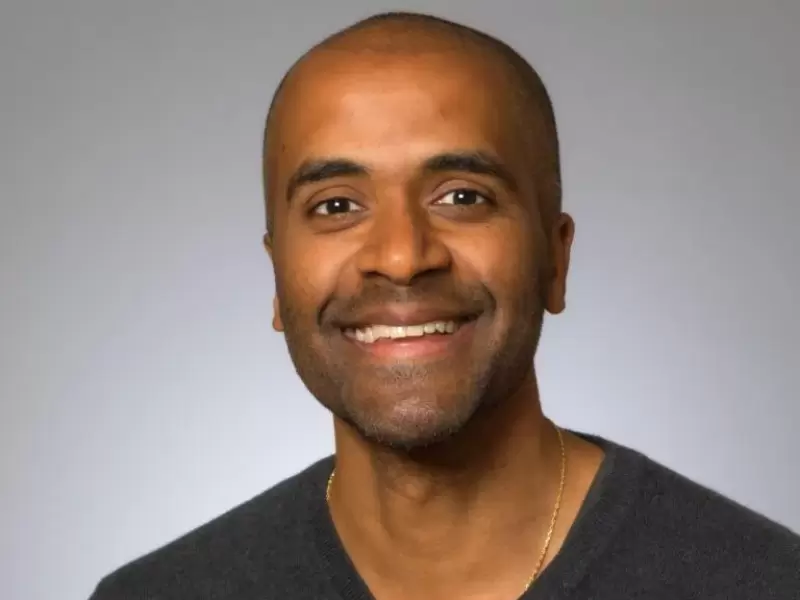
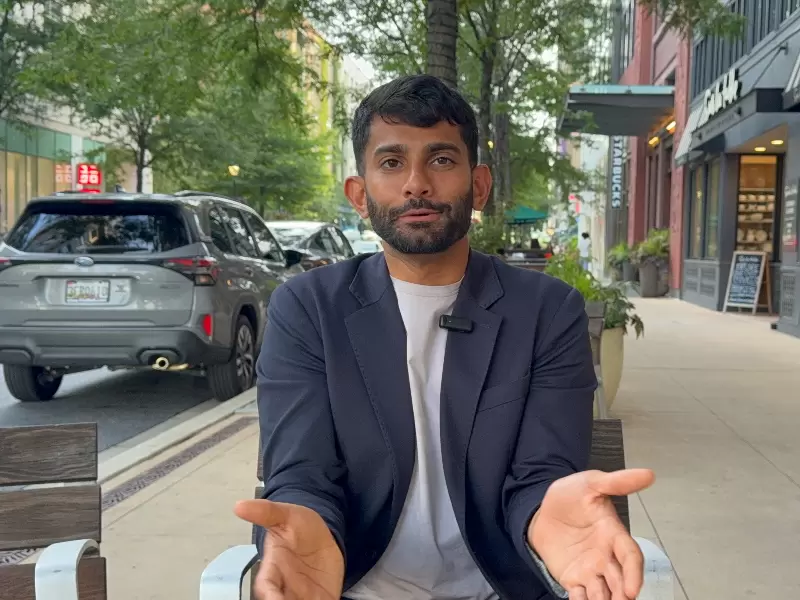 Amar Mukunda / Courtesy photo
The son of a father from Karnataka and a mother from Karachi, Amar Mukunda grew up moving between cultures and, after his family’s business failed, between homes. His path has now brought him to the verge of becoming Maryland’s first South Asian state senator.
Mukunda, 33, defeated longtime Senate Majority Leader Nancy King in the Democratic primary for Maryland’s 39th Legislative District. It was one of the most significant upsets in recent state politics.
Mukunda received 48.6% of the Democratic vote. King received 36.1%, while Destiny Drake West finished third with 15.2%.
ALSO READ: Maine’s Nirav Shah enters U.S. Senate race
King, 76, conceded on June 26 after more than two decades in the Maryland General Assembly. Mukunda has no Republican opponent in the November general election, leaving him virtually assured of taking the seat in January.
“There’s one seat and one candidate,” Mukunda said with a laugh during an exclusive interview with India Abroad. “So I like my chances.”
It is a remarkable outcome for a first-time candidate who began the race with little name recognition and no institutional advantage. Mukunda said few people believed he could defeat one of the most powerful figures in Annapolis.
But the race was small enough that no public polling was conducted. He turned that absence of data into a source of hope.
“If they had done a poll, they would have seen I’m at 0% and she’s at 100%,” he said. “But I could say, there’s no poll, you know, there’s no poll. I keep running and keep working and build the support from there.”
A childhood shaped by upheaval
Mukunda’s story is rooted in Montgomery County, one of the most diverse jurisdictions in the Washington metropolitan region.
His father came to the United States from Karnataka. His mother came from Karachi. They met in Maryland, started a company and found success as small-business owners.
Then everything collapsed.
“When I was nine years old, their company went bankrupt, and our family lost everything,” Mukunda said. “So I grew up in Montgomery County, but I moved eight times within the county before I graduated from high school.”
The repeated moves exposed him to strikingly different experiences within the same county.
“I got to see the best and worst of what our part of Maryland has to offer and got an understanding of the trials and struggles that so many families go through in this country,” he said.
Even as the family moved, Mukunda remained in the same public school system. He attended Carderock Springs Elementary School, Pyle Middle School and Walt Whitman High School.
“I’m absolutely a born-and-raised Montgomery County kid,” he said.
Mukunda recalled growing up with a strong belief that Montgomery County offered some of the finest public schools and infrastructure in the country. He no longer believes the county has maintained that edge, particularly when compared with neighboring Northern Virginia.
“I think we definitely were, definitely still are, an amazing place, but I think there are a lot of things that have fallen behind in the county,” he said.
After high school, Mukunda attended Amherst College in Massachusetts, where he studied computer science and geology. He started a company while in college and later conducted research in machine learning and artificial intelligence under a Fulbright grant.
Politics was not initially his chosen career. But its pull had begun years earlier.
Inspired by Obama
Mukunda traces his political awakening to Barack Obama’s first presidential campaign. While still in high school, he volunteered for Obama and served as the campaign’s Montgomery County high school coordinator.
His job was to recruit students from across the county to knock on doors.
“That was really the first thing that got me interested or excited about politics, was seeing him run,” Mukunda said.
Obama’s identity and family history resonated with him.
“In many ways he was also like the first person who had a really clear immigrant story and was a child of immigrants,” he said. “He was our president, he was my president and I was very much inspired by him.”
But politics receded as Mukunda pursued technology. His priorities changed in early 2019, when he lost someone close to him to addiction.
Mukunda left the technology sector and began working for a small gun violence and addiction prevention program. He worked directly with young people who were trying to overcome addiction, obtain high school equivalency qualifications and find jobs.
Much of the work took place in Baltimore, though the program also operated in Montgomery County, Hagerstown and other parts of Maryland.
“Through that work, which was really direct community service work, working with young people on the street, mostly Baltimore City, but also here in Montgomery County, Hagerstown, different parts of the state, I started to get more involved in the Maryland political space,” he said.
Mukunda advocated for gun violence prevention policies, including the Maryland Violence Intervention and Prevention Program Fund. That work introduced him to the state government and the legislative process.
“I think that’s a big part of what led to me doing this now,” he said.
Mukunda is also a combat engineer in the U.S. Army Reserve. He originally filed to seek a seat in the House of Delegates before switching in November to challenge King for the Senate.
The decision meant taking on an incumbent with decades of relationships, political support and influence over the legislative process.
Mukunda viewed inaction as the greater danger.
“You risk your time, you risk your effort, you risk asking people to support something and believe in something that may not work out,” he said. “But ultimately the bigger risk is letting things stay the way they are.”
Knocking on tens of thousands of doors
Mukunda’s campaign depended heavily on meeting voters at their homes. He estimated that his team knocked on tens of thousands of doors across the district.
“A lot of campaigning is knocking on doors because you can go to a lot of community meetings and you can meet people at those things, but if you wanna have time to talk to people one-on-one, knocking on doors is the best way,” he said.
Most doors did not open. Mukunda estimated that no one answered about 75% of the time.
The encounters that did occur ranged from hurried exchanges to long conversations. Some residents took his literature and returned to cooking dinner. Others invited him inside.
One family was eating when he arrived. They brought him to the table, gave him a plate of food and discussed the election with him. Residents offered him hot tea while he campaigned in the winter. Someone gave him an umbrella in the rain. Others offered water during the summer heat.
One voter handed him a bag of bananas.
“People are really, really, really kind and nice,” Mukunda said.
Those meetings also revealed how distant many residents felt from their representatives.
“When you meet somebody who says, ‘I have never spoken to an elected official before. Nobody who’s running for office has ever come to my door and asked for my vote. This is amazing,’ that’s really impactful because you’re bringing democracy to people’s doorsteps,” he said.
Not every reception was friendly. Occasionally, residents ordered him off their property. Mukunda said he did not believe those reactions were driven by his ethnicity or the color of his skin.
“I don’t think it was ever because of the color of my skin,” he said.
He found more racial hostility online. But the presence of bots and fake accounts made it difficult to separate genuine sentiment from content designed to provoke engagement.
In person, he said, anger was more often connected to social isolation, personal hardship and financial stress.
“People are going through things,” Mukunda said. “When you show up at somebody’s house, you’re in their space and you don’t know what’s going on.”
Cost of living dominated conversations
The door-to-door campaign gave Mukunda a direct understanding of voter concerns. The cost of living came first.
“The most important issues for people are definitely the cost of living, for sure,” he said. “Whether that’s healthcare, utility bills or housing, but just the cost.”
Schools were the second major issue. The third was a combination of limited access to jobs and inadequate public transportation.
Many District 39 residents travel toward lower Montgomery County or Washington for work. Congestion on Interstate 270 makes those commutes difficult.
Mukunda supports extending the Washington Metro’s Red Line to Germantown. He also campaigned for universal health care, clean energy jobs, faster government permitting and greater access to home and small-business ownership.
He declined contributions from corporations and lobbyists. That position became central to his campaign.
“Everyone knows that utility bills are going up. Everyone knows that healthcare costs are going up,” he said. “But so many of our legislators are continuing to take money from utility companies and healthcare companies while having the job responsibility of writing laws and legislation that are supposed to help protect us and lower our costs.”
Mukunda said the Democratic Party must establish its credibility by rejecting corporate influence.
“If we’re not clean, if we’re taking money from all these big companies, nobody’s gonna believe anything else we have to say,” he said.
He also wants Democrats to become the party of ownership and economic opportunity.
“We should be the party that is saying to people, we wanna make it easy for you to own your own home, for you to own your own small businesses, for you to be able to actually thrive in our state, in our county, in our country,” Mukunda said.
Most people, he said, want a tangible stake in their community.
“They don’t wanna be a renter for life,” he said. “They don’t wanna be an employee for life. They wanna own something real.”
‘A lot of empathy’ for MAGA voters
Mukunda offered a nuanced but sharply critical assessment of President Donald Trump’s Make America Great Again movement.
“I have a lot of empathy for the MAGA movement,” he said. “I think there are a lot of basic frustrations that people who are MAGA voters have that are not being addressed.”
Mukunda said those economic grievances were shared by Democrats and Republicans. Many Americans believe political and corporate leaders have failed working people, he said.
“The American economic system is not working for people,” Mukunda said.
But he argued that those frustrations had been mixed with racial hatred, hostility toward immigrants and fear of outsiders.
“My experience in life was never that America was over its racism in the 1990s and 2000s and Trump brought it back,” he said. “It was always there.”
Mukunda rejected the movement’s anti-immigration rhetoric and attacks on democratic institutions. He was particularly dismissive of the idea that building a wall could resolve the complexities of immigration.
“Like build a wall,” he said. “It’s like people are gonna get a ladder. Like really? You think that’s an immigration policy?”
His criticism of Trump was equally direct.
“The racial hatred, the destruction of our democratic norms, the unbelievably vile aspects of Trump himself as an individual, I have no patience for any of those things,” he said.
Mukunda does not believe Republican attempts to portray Democrats as communists or socialists will ultimately succeed. Voters, he said, are more interested in whether a policy works than where it sits on an ideological spectrum.
“People frankly don’t really care whether an idea is libertarian or liberal or conservative or whatever it is,” he said. “They care whether or not their healthcare costs too much.”
Looking for results, not labels
Mukunda declined to name a preferred Democratic candidate for the next presidential election. He said the nominee should be someone who could demonstrate concrete achievements rather than merely make promises.
“The person who should be the nominee for president is the person who can prove that they have done the biggest things that really make a real difference in people’s lives,” he said.
He pointed to the excitement surrounding New York political leader Zohran Mamdani as evidence that Democratic voters are looking for action, independence from special interests and visible results.
“It’s not about an individual. It’s not about a person. It’s not about a personality. It’s not even really about an ideology,” Mukunda said. “It’s about like work for us and make it happen.”
He also cited Baltimore’s decline in homicides as an overlooked example of successful Democratic governance.
Mukunda said that when he was working in gun violence prevention in Baltimore in 2020, the prospect of the murder rate being cut in half within five or six years would have seemed almost unimaginable.
“That would be the most amazing miracle that I could ever imagine,” he said. “Because you’re saving hundreds of people’s lives every single year.”
From victory to governing
Mukunda said his future colleagues in the Maryland Senate and House of Delegates had been gracious after his victory. He also received a warm response from Gov. Wes Moore, Lt. Gov. Aruna Miller and the governor’s office.
But he is already confronting the bargaining that comes with legislative politics. Lawmakers want to know which proposals he will support and which issues he intends to advance.
Mukunda said building relationships will be essential, particularly because passing legislation requires working with people with whom he may disagree.
The larger challenge, he said, will be keeping the community engaged after the election. Voting alone is no longer enough to overcome the influence of organized interests in the legislative process.
“You have to vote. You have to organize with that elected official,” he said. “You have to get your community engaged. You have to write letters, you have to make phone calls, you have to call other elected officials, you have to testify on the bills.”
For Mukunda, winning the primary did not complete the work. It merely gave him a chance to begin it.
“At this point, it’s all about results,” he said. “It’s not about anything other than how do we make sure we’re getting legislation passed that makes a difference in people’s lives.”
King was first elected to the Maryland General Assembly in 2002 and entered the Senate in 2007. She became one of Montgomery County’s longest-serving state legislators. In announcing her concession, she said her job title would change in January but her commitment to serving Maryland would continue, according to Bethesda Today.
District 39 covers Germantown, Montgomery Village and surrounding communities. Its population has become substantially more diverse over the past two decades. Maryland has previously elected several South Asian delegates, including Kumar Barve, who in 1990 became the first Indian American elected to a state legislature in the United States. Mukunda’s expected election would mark the community’s first representation in the Maryland Senate.
Discover more at New India Abroad.
Leave A Comment
Related






ADVERTISEMENT

ADVERTISEMENT
E Paper
Video

Comments
Start the conversation
Become a member of New India Abroad to start commenting.
Sign Up Now
Already have an account? Login