ADVERTISEMENT
ADVERTISEMENT



The romance of the rains
From romance and longing to heartbreak and rebellion, Bollywood has turned the monsoon into one of cinema’s most enduring emotional landscapes.
-
 Bollywood Insider
 - Sun, 09, Aug 2026
- 06:26 EDT
- 61
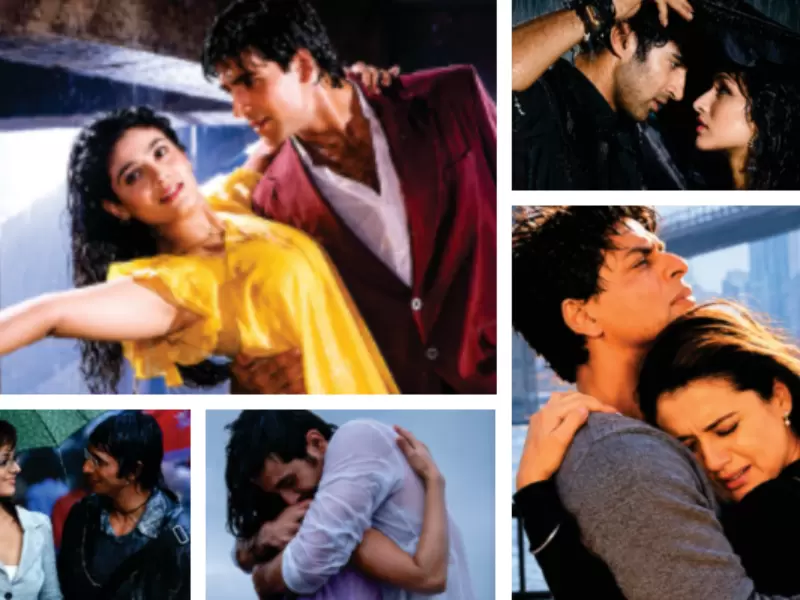 Rain in bollywood / Screengrabs from popular bollywood movies
There are few things Bollywood loves more than rain. Long before cinematic universes and visual effects took over the big screen, Hindi cinema understood the emotional power of the monsoon.
Rain became more than weather it became longing, desire, rebellion and heartbreak. Whether lovers found each other beneath umbrellas or lonely souls wandered through wet city streets, Bollywood transformed the monsoon into poetry. Over decades, rain songs and storm-soaked scenes have created some of Indian cinema's most unforgettable moments, proving that sometimes emotions are best expressed beneath dark clouds and falling rain.
Also Read: Karisma Κapoor: The original trailblazer
THE BIRTH OF RAIN ROMANCE
If one had to choose the most iconic rain image in Hindi cinema, it would perhaps be Raj Kapoor and Nargis under a single umbrella in Shree 420. The song Pyaar Hua Ikraar Hua remains one of Bollywood's most enduring declarations of love. Two people walk through pouring rain while the city glows around them. The rain does not disrupt romance it completes it. The umbrella becomes intimacy itself.
The black-and-white visuals carry a timeless innocence. There is no urgency, no spectacle, no choreography designed for virality. Just two people slowly surrendering to love while the rain protects them from the world.
That scene quietly established one of Bollywood's greatest cinematic traditions - rain as romance.
Soon, monsoon songs became essential to Hindi films. Rain allowed filmmakers to create sensuality without explicitness. A drenched saree, wet hair, trembling hands and stolen glances could say more than pages of dialogue.
Few actresses embodied rain romance like Sridevi - In Mr. India, the legendary song 'Kaate Nahi Kat Te...' transformed rainfall into seduction. Wrapped in a blue saree, Sridevi turned the storm into desire itself while Anil Kapoor watched in speechless awe. The scene remains one of Bollywood's most iconic expressions of sensuality - elegant, playful and hypnotic.
Years later, Raveena Tandon's 'Tip Tip Barsa Paani...' from Mohra became another landmark in cinematic rain history. Wearing a bright yellow saree against dark industrial backdrops, she delivered one of the most recognisable rain performances in Indian film history.
The rain in these songs is not soft or delicate. It is intense, wild and unapologetic.
Bollywood discovered that storms could be seductive.
RAIN AS LONGING AND HEARTBREAK
But monsoon in Hindi cinema has never belonged only to lovers. Sometimes, rain arrives when love is already slipping away. Few films in Bollywood have understood emotional loneliness as intimately as Kal Ho Naa Ho. The film often uses rain not as spectacle, but as emotional camouflage. In several moments between Naina and Aman, the wet New York streets and overcast skies mirror feelings left unspoken. Shah Rukh Khan plays Aman with heartbreaking restraint - a man overflowing with love yet constantly denying himself the right to express it. The rain in the film softens the city's chaos and creates emotional intimacy.
Similarly, Gangster transformed rain into emotional isolation. Anurag Basu's visual world is filled with dimly lit rooms, wet roads, lonely balconies and skies permanently burdened by clouds. Kangana Ranaut's Simran appears emotionally drenched throughout the film fragile, restless and constantly searching for escape. The songs deepen that atmosphere of ache and instability. 'Bheegi Bheegi...' especially feels soaked in longing, guilt and emotional exhaustion. Rain in Gangster is not romantic comfort; it is emotional suffocation. The characters seem trapped within their own sadness, unable to outrun their pasts no matter how desperately they try.
Then came Aashiqui 2, perhaps one of Bollywood's most emotionally rain-soaked love stories in recent memory. Mohit Suri drenched the film in melancholy from beginning to end. Rainfall, mist, damp concert venues, foggy windows and dark skies create an atmosphere where love always feels dangerously close to collapse. Rahul and Aarohi are deeply in love, yet their relationship constantly carries the fear of emotional ruin.
And at the centre of that heartbreak stands 'Tum Hi Ho... the song became more than just a chartbuster; it became the emotional soul of the film. Arijit Singh's aching voice, combined with visuals of rain, silence and emotional dependency, transformed the song into an anthem of vulnerable love. What made Aashiqui 2 especially effective was the exhaustion carried by its characters. The monsoon in Aashiqui 2 becomes a warning sign. Every storm feels like impending heartbreak.
Bollywood has long understood that heartbreak appears strangely beautiful in rain. Perhaps because monsoon mirrors grief so naturally. Both arrive heavily. Both stay longer than expected. And both flood everything quietly.
THE REBELLIOUS MONSOON
Rain songs are often associated with romance, but Bollywood has also repeatedly used the monsoon as rebellion. Rain frees characters in ways ordinary life cannot. The first heavy downpour in a film often feels like the collapse of emotional discipline. Carefully maintained appearances disappear. Expensive clothes get ruined. Makeup fades. Hair loosens. Social hierarchies blur. People stop worrying about dignity and begin responding to instinct.
The monsoon allows Bollywood characters to become emotionally honest.
Few films captured youthful recklessness through weather as effectively as Rang De Basanti. The film's emotional energy constantly carries the feeling of an approaching storm - restless, impulsive and impossible to contain. The rain-soaked moments among the friends feel spontaneous and alive, almost documentary-like in their warmth.
But as the narrative darkens, that same emotional freedom transforms into rebellion. The rain becomes symbolic of cleansing anger - a generation refusing silence.
In Wake Up Sid, Mumbai's monsoon represented something entirely different: adulthood.
Ayan Mukerji's film understood the emotional texture of Mumbai rains with unusual tenderness. Siddharth Mehra's journey from spoiled aimlessness to emotional maturity unfolds alongside the city's changing skies. Rain in the film is messy, inconvenient and beautiful all at once-much like growing up itself.
The image of Konkona Sen Sharma and Ranbir Kapoor sharing conversations inside modest apartments while rain falls outside creates a deeply lived-in intimacy. The monsoon here is not cinematic fantasy. It is everyday life.
Wet clothes drying near windows. Traffic crawling endlessly. Books stacked beside steaming cups of chai. Lonely evenings softened by rainfall.
Few filmmakers have captured Mumbai rains as intimately as those who understood the city beyond postcard glamour.
Not merely Marine Drive slow-motion shots, but the everyday exhaustion of monsoon life crowded railway stations, yellow taxis splashing through flooded streets, damp apartments and late-night cutting chai at roadside stalls.
In Life In A... Metro, the rain reflected urban loneliness. Anurag Basu used the city's wetness to heighten emotional isolation among characters trapped inside unhappy marriages and unfinished relationships.
In Guru, rain became ambition. Mani Ratnam used monsoon atmospheres not merely for beauty but for momentum. The storms reflected Gurukant Desai's relentless hunger to rise.
Then there is Satya, where Mumbai's monsoon became dangerous. Ram Gopal Varma stripped away romanticism entirely. Rain in Satya creates paranoia. Dark alleys become more threatening. Violence feels more immediate. The city appears slippery, unstable and impossible to trust.
Rain in Bollywood often gives people permission to become their truest selves.
The shy become fearless. The lonely become vulnerable. The broken stop pretending they are fine. And the angry become revolutionary.
Perhaps that is why monsoon remains such a powerful cinematic device. Because storms do not merely change the weather. They change people.
Trends change, storytelling evolves and audiences move on to newer spectacles, yet rain continues to hold emotional power on screen. A single storm can still make a love story more intimate, a heartbreak more devastating and a character more vulnerable. Somewhere between old melodies, flickering streetlights and rain-soaked silences, Bollywood discovered that the monsoon does not merely accompany emotions it reveals them.
Discover More At New India Abroad
Leave A Comment
Related










ADVERTISEMENT

ADVERTISEMENT
E Paper
Video

Comments
Start the conversation
Become a member of New India Abroad to start commenting.
Sign Up Now
Already have an account? Login