ADVERTISEMENT
ADVERTISEMENT


Delivering punchline with pouts and power
The journey of women in Bollywood comedy isn't just about laughter—it's about who gets to claim it.
-
 Bollywood Insider
 - Sun, 26, Jul 2026
- 03:35 EDT
- 28
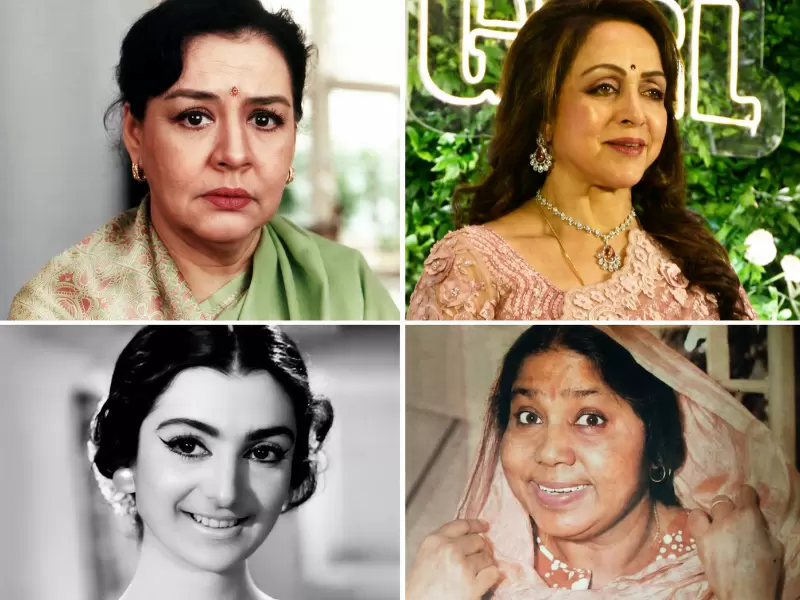 Clockwise: Farida Jalal, Hema Malini, Uma Devi Khatri and Saira Banu / Wikipedia, IMDB
For years, comedy in Hindi cinema belonged to the men—the heroes joked, the sidekicks fumbled, and women were expected to simply smile along. But even within these limits, actresses found ways to be funny, first as comic side characters and eventually as leading ladies who refused to stay out of the joke.
The journey of women in Bollywood comedy isn't just about laughter—it's about who gets to claim it.
For the longest time, comedy in Hindi cinema was considered a man's playground. The heroes flirted, the comedians fumbled, and the women—more often than not—smiled politely on the sidelines. But that's only half the story. Because even in those early decades, women were quietly (and sometimes riotously) rewriting the rules of humor, first as designated comediennes and eventually as leading ladies who refused to be left out of the joke.
The journey of women in Bollywood comedy is not just about who got the laughs—it's about who was allowed to be funny.
When Women Were "The Comedians"
In the 1940s and 1950s, comedy was a specialized space, and women who entered it did so almost as a separate category. The most iconic among them was Uma Devi Khatri, better known as TunTun, widely regarded as Hindi cinema's first female comedian.
Starting out as a playback singer, she transitioned into acting and carved a niche with her impeccable timing and physical comedy in films like Aar Paar and Mr. & Mrs. '55. At a time when heroines were expected to be graceful and demure, TunTun was unapologetically loud, expressive and funny.
Alongside her was Manorama, whose sharp voice and exaggerated expressions made her a scene-stealer in films like Half Ticket and Caravan. These women didn't play the romantic lead—they were the comic relief.
But that distinction came with limitations. Their humor was often rooted in caricature—physicality, eccentricity or social stereotypes. They were funny, yes, but rarely central to the narrative.
The Heroine Joins the Joke
The real shift began when leading ladies started embracing comedy, not as an add-on but as an integral part of their persona.
Take Saira Banu in Padosan (1968). While the film is remembered for its male comedic legends, her performance added a breezy charm that complemented the chaos. Around the same time, Mumtaz brought a playful, flirtatious energy to films like Pyaar Kiye Jaa, proving that heroines could be both glamorous and funny.
Then came Hema Malini, whose portrayal of Basanti in Sholay (1975) remains one of the most iconic comedic performances in Hindi cinema. Talkative, dramatic and endlessly entertaining, Basanti wasn't just comic relief—she was unforgettable. In Seeta Aur Geeta, Hema doubled down on her comic chops, switching between identities with impeccable timing.
This phase marked a crucial transition: Women were no longer confined to "comedy roles"—they were owning comedy within mainstream narratives.
The '90s Boom: When Heroines Became Comedy Queens
If there was a golden age for female-driven humor in Bollywood, it was the 1990s and early 2000s.
At the forefront was Juhi Chawla, often hailed as one of the finest comic actors in Hindi cinema. Her performances in Ishq, Hum Hain Rahi Pyar Ke and Bol Radha Bol were masterclasses in timing—effortless, spontaneous and never forced. She didn't need slapstick; her expressions did the work.
Then there was Sridevi, a phenomenon in her own right. Whether it was the double-role madness of ChaalBaaz, the invisible antics of Mr. India or the subtle humor of Lamhe, Sridevi could oscillate between slapstick and sophistication like no one else. Her comedy wasn't just funny—it was transformative.
Kajol brought a different flavor—loud, energetic and completely uninhibited. In films like Ishq and Pyaar To Hona Hi Tha, she matched her male co-stars beat for beat, often outshining them.
Meanwhile, Karisma Kapoor became the face of commercial comedy with hits like Raja Babu and Hero No. 1. Her willingness to be goofy, exaggerated and even ridiculous made her a perfect fit for David Dhawan-style entertainers.
Add to that Raveena Tandon in Andaz Apna Apna and Preity Zinta in Dil Chahta Hai, and you had a generation of actresses who embraced humor without hesitation.
This era blurred the line between "hero" and "heroine" in comedy. Women weren't just participating—they were leading the laughter.
The Supporting Stars Who Stole the Show
While leading ladies were redefining comedy, character actors were quietly building a legacy of their own. Farida Jalal became the go-to "funny mom," bringing warmth and humor to countless films. Kirron Kher elevated the loud, dramatic Punjabi mother into an art form. Her performance in Dostana remains a pop culture staple.
On the more eccentric end, Guddi Maruti and Upasana Singh carried forward the legacy of physical comedy, often in male-dominated spaces.
And then there's Supriya Pathak, whose portrayal of Hansa in Khichdi is nothing short of iconic, proof that television, too, played a crucial role in shaping India's comic sensibilities.
These women often had limited screen time, but they made every second count.
The Modern Shift: Subtle, Situational, Self-Aware
Today, comedy in Bollywood has evolved, and so have the women who perform it.
Vidya Balan in Tumhari Sulu and Ishqiya brings a grounded, situational humor that feels organic rather than performative. Kangana Ranaut in Queen and Tanu Weds Manu uses wit and vulnerability to create characters that are both funny and deeply human.
Kareena Kapoor Khan's Geet in Jab We Met is arguably one of the most quoted comedic characters of the 21st century—bubbly, self-absorbed and irresistibly entertaining. Similarly, Deepika Padukone has shown a flair for comedy in films like Chennai Express and Cocktail, blending glamour with goofiness.
Actors like Tabu have taken a more understated route, delivering deadpan humor in films like Hera Pheri and Golmaal Again. Meanwhile, Kriti Sanon and Parineeti Chopra represent a newer generation that's comfortable oscillating between genres, including comedy.
Even Alia Bhatt, often associated with intense roles, has shown a natural flair for lighthearted humor in films like 2 States.
And then there's Neena Gupta in Badhaai Ho—a masterclass in understated, situational comedy that emerges from discomfort and realism rather than punchlines.
The Last Laugh
What's remarkable is not just that women in Bollywood have become funnier—it's that they've become freer.
From Uma Devi Khatri's uninhibited physical comedy to Sridevi's genre-defying brilliance, from Juhi Chawla's effortless charm to Vidya Balan's grounded realism, the journey has been expansive.
And yet, there's still ground to cover. Female-led comedies remain relatively rare, and humor is still often male-driven in mainstream cinema.
But if history is any indication, Bollywood's women don't wait for permission.
They take the mic, deliver the punchline and walk away with the last laugh.
Discover more at New India Abroad.
Leave A Comment
Related

ADVERTISEMENT

ADVERTISEMENT
E Paper
Video

Comments
Start the conversation
Become a member of New India Abroad to start commenting.
Sign Up Now
Already have an account? Login