ADVERTISEMENT
ADVERTISEMENT


With economy a concern, Trump plans weekly US travel before midterms
The domestic travel comes as frustration has grown among senior White House aides and Republican lawmakers over Trump’s emphasis on foreign policy, rather than the economic and healthcare concerns dominating the election year.
-
 Reuters
 - Wed, 21, Jan 2026
- 16:33 EST
- 72
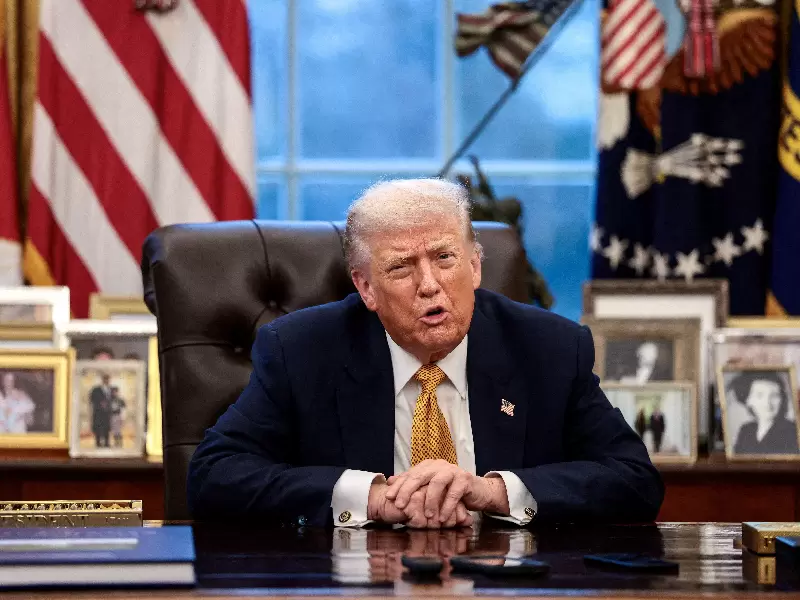 FILE PHOTO: U.S. President Donald Trump is interviewed by Reuters White House correspondent Steve Holland (not pictured) during an exclusive interview in the Oval Office in the White House in Washington, D.C., U.S., January 14, 2026. / REUTERS/Evelyn Hockstein/File Photo
President Donald Trump will begin weekly trips around the United States to speak to voters ahead of November's midterm elections, beginning on Jan. 20 with a stop in Iowa, White House chief of staff Susie Wiles said.
The speech in Iowa will focus on the economy and energy, Wiles told reporters on the way to Davos, Switzerland. Cabinet officials will also increase their domestic travel in the coming months, she said.
Also Read: Trump says he “saved millions” by ending India-Pakistan hostilities
The domestic travel comes as frustration has grown among senior White House aides and Republican lawmakers over Trump’s emphasis on foreign policy, rather than the economic and healthcare concerns dominating the election year.
Opinion polls show Americans are broadly unhappy with Trump's handling of the economy, and Trump conceded in an interview with Reuters last week that his Republican Party could struggle to retain its tenuous grip of Congress because the party of the president historically suffers losses during midterm elections.
Trump's attention on foreign policy has included a military operation that led to the capture of Venezuelan President Nicolás Maduro, escalating rhetoric about seizing Greenland, negotiating an end to Russia's war in Ukraine, and pushing an ambitious international Board of Peace, that aims to resolve conflicts globally.
On Jan. 21, Trump ruled out the use of force in his bid to control Greenland, but said in a speech to world leaders in Davos that no other country can secure the Danish territory. His comments overshadowed a speech that was intended to focus primarily on the U.S. economy.
Trump has struggled to convey a message on affordability that resonates with voters, and the president's aides and allies fear blowback in November since foreign policy is rarely a winning issue in U.S. congressional elections. While Trump is not on the ballot in November, Republicans view him as their best messenger on the economy and plan to use him to win over skeptical voters.
Some 36 percent of Americans approve of Trump's overall handling of the economy, according to a recent Reuters/Ipsos poll. That is well below his initial 42 percent rating on the issue when he first took office last year, but up from a low of 33 percent in a December poll.
In recent days, the White House has scrambled to offer Americans a slew of populist economic proposals to ease cost-of-living concerns.
Trump has proposed a cap on credit card interest rates at 10 percent, a ban on large investors buying up family housing and a directive to government-controlled mortgage giants Fannie Mae and Freddie Mac to buy $200 billion in mortgage bondsto lower mortgage interest rates.
Half a dozen economists and lenders who spoke to Reuters expressed skepticism that Trump's recent economic proposals will have any meaningful impact on the cost of living between now and November's congressional elections and some could even backfire.
Discover more at New India Abroad.
Leave A Comment
Related








ADVERTISEMENT

ADVERTISEMENT
E Paper
Video

Comments
Start the conversation
Become a member of New India Abroad to start commenting.
Sign Up Now
Already have an account? Login