ADVERTISEMENT
ADVERTISEMENT



Why Mohan Bhagwat’s Message Belongs at the Universal Oneness Celebrations
He chose to forgo a medical career to become a full-time pracharak (volunteer worker) for the Rashtriya Swayamsevak Sangh (RSS), the massive social organization founded in 1925
-
 Madhu Hebbar
 - Fri, 14, Aug 2026
- 04:42 EDT
- 23
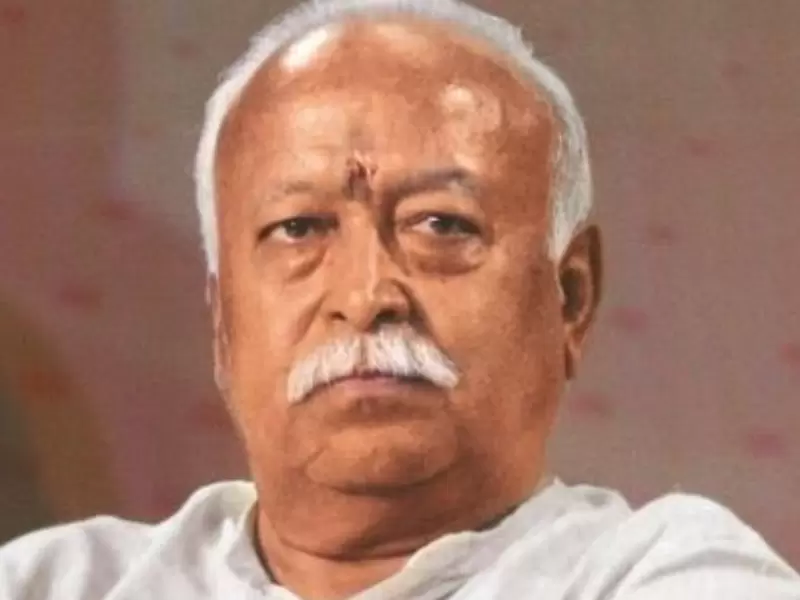 Mohan Madhukar Bhagwat / X/@mohanbhagwat
Born in 1950 in Chandrapur, Maharashtra, Mohan Madhukar Bhagwat grew up in a household deeply committed to community service. As a young man, he chose to study veterinary science, earning his degree in animal husbandry.
However, just as he was preparing for postgraduate studies in 1975, a deep sense of social calling changed his trajectory. He chose to forgo a medical career to become a full-time pracharak (volunteer worker) for the Rashtriya Swayamsevak Sangh (RSS), the massive social organization founded in 1925. Working quietly at the grassroots level for decades across villages and towns, Bhagwat rose through the ranks due to his strong organizational skills, eventually becoming the Sarsanghchalak (chief leader) of the RSS in 2009.
The Engine of Grassroots Action
To understand Mohan Bhagwat’s leadership, one must look at the grassroots machinery of the Sangh, which makes up a vital chapter of his lifelong work. Under his guidance, the RSS operates as a huge network of grassroots activism, running more than 130,000 service projects across India. These initiatives focus heavily on social upliftment, environmental protection, and local community care:
Environmental Stewardship: Through environmental wings like the Paryavaran Sanrakshan Gatividhi (PSG), RSS volunteers drive tree plantation campaigns, campus greening projects, and single-use plastic reduction drives across the country. Bhagwat has consistently urged society to make water conservation and afforestation a personal priority, stating that "Sanatan dharma was based on jal (water), jungle (forest), and zameen (land)... we must plant saplings to boost afforestation."
Organic Farming & Soil Health: The Sangh's agricultural affiliate, the Bharatiya Kisan Sangh (BKS), promotes eco-friendly, traditional agricultural methods. Bhagwat has championed organic and cow-based farming to protect soil health and save farmers from economic strain, noting that "organic farming is not only environment-friendly, but it also enhances the production of crops and rids farmers of the debt trap."
Water Conservation: Across drought-prone regions such as Marathwada and Rajasthan, volunteers build check dams and restore village tanks (taalaabs). Bhagwat has stressed this grassroots responsibility, reminding volunteers: "We may not be able to create water, but we can definitely promote conservation of water."
Social Upliftment & Crisis Relief: RSS affiliates run thousands of free schools, vocational training centers, and clinics in remote tribal belts. During emergencies, from floods and famines to the COVID-19 pandemic, volunteers act as first responders, distributing food packs and providing medical relief regardless of community background.
A Modern Vision Through His Speeches
As the leader of millions of volunteers, Bhagwat regularly delivers speeches outlining his vision for a harmonious and modern India. Over recent years, his public addresses have focused on crucial social issues: On Women and Dignity: Speaking after national outrage over violence against women, such as the attack at Kolkata's R.G. Kar Medical College, Bhagwat condemned attempts to shield criminals through political influence. He emphasized that women's security, dignity, and active participation in public life are nonnegotiable obligations. He also warned against perverted digital content and mobile addiction, which harm moral values among youth.
On Eradicating Caste Discrimination: Bhagwat has taken a firm stand against historical caste barriers, urging society to erase caste from the mind first. To build true equality, he championed the practical goal of "One Well, One Temple, One Crematorium" in every village. He encouraged all communities to collectively celebrate historical figures like Maharishi Valmiki and Sant Ravidas, reinforcing that the entire nation shares a single identity.
On Freedom of Religion and Unity: Highlighting India’s pluralistic heritage, Bhagwat maintains that the nation belongs equally to all its citizens, regardless of religious belief. While advocating for peaceful coexistence and respect for all faiths, he stresses that national unity comes first and that all grievances must be addressed through peaceful, democratic means rather than violence.
On Service as a Duty: Reflecting on crisis relief work during famines and epidemics, Bhagwat explains that social service is not an act of pity, but a fundamental duty. He describes humanity as "one big family," where stronger members naturally support those facing hardship, blending spiritual values of care with modern tools of development.
Why Madison Square Garden is the Right Stage
Given his life’s trajectory and the core philosophy he espouses, Mohan Bhagwat’s address at the "Universal Oneness Celebrations" at New York’s Madison Square Garden is not just a high-profile event, it is a remarkably fitting convergence of message, venue, and timing.
A Philosophy Rooted in Universal Oneness (Vasudhaiva Kutumbakam): Bhagwat's overarching message consistently returns to the ancient Indian ideal that the world is one single family. Addressing a global gathering on "Universal Oneness" directly mirrors his core thesis: that true global harmony is built when societies move beyond divisions, practice selfless service, and see every individual as part of an interconnected whole.
Bridging Grassroots Action with Global Dialogue: Madison Square Garden sits at the heart of one of the world's most culturally diverse metropolises. For a leader who spent decades as a veterinarian and grassroots organizer before steering a massive worldwide network of social initiatives, this global stage allows him to connect practical, on-the-ground human service, from flood relief to environmental stewardship, with universal spiritual values.
Relevance to the Diaspora and Beyond: The Indian American community is itself a living model of pluralism, success, and civic contribution. Bhagwat’s themes, eradicating social discrimination, treating environmental care as a sacred obligation, and fostering civic duty without losing one's cultural anchor, resonate deeply with a global audience seeking sustainable, unified solutions to modern polarization.
At a venue known for historic cultural exchanges, Mohan Bhagwat bringing his message of oneness, social harmony, and mutual respect offers a timely, unifying vision for an increasingly divided world. How Dr. Mohan Bhagwat Views 100-Year Journey of RSS As a Swayamsevak and Sarsanghchalak This video provides direct insight from Mohan Bhagwat on his personal journey as a Swayamsevak and the RSS's century-long effort in grassroots activism and social transformation.
(The views and opinions expressed in this article are those of the author and do not necessarily reflect the official policy or position of New India Abroad.)
Discover more at New India Abroad.
Leave A Comment
Related





ADVERTISEMENT

ADVERTISEMENT
E Paper
Video

Comments
Start the conversation
Become a member of New India Abroad to start commenting.
Sign Up Now
Already have an account? Login