ADVERTISEMENT
ADVERTISEMENT



UN Indian mission links Ambedkar vision with multilateralism
Parallels were drawn between Ambedkar’s vision of the Indian Constitution and the UN Charter.
-
1759953093.png) Staff Reporter
Staff Reporter - Wed, 15, Apr 2026
- 03:57 EDT
- 33
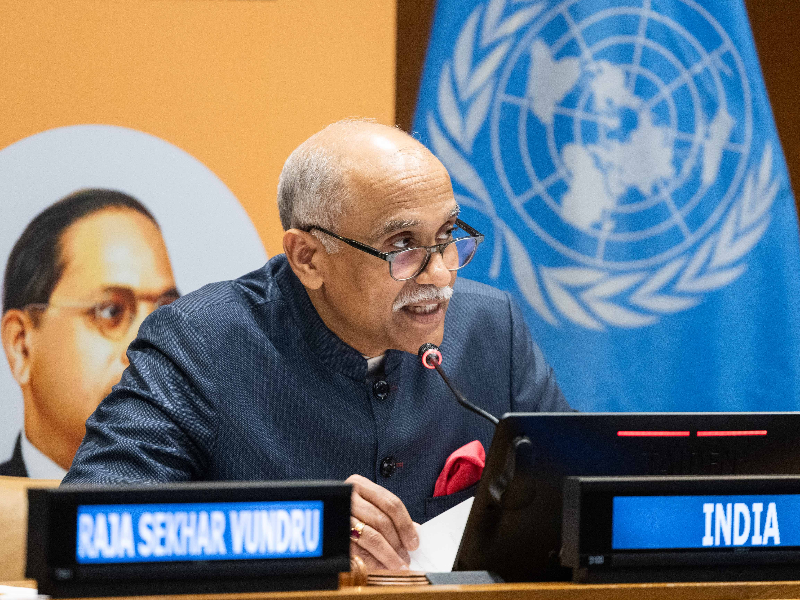 Permanent Representative of India to the United Nations Parvathaneni Harish / Courtesy photo
India’s Permanent Mission to the United Nations organized a commemorative event to mark the 135th birth anniversary of Dr. B. R. Ambedkar at United Nations Headquarters on April 14.
Titled, “Dr. B. R. Ambedkar’s Vision of Constitutional Morality and Its Relevance for Multilateralism,” the event brought together members of the diplomatic corps, academia, and people from various walks of life, underlining that Dr. Ambedkar’s vision of constitutional morality, social equality, and empowerment remains relevant and continues to inspire humanity’s march toward inclusion, democracy, and equality.
The opening remarks were given by the permanent representative of India to the United Nations, Ambassador Harish Parvathaneni.
Parvathaneni, in his address, outlined the core features of India’s democracy and constitutional values, while highlighting important parallels between the Constitution of India and the UN Charter.
He further remarked that Ambedkar’s call to cultivate constitutional morality is particularly relevant in today’s troubled times, adding that embracing this principle can strengthen multilateralism, drive meaningful reforms in the United Nations, revitalize its principal organs, and make the UN more effective and fit for purpose in the 21st century.
The keynote address was delivered by Dr. Raja Sekhar Vundru, a senior civil servant and a noted Ambedkar scholar. Vundru highlighted Ambedkar’s push for multilateralism and described him as someone who witnessed both the World Wars and the creation of the UN. He added that the foundational spirit of maintenance of international peace, as outlined in the UN Charter, is also reflected in the Indian Constitution written by Ambedkar.
ALSO READ: Relevance of B.R. Ambedkar’s vision of equality among Indian youth
In this context, the keynote speaker said that there is a case for cultivating international constitutional morality on the basis of multilateralism and the UN Charter.
Guest speaker Dr. Santosh Raut, visiting professor at Harvard Divinity School, described Dr. B. R. Ambedkar’s life as a powerful moral testimony. He noted that Ambedkar did not merely escape suffering but transformed it, turning personal pain into profound wisdom.
Highlighting the significance of constitutional morality, as endorsed by Ambedkar, Dr. Raut emphasized that morality serves as the essential force that translates the written words of documents like the UN Charter into practical reality and effective action.
Discover more at New India Abroad.
Related





ADVERTISEMENT

ADVERTISEMENT
E Paper
Video

Comments
Start the conversation
Become a member of New India Abroad to start commenting.
Sign Up Now
Already have an account? Login