ADVERTISEMENT
ADVERTISEMENT


Trump says he will raise US global tariff rate from 10% to 15%, following court ruling
In a social media post on Feb. 21, Trump said he would use the 150-day period to work on issuing other "legally permissible" tariffs
-
 Reuters
 - Sat, 21, Feb 2026
- 13:26 EST
- 61
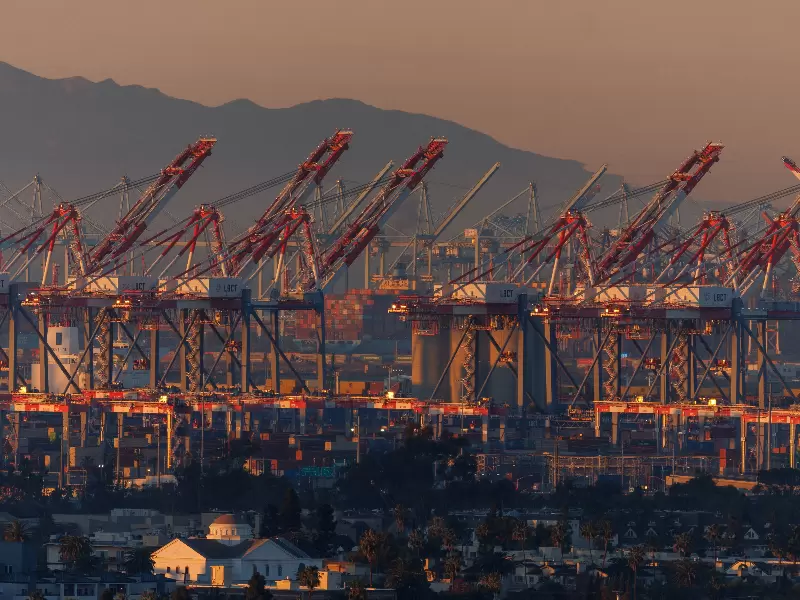 The Long Beach Container Terminal is shown at the Port of Long Beach as seen from Signal Hill, California, U.S., January 14, 2026. / REUTERS/Mike Blake
President Donald Trump said on Feb. 21 he will raise a temporary tariff from 10 percent to 15 percent on U.S. imports from all countries, the maximum level allowed under the law, after the U.S. Supreme Court struck down his previous tariff program.
Trump had immediately announced a 10 percent across-the-board tariff on Feb. 20 after the court's decision, which found the president had exceeded his authority when he imposed an array of higher rates under an economic emergency law.
Also Read: Delivered crucial relief: Neal Katyal on Supreme Court win over Trump tariffs
The new levies are grounded in a separate but untested law, known as Section 122, that allows tariffs up to 15 percent but requires congressional approval to extend them after 150 days. No president has previously invoked Section 122, and its use could lead to further legal challenges.
Trade experts and congressional aides are skeptical the Republican-majority Congress would extend the tariffs, given polls that show growing numbers of Americans blame the duties for higher prices.
TRUMP EYES OTHER WAYS TO IMPOSE TARIFFS
In a social media post on Feb. 21, Trump said he would use the 150-day period to work on issuing other "legally permissible" tariffs. The administration intends to rely on two other statutes that permit import taxes on specific products or countries based on investigations into national security or unfair trade practices.
"I, as President of the United States of America, will be, effective immediately, raising the 10 percent Worldwide Tariff on Countries, many of which have been 'ripping' the U.S. off for decades, without retribution (until I came along!), to the fully allowed, and legally tested, 15 percent level," he wrote in a Truth Social post.
The Section 122 tariffs include exemptions for certain products, including critical minerals, metals and energy products, according to the White House.
Wendy Cutler, a former senior U.S. trade official and senior vice president at the Asia Society think tank, said she was surprised Trump had not gone for the maximum Section 122 rate on Feb. 20, but that his rapid-fire change underscored the uncertainty trading partners faced.
Trump, who often describes tariffs as his favorite word, has attacked individual justices in personal terms and insisted he retained the power to impose tariffs as he sees fit.
TRADE DEALS MUST BE HONORED: GREER
Trump has used the tariffs, or the threat of imposing them, to extract trade deals from foreign countries.
After the court's decision, Trump's trade representative, Jamieson Greer, told Fox News on Friday that those countries must honor agreements even if they call for higher rates than the Section 122 tariffs.
Exports to the U.S. from countries such as Malaysia and Cambodia would continue to be taxed at their negotiated rates of 19 percent, even though the universal rate is lower, Greer said.
The ruling could spell good news for countries like Brazil, which has not negotiated a deal with Washington to lower its 40 percent tariff rate but could now see its tariff rate drop to 15 percent, at least temporarily.
Trump's approval rating on his handling of the economy has steadily declined during his year in office, with 34 percent of respondents saying they approve and 57 percent saying they disapprove in a Reuters/Ipsos poll that closed on Feb. 23.
Discover more stories on NewIndiaAbroad
Leave A Comment
Related







ADVERTISEMENT

ADVERTISEMENT
E Paper
Video

Comments
Start the conversation
Become a member of New India Abroad to start commenting.
Sign Up Now
Already have an account? Login