ADVERTISEMENT
ADVERTISEMENT


Trump names Warsh as next Federal Reserve Chair
The nomination caps a months-long process that often resembled a public audition as Warsh, White House economic advisor Kevin Hassett and other top contenders.
-
 Reuters
 - Fri, 30, Jan 2026
- 11:10 EST
- 106
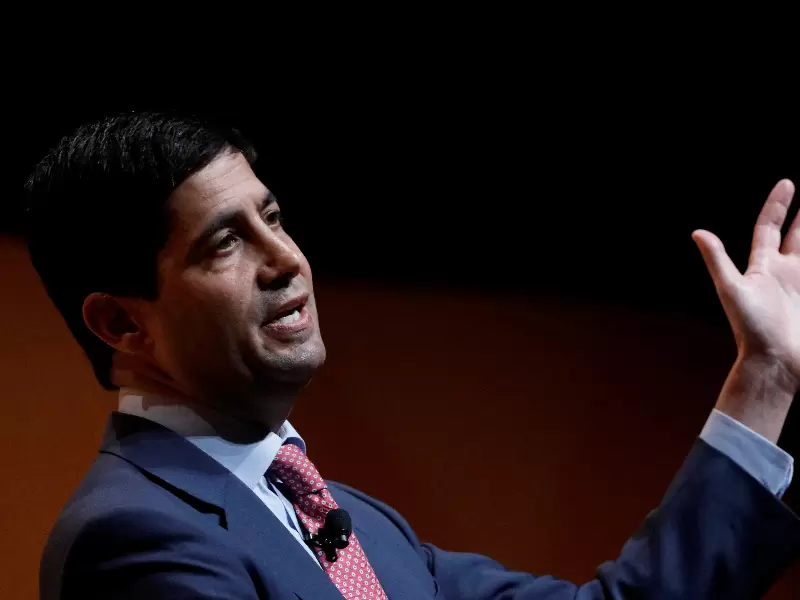 FILE PHOTO: Kevin Warsh, Fellow in Economics at the Hoover Institution and lecturer at the Stanford Graduate School of Business, speaks during the Sohn Investment Conference in New York City, U.S., May 8, 2017. / REUTERS/Brendan McDermid/File Photo
U.S. President Donald Trump on Jan. 30 said he had picked former Federal Reserve governor Kevin Warsh as the next head of the Federal Reserve, when Chair Jerome Powell steps down in May.
The nomination caps a months-long process that often resembled a public audition as Warsh, White House economic advisor Kevin Hassett and other top contenders - including sitting Fed governor Christopher Waller and Wall Street insider Rick Rieder - appeared regularly on television to tout their credentials and showcase their thoughts about the economy and Fed policy.
Also Read: Trump says Fed pick due Jan. 30 after meeting Warsh at White House
The dollar trimmed earlier gains, while U.S. Treasury yields were higher and stock futures pointed to a weak open on Wall Street.
COMMENTS:
GARY PAULIN, INTERNATIONAL CHIEF INVESTMENT STRATEGIST, NORTHERN TRUST ASSET MANAGEMENT, LONDON
“What he might want to do and what he actually does might be different things, given the way decision-making is done within the Federal Reserve”
“Two things market will pick up on is his commentary on wanting to reduce the Fed’s balance sheet, footprint in the economy. People question what does that mean for asset pricing and for liquidity.”
“The counter to that will be his focus on intermediary levers, particularly the banks and how, if we’re for not using the central bank as a primary tool for injecting liquidity in the system, how do we maintain liquidity by using the banks in a more efficient way? So reforms, as they relate to the banks, will be a key focus”.
PETER CARDILLO, CHIEF MARKET ECONOMIST, SPARTAN CAPITAL SECURITIES, NEW YORK
"I don't want to say it's a total surprise... he was considered a hawk, but recently he seems to have aligned himself with Trump, so it's kind of difficult to assess how the market is going to accept this nomination."
"We just have to see whether or not he will be influenced by the White House. My guess is that he will not and that he will look very carefully, he will be somewhat balanced in in terms of inflation, labour markets. Less determined than Powell, but not that far apart."
BENJAMIN FORD, STRATEGIST, MACRO HIVE, LONDON
"For now, we don't read too much into the big headline. Instead, we continue to point to our dollar framework: near-term G10 FX outperformance as vols climb. Then, once vols settle, it'll be a rotation back to favoured emerging-market trades."
ELIAS HADDAD, GLOBAL HEAD OF MARKETS STRATEGY, BROWN BROTHERS HARRIMAN, LONDON
"His view on the balance sheet and what it means for rates suggest that the yield curve in the U.S. could steepen further as short rates fall, while longer-term rates perhaps stay sticky, or even drift higher, because of lack of U.S. fiscal credibility.
In terms of the dollar impact, it's neutral and for equity markets, it's also neutral. He still favours lower rates, so that's supportive for risk assets. But on the other hand, he wants to significantly reduce the Fed's balance sheet, which has been a big support for this melt-up in asset prices."
IPEK OZKARDESKAYA, SENIOR ANALYST AT SWISSQUOTE BANK, SWITZERLAND
“There is a general sense of hawkishness in the market following the emergence of Kevin Warsh’s name. He is viewed as less dovish than many of the other candidates and is expected to favour fewer rate cuts, which explains why the dollar strengthened initially.
Yields also moved higher, though what is interesting is that the two‑year Treasury yield — which best captures expectations for Fed policy — has softened this morning. That suggests the initial moves were largely a knee‑jerk reaction to the headline, and that first impression is now beginning to fade."
"Given that several names floated previously were extremely dovish and closely aligned with the White House’s preference for aggressive rate cuts despite the data, Warsh’s candidacy represents a relatively hawkish shift for the Fed’s leadership. It is not necessarily a relief, but it does mark a more disciplined and realistic development.”
FIONA CINCOTTA, SENIOR MARKET ANALYST, CITY INDEX, LONDON
"We have seen a little bit of volatility surrounding the expectations or in the anticipation of the decision. Warsh typically has fame for being of a more hawkish stance, but more recently has moved more in line with Trump and (taken) a slightly more dovish take. So the market is just now waiting to see what this might mean as far as the outlook for the Federal Reserve policy is concerned."
"At the end of the day, the Fed has to remain data dependent and it has to remain independent. And I don't think that will change under Kevin Warsh. Although we're talking about a change at the head of the Fed, this is a committee and if the data doesn't show the need to be adopting a more dovish stance, then it's going to be very difficult for one person to drive that change."
KIRSTINE KUNDBY-NIELSEN, ANALYST, DANSKE BANK, COPENHAGEN
"I would say it's dollar positive. He's an experienced central banker with previous Fed experience.
It alleviates some of the nervousness should we have got a Fed chair who was more politicised or that was a lot more dovish.
In that sense, it is pricing out some of the risk that it would have been someone who's been clear in communicating how dovish they would be, like (Stephen) Miran."
PHILIP SHAW, CHIEF ECONOMIST, INVESTEC, LONDON
“We heard serious rumours about Warsh taking over overnight. There doesn't really seem to be much of a case to expect further market reaction. That was all but done last night. So it's now a case of just assessing where Warsh stands on various factors, including rates and the balance sheet. He does not have a reputation for being an out-and-out dove at all. Of course, he's a former Fed Governor and he's known within the UK for conducting an analysis of (Bank of England rate-setting transparency 10 years ago or so. So he is well respected.”
“The U.S.'s fiscal position is on an unsustainable path and Warsh's appointment doesn't necessarily stop President Trump from interfering with either the Fed or other areas of the U.S. government machinery. The risks of a lower dollar remain, (although) those risks are probably reduced with the news this afternoon.”
Also Read: U.S. tariff warnings raise new market concerns
CHRIS BEAUCHAMP, CHIEF MARKET ANALYST, IG MARKETS, LONDON
"We will see from here because it's one thing to appoint somebody and it's an entirely different to actually be chairman of the Federal Reserve."
"The president wants low rates to be the main priority.... the problem is that it could be that his (Warsh's) position becomes just as difficult. The president doesn't change and it's recognition that the U.S. finds itself in a very difficult position right now in terms of inflation remaining stubborn, but economic data, as we should see in payrolls beginning to show signs of weakness with the unemployment rate moving higher."
KALLUM PICKERING, CHIEF ECONOMIST, PEEL HUNT, LONDON
"Warsh...is somewhat of a surprise pick, not being among the recently speculated frontrunners. That's why we got stocks and Treasuries coming back a little bit on the news earlier and the dollar picked up a little bit.
"In the end, I don't think that the whole debate around whether you get a hawkish or a dovish Fed chair matters as much as the market thinks. Mainly because I think the U.S. is going to see inflation mostly in the safe zone this year, which means the Fed should be free to focus on the employment side of its mandate."
"And so even if we would have got the dove or the hawk, in the end, the difference is their view on inflation, not whether or not they should support employment. My hunch is they're going to cut a little bit anyway just to try and support economic activity."
NICK KENNEDY, CURRENCY STRATEGIST, LLOYDS, LONDON
"Warsh is my preferred candidate but it didn't look promising for a while."
"From a policy perspective, his track record is more on the hawkish side and he is academically aligned with the administration on wanting a smaller balance sheet.
"In the interview process you have to be aligned with what Trump wants on policy rates. I don't think this is a role you would want to step into if you were in conflict with that."
"So, that idea that this is good for the dollar is going to be short-lived."
Discover more at New India Abroad.
Leave A Comment
Related







ADVERTISEMENT

ADVERTISEMENT
E Paper
Video

Comments
Start the conversation
Become a member of New India Abroad to start commenting.
Sign Up Now
Already have an account? Login