ADVERTISEMENT
ADVERTISEMENT


Top FDA regulator Vinay Prasad to step down
Dr. Prasad, whose parents immigrated to the U.S. from India, is returning to his faculty role at the University of California,
-
1747754650.png) Ishani Duttagupta
Ishani Duttagupta - Sat, 07, Mar 2026
- 00:54 EST
- 135
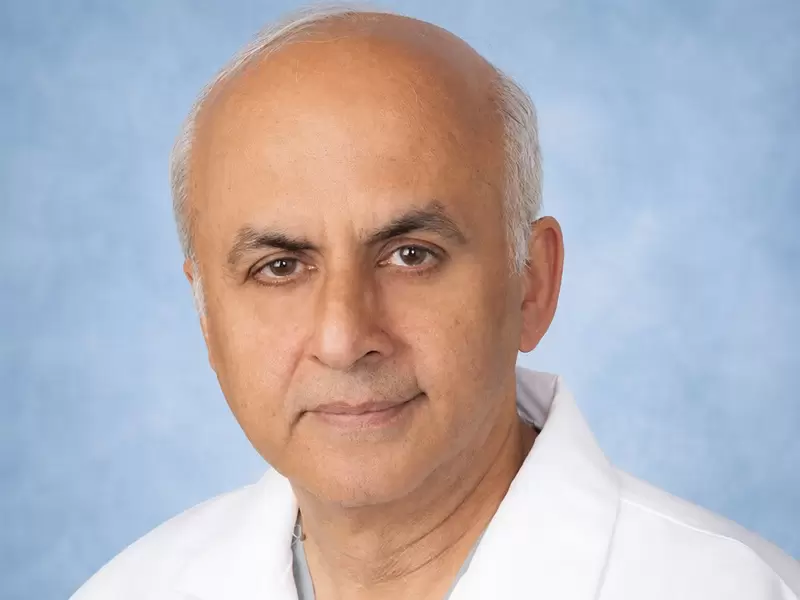
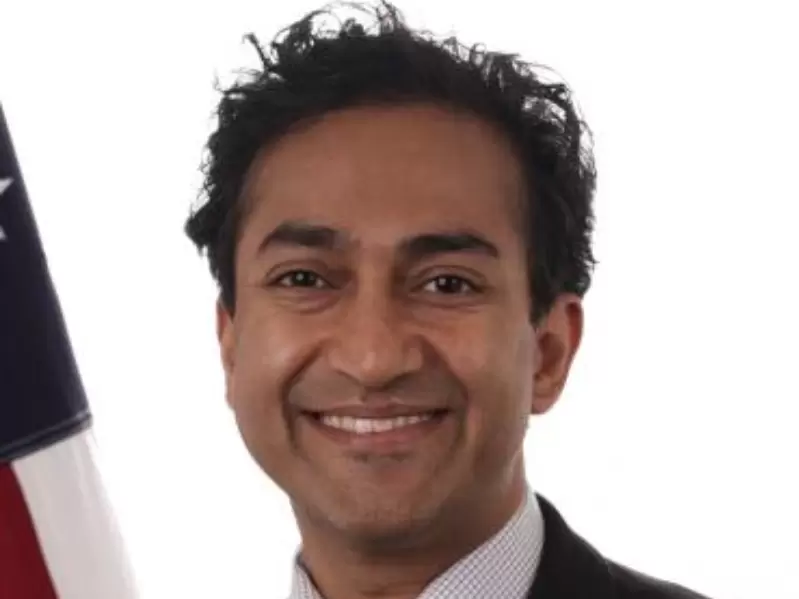 Vinay Prasad / Wikipedia
The U.S. Food and Drug Administration (FDA) will lose a key Indian American leader next month as Dr. Vinayak (Vinay) Kashyap Prasad steps down from his dual roles as director of the Center for Biologics Evaluation and Research (CBER) and the agency’s chief medical and scientific officer.
FDA Commissioner Marty Makary shared the news on social media on March 6, marking a significant transition for the agency’s biologics and scientific leadership.
ALSO READ: From India to NIST: Raman outlines innovation agenda
Dr. Prasad, the agency’s top regulator, has a wide range of responsibilities, including advising the FDA commissioner and other senior officials on cross-cutting and emerging medical and scientific issues impacting regulatory science and public health. He provides strategic input and leadership on trans-center working groups and initiatives, ensuring scientific consistency and integration across FDA centers, and builds partnerships with academic, governmental and industry stakeholders.
Dr. Prasad also provides senior medical and scientific input to the FDA commissioner on cross-center medical policy and regulatory decisions and acts as a senior medical and scientific representative at national, international or advisory committee meetings and forums related to public health, regulatory science and innovation.
In his role as director of CBER, Dr. Prasad supervises the FDA’s work regulating biological products for human use under applicable federal laws.
Dr. Prasad’s tenure at the FDA has been marked by controversy and clashes with the pharmaceutical industry. He has been a vocal critic of broad vaccine mandates and the frequency of boosters. In late 2025, Prasad issued an internal memo claiming that COVID-19 vaccines caused the deaths of 10 children due to myocarditis. This sparked backlash from 12 former FDA commissioners. He worked with FDA Commissioner Marty Makary to scale back annual COVID-19 booster recommendations, limiting them primarily to seniors and high-risk individuals.
ALSO READ: Darshana Patel to lead California’s Education Committee
In early 2026, Dr. Prasad blocked pharma giant Moderna’s mRNA-based flu vaccine application, arguing the trial design did not use an adequate “standard of care” control group. The decision was later reversed. In July 2025, he was briefly fired following a social media campaign by right-wing activists but was reinstated 10 days later with the backing of Health Secretary Robert F. Kennedy Jr. and FDA Commissioner Makary.
Significantly, Dr. Jay Bhattacharya, the Indian American director of the U.S. National Institutes of Health, who is now concurrently serving as acting director of the Centers for Disease Control and Prevention, is also known for his opposition to COVID-19 vaccine mandates and has raised concerns about the testing and rollout of the mRNA COVID-19 vaccines.
FDA chief Dr. Makary said in a post on social media platform X on March 6:
“A year ago, Dr. Prasad came to the FDA to implement four major long-lasting reforms: 2-to-1 pivotal trial requirement, national priority reviews, a risk-stratified COVID vaccine framework, and the new plausible mechanism framework for ultra rare diseases which we launched last week. Also, under his leadership, his center hit a record number of approvals in Dec. He got a tremendous amount accomplished within his one-year sabbatical from UCSF and will be returning back to his academic home later next month. We will name a successor before his departure. I want to thank him for his service and personal sacrifice to take time away from his family.”
Dr. Prasad, whose parents immigrated to the U.S. from India, is returning to his faculty role at the University of California, San Francisco, following his FDA tenure. Since 2020, he has served as a professor in UCSF’s Department of Epidemiology and Biostatistics. A specialist in hematology and oncology, Dr. Prasad previously held professorships in medical oncology and public health at Oregon Health & Science University. His distinguished career also includes fellowships at the National Institutes of Health and the National Cancer Institute.
Raised in a suburb of Cleveland, Ohio, he graduated from Michigan State University with a bachelor of science in physiology and philosophy. He received his M.D. from the University of Chicago Division of Biological Sciences Pritzker School of Medicine, with an internship and residency in internal medicine at Northwestern University, and a master of public health from the Johns Hopkins University Bloomberg School of Public Health.
Dr. Prasad has published more than 500 academic articles, conducted extensive research in the field of oncology and presented at hundreds of scientific and medical conferences. He is the author of the books 'Malignant: How Bad Policy and Bad Evidence Harm People with Cancer and Ending Medical Reversal: Improving Outcomes, Saving Lives'.
Discover more stories on NewIndiaAbroad
Leave A Comment
Related






ADVERTISEMENT

ADVERTISEMENT
E Paper
Video

Comments
Start the conversation
Become a member of New India Abroad to start commenting.
Sign Up Now
Already have an account? Login