ADVERTISEMENT
ADVERTISEMENT



The man who refused to look away
How Girish Kulkarni transformed a teenager’s encounter with injustice into a movement for dignity
-
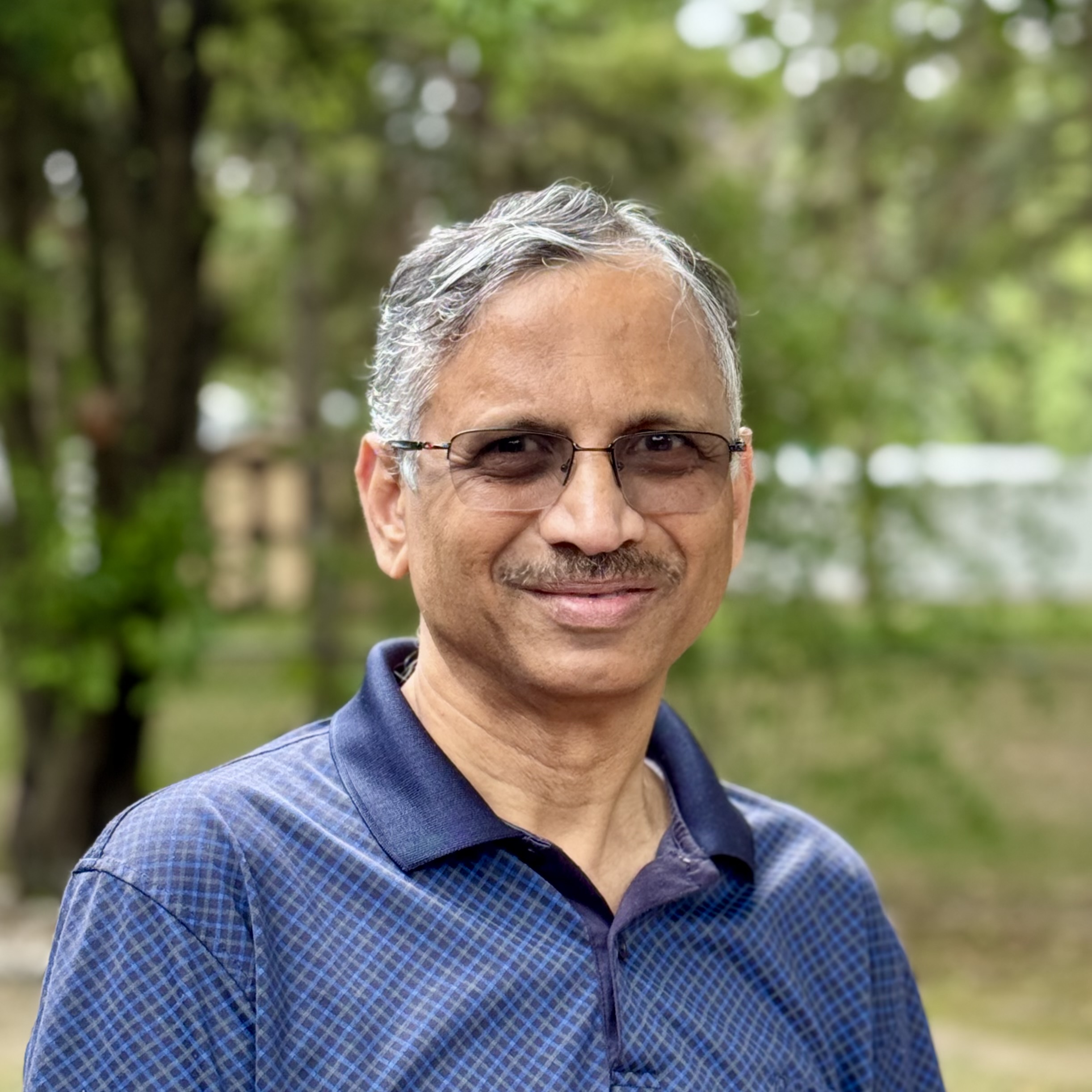 Prasad Kaipa
 - Thu, 13, Aug 2026
- 10:38 EDT
- 29
 Girish Kulkarni / Snehalaya
When I arrived at the home of R. Sundar, co-founder of the Hi 5 Youth Foundation, an unassuming man stepped forward, shook my hand, and warmly invited me into the conversation already underway.
Nothing in his manner announced the scale of what he had accomplished. He was gracious, attentive, and seemingly as interested in meeting me as I was in meeting him.
Only later did I understand that he was Dr. Girish Kulkarni, founder of Snehalaya, one of India’s remarkable grassroots organizations serving women, children, and communities that society too often refuses to see.
The other visiting guest was Anshu Gupta, founder of Goonj and a Ramon Magsaysay Award recipient. Listening to these two men describe their work—and witnessing the mutual respect among them and Sundar—made it one of those rare evenings that quietly changes one’s understanding of leadership and service.
Also Read: Why some immigrant institutions outlive their founders
Girish’s story began when he was about 13 years old in Ahmednagar, Maharashtra. On his way to mathematics classes, he regularly passed through a red-light district. There he saw girls his own age being sexually exploited.
His response was simple and profound: Those girls should be sitting beside him in school.
The injustice became more personal when Girish visited the home of a friend from a nomadic community. His friend’s younger sister, mother, and grandmother—three generations of the same family—were all in prostitution.
“We can’t choose our parents,” Girish recalled at dinner. “We can’t decide where to take birth.”
He recognized that being born into a teacher’s family, protected and able to attend school, was not an achievement of his own. It was grace—and that grace created responsibility.
For several years, Girish carried the question of what he could do. He met social reformers, including Baba Amte, and encountered the example of Vijayatai Lawate, a nurse who had opened her home to women and children from Pune’s red-light district.
Her example removed his last excuse for waiting.
At 19, Girish asked himself two questions: “If not now, then when? And if not me, then who?”
In November 1988, he began visiting Ahmednagar’s red-light areas, initially hoping to persuade women to leave prostitution if alternative livelihoods could be found. The women helped him recognize the limitations of his approach.
“You cannot change my life,” one young woman told him. “But you can do something for my child.”
That exchange changed the direction of his work. Girish realized that social workers often arrive with their own definitions of a problem and their own preferred solutions. Meaningful intervention begins by listening to those living with the problem.
One woman entrusted him with her three-and-a-half-year-old child. Girish began a care center in an old municipal school building. Within three months, it was serving more than 100 children from several red-light areas.
When some children had nowhere safe to live, he turned his family home into a hostel. His parents allowed him to bring children there, along with two women who helped care for them. Some of the women and children were subsequently found to be HIV-positive.
This was a period when effective HIV treatment was largely unavailable to them. Women came to Snehalaya from red-light districts across India because, as Girish put it with devastating directness, they had “no place to die.”
Snehalaya had little money, almost no medical infrastructure, and no trained medical staff. Girish and his colleagues learned what they could. Many women and children died on the premises. Even when the organization tried to discourage more women from coming because it lacked the capacity to care for them, they pleaded to be allowed to spend their final days there.
“Let us die here,” they said.
Over time, those small huts evolved into a hospital providing free, nondiscriminatory care to people living with HIV. Snehalaya also developed residential care, an English-medium school, rehabilitation and livelihood programs, adoption services, mental-health and addiction treatment, and initiatives addressing trafficking, child marriage, and sexual abuse.
But the organization’s most significant accomplishment may be how it changed the conditions surrounding exploitation rather than simply responding to its consequences.
At dinner, Girish described cases involving a 14-year-old girl sexually exploited by 22 men and a 16-year-old exploited by 17. The accused included politically connected and influential people. Snehalaya and its allies pursued a landmark case for approximately seven years, helping secure convictions and severe prison sentences.
The case demonstrated that laws alone cannot protect children. Conviction requires complainants, credible witnesses, sustained legal support, and a civil society willing to stand with survivors against powerful people.
Snehalaya complemented prosecution with community mobilization. Women in the red-light districts became active participants in identifying and preventing the trafficking of minors. Auto-rickshaw drivers and other neighborhood residents joined an informal alert network. Girish described it as creating an “antivirus” within the community.
Snehalaya reports that these combined efforts brought an end to the sexual exploitation of minors in Ahmednagar’s red-light districts and prevented second-generation prostitution in the area. It has subsequently helped other organizations adopt similar community-led approaches.
This is a recurring pattern in Girish’s work: People whom society labels as victims become agents of change.
Snehalaya’s current president, Jaya, experienced child marriage and was forced into prostitution. Today, she leads the organization and works directly to empower women in red-light districts. Many Snehalaya projects are similarly led by former students, beneficiaries, and members of the communities it serves.
That may be the most significant measure of Girish’s leadership. He has not constructed an institution that must depend perpetually on its founder. He has cultivated people who can lead it beyond him.
At dinner, someone described this as servant leadership. But it is more than personal humility. Girish has converted humility into organizational architecture: Authority is shared, autonomy is encouraged, and people who once received assistance now shape and lead the institution.
Snehalaya also helps smaller nonprofits develop their capabilities in technology, compliance, management, and organizational sustainability. “We can’t go and work everywhere,” Girish explained. Instead, Snehalaya equips others to serve communities they understand.
I left Sundar’s home deeply moved—not only by what Girish, Anshu, and Sundar have individually created, but by how little many of us outside India know about people like them.
They are not simply operating charitable organizations. They are developing new answers to some of India’s hardest questions: How can service preserve dignity? How can marginalized people become institutional leaders? How can an organization outlive its founder? And how can compassion be converted into lasting social change?
Snehalaya, founded in 1989, now reports serving more than 19,000 people annually through 22 projects spanning education, healthcare, rehabilitation, and public awareness. Yet its significance cannot be captured by numbers alone. Its deeper achievement is the transformation of people once treated as victims into advocates, professionals, trustees, and institutional leaders.
When Girish stepped forward to shake my hand that evening, I could not have known that the quiet, humble man before me had spent nearly four decades confronting traffickers, caring for people whom society had abandoned, educating their children, and preparing those same communities to lead.
Perhaps that is what genuine leadership looks like.
It does not announce itself when it enters the room. Its presence is revealed through the lives and leaders it leaves behind.
How readers can participate
Snehalaya welcomes people who would like to contribute their time, professional expertise, ideas, or financial support. Visitors to India can arrange to spend time at its projects in Ahmednagar and learn directly from its staff and community leaders.
US residents can make tax-deductible contributions or volunteer to strengthen Snehalaya’s American outreach. More information is available through Snehalaya’s US volunteer page and US donation page. The organization can also be reached at snehalayausa@snehalaya.org.
For information about Snehalaya, Goonj, or upcoming Bay Area conversations with their leaders, readers may contact Chitra, who has helped develop their local support network, via WhatsApp at +1 650-396-0150.
Bay Area residents can also ask her about opportunities to meet the visiting leaders on Friday, August 14, and Saturday, August 15.
(The views and opinions expressed in this article are those of the author and do not necessarily reflect the official policy or position of New India Abroad.)
Discover more at New India Abroad.
Leave A Comment
Related







ADVERTISEMENT

ADVERTISEMENT
E Paper
Video

Comments
Start the conversation
Become a member of New India Abroad to start commenting.
Sign Up Now
Already have an account? Login