ADVERTISEMENT
ADVERTISEMENT



Suhas Subramanyam questions Iran deal, says key security concerns remain unresolved
Subramanyam argued that the recent conflict had strengthened rather than weakened Iran's position in the region.
-
 IANS
IANS - Wed, 17, Jun 2026
- 01:23 EDT
- 26
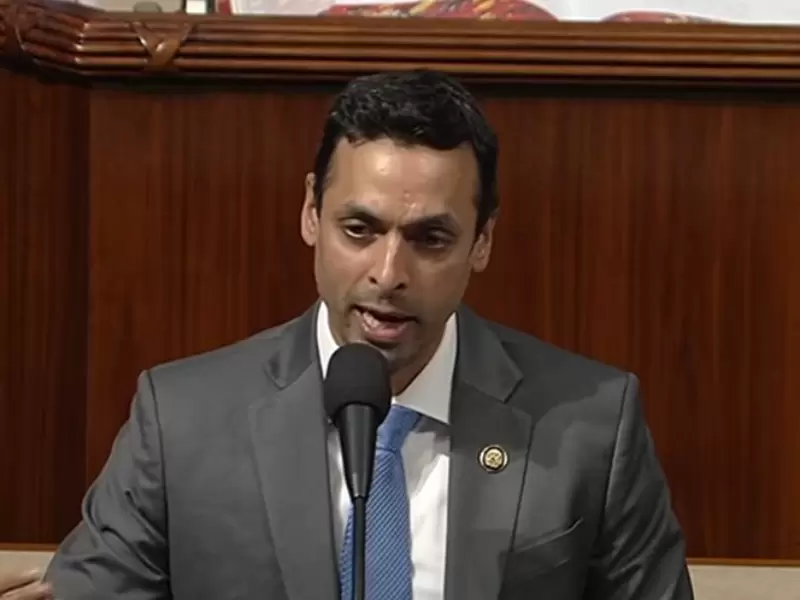 Suhas Subramanyam / A screen grab of Congressman Suhas Subramanyan speaking on the House floor
Indian American Congressman Suhas Subramanyam questioned the Trump administration's Iran agreement, saying the deal leaves key security concerns unresolved while divisive rhetoric continues to fuel discrimination at home.
Speaking to IANS, the Democratic lawmaker in the House of Representatives said the agreement may help reduce immediate tensions in the Middle East but falls short of addressing the issues that Washington has long cited as central to its confrontation with Tehran.
"This Iran deal, yes, it means fewer bombs, which is one good thing," Subramanyam said.
However, he expressed doubts about the administration's negotiating approach.
"I don't have a lot of faith in this administration to negotiate," he said.
"It seems like the Iran deal is a step back from what we had even in 2015 when we had a real nuclear deal in place with very measurable returns."
Subramanyam argued that the recent conflict had strengthened rather than weakened Iran's position in the region.
"All that's happened with this war is it has given Iran more leverage over the region and over the world by allowing it to have some form of leverage," he said.
The Trump administration has presented the agreement as a breakthrough that could ease tensions in the Gulf and restore commercial traffic through the Strait of Hormuz, one of the world's most important energy corridors.
But Subramanyam cautioned that shipping companies and traders were unlikely to return immediately to normal operations.
"A lot of ships have concerns about going through there," he said.
"So it's going to take a long time to normalize trade through the Strait of Hormuz."
The congressman also questioned whether the agreement had achieved its core objectives.
"And then this does nothing when it comes to Iran's support of terrorism," he said.
"It does nothing to curtail Iran's nuclear program, which is the whole point of the war."
Subramanyam said the outcome could have wider implications for American diplomacy and international influence.
"I don't know if it's a decline of US power," he said.
"But certainly this war has undermined this administration's diplomatic efforts and also its ability to follow through on kinetic threats."
He added that the consequences could extend beyond the Middle East.
"What has happened is this administration is weakening the US standing in the world and its standing diplomatically, and that's going to have long-term repercussions," he said.
The congressman then turned to what he described as a troubling rise in hostility directed at Indian Americans and other minority communities.
"We want to make sure we call out hate in all forms, including against the Indian American community," he said.
Subramanyam said such incidents have become increasingly common and are often visible on social media platforms.
"We have seen it in many ways," he said.
"I see it on my own social media. People will respond, saying to go back where I came from. They'll say that I'm not a real American."
The US lawmaker said public officials and community leaders have a responsibility to confront such behavior.
"We can't stay silent when that happens," he said.
"We can't stay silent when things like a flag burning happen. We have to call it out where we see it."
Asked whether political rhetoric was contributing to growing divisions, Subramanyam said inflammatory language from across the political spectrum was harmful.
"There's rhetoric coming from the far right and there's rhetoric coming from the far left, and none of it is helpful," he said.
"And so that's why we have to call it out when we see it."
Discover more at New India Abroad.
Related





.png)

ADVERTISEMENT

ADVERTISEMENT
E Paper
Video

Comments
Start the conversation
Become a member of New India Abroad to start commenting.
Sign Up Now
Already have an account? Login