ADVERTISEMENT
ADVERTISEMENT



Shefali Razdan Duggal never stopped being Indian
The former U.S. ambassador to the Netherlands speaks about identity, diplomacy, immigrant grit and why representation matters to a new generation of Indian Americans
-
1759953093.png) Staff Reporter
Staff Reporter - Tue, 16, Jun 2026
- 03:13 EDT
- 31
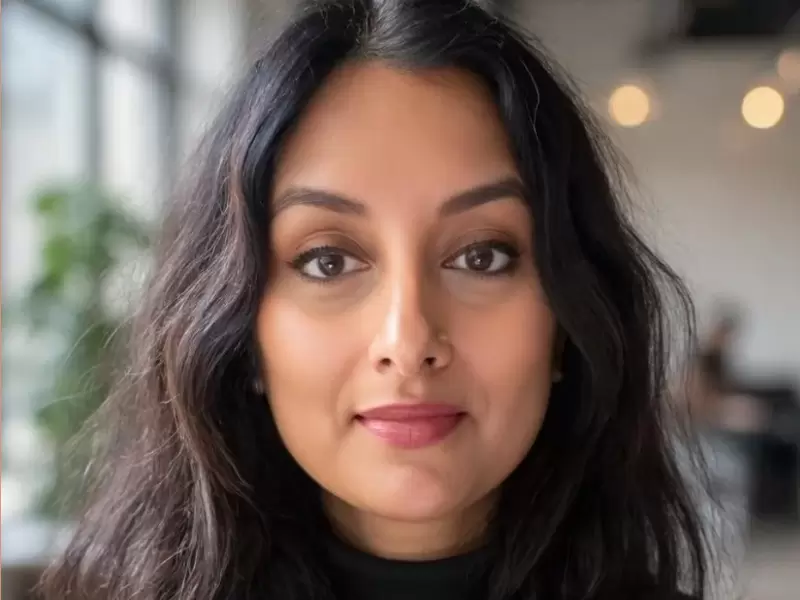
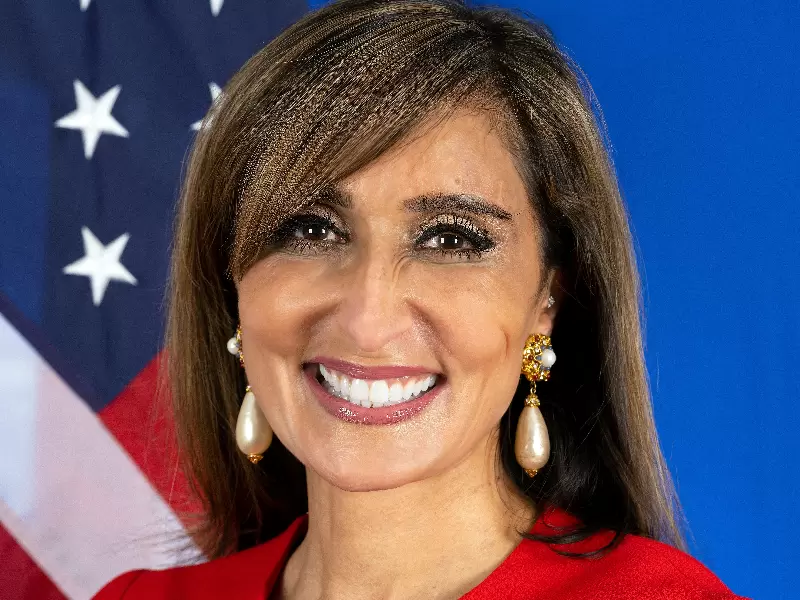 Former U.S. Ambassador to the Netherlands Shefali Razdan Duggal / Wikimedia commons
When Shefali Razdan Duggal arrived in the Netherlands as the United States ambassador in 2022, she carried the authority of Washington, the confidence of a seasoned political operative and the responsibility of representing America abroad.
But she also carried something else.
She carried India.
Not officially. Not diplomatically. Not in any constitutional sense.
She carried it in her memories, in her upbringing, in her values and in the story that had shaped her long before she entered the world of embassies and heads of state.
"I'm Indian American. I'm a U.S. citizen. I represent my country. I'm very, very Indian on the inside, very Indian," Razdan Duggal said during an exclusive interview with India Abroad.
ALSO READ: Shefali Razdan Duggal warns of democratic divide
For many Indian Americans, that sentence may explain why her story resonates so deeply.
At a time when Indian-origin Americans occupy some of the highest positions in government, business, technology and academia, Razdan Duggal's journey stands out because it reflects a familiar immigrant narrative — one built not on privilege, but on sacrifice.
Born in Haridwar and brought to the United States as a 2-year-old child, she was raised by a single mother who worked two minimum-wage jobs.
"She was a seamstress during the day and worked at the grocery store in the evening," Razdan Duggal recalled.
There was no political pedigree.
No influential family network.
No roadmap to diplomacy.
"We had no money, we had no privilege. I had no connections," she said.
Yet decades later, she would become the first person of color to serve as U.S. ambassador to the Kingdom of the Netherlands and the first Indian-origin woman appointed as a U.S. ambassador to Europe.
For Indian Americans who often tell their children that education, hard work and persistence can overcome circumstance, her life reads almost like a modern immigrant parable.
An ambassador who remained a student
The image many people have of ambassadors is one of polished diplomacy, elegant receptions and carefully choreographed statecraft.
Razdan Duggal tells a different story.
Before she even arrived in The Hague, she was studying.
She watched videos of ambassadors presenting credentials to foreign heads of state. She researched Dutch culture. She prepared obsessively.
"I was working 90 hours a week," she said.
That work ethic was visible from the beginning.
One of the first people she reached out to before arriving in the Netherlands was India's ambassador to the country, Renu Pall.
"I specifically went to the Indian ambassador because I thought, this is a person who looks like me," she said.
The outreach was personal.
It was also revealing.
Despite representing the world's most powerful nation, Razdan Duggal approached her assignment with the humility of someone eager to learn.
"I thought, I'm just a person who wants to learn."
The two diplomats quickly formed a close friendship.
"She was the very, very, very first person to come and visit me," Razdan Duggal recalled.
That relationship also reflected something larger about the Indian diaspora — a community that increasingly occupies positions of influence around the world while maintaining connections across national borders.
Finding India in the Netherlands
The Netherlands may not immediately come to mind when Americans think about the Indian diaspora.
But for Razdan Duggal, one of the unexpected joys of her posting was connecting with the country's diverse Indian-origin community.
Part of that community consists of recent arrivals drawn by opportunities in technology and business.
Others trace their roots back more than a century to Suriname, where Indian laborers settled during the colonial era before later moving to the Netherlands.
The community welcomed her warmly.
"They loved that the U.S. ambassador was born in India," she said.
"They loved it."
She attended Diwali celebrations and engaged with Indian-origin residents throughout the country.
What struck many community members was not simply that she was Indian-born.
It was that she openly embraced that identity.
There was no effort to minimize it.
No attempt to distance herself from it.
For many immigrants and children of immigrants, success often comes with pressure to assimilate. Razdan Duggal seemed comfortable inhabiting both worlds simultaneously.
American by citizenship.
Indian by heritage.
Confident in both.
The burden of being first
History often celebrates pioneers after the fact.
Living through it is usually less glamorous.
Razdan Duggal became the first person of color to serve as U.S. ambassador to the Netherlands.
The distinction carried significance.
It also carried pressure.
"If you're the first of anything, being the first person of color in the Netherlands, I was representing more than just me," she said.
"I could not make a mistake."
Her assessment of the challenges facing women and women of color in leadership positions was direct.
"A woman has to work twice as hard. No question. A woman of color has to work four times as hard."
Rather than viewing that reality with bitterness, she viewed it as responsibility.
"The only way that the second person of color can get there is if the first person just does an unmistakably incredible job."
That mindset shaped everything from her preparation for meetings to her public appearances and speeches.
It also shaped how others viewed her.
One moment remains especially meaningful.
At the ambassador's residence, portraits of previous ambassadors lined a wall.
For decades, the images reflected a familiar pattern.
Then there was hers.
A brown woman in a red dress.
Women of color visiting the embassy would stop and stare.
Many became emotional.
"They would just instantaneously start crying," she said.
Some would ask whether her presence meant that they, too, could dream bigger.
For Razdan Duggal, those encounters justified every late night and every demanding week.
The immigrant mentality
Throughout the interview, one theme surfaced repeatedly: gratitude.
Not gratitude for titles or honors.
Gratitude for opportunity.
Razdan Duggal often speaks about what she calls an immigrant mentality.
It is not a concept limited to immigrants, she says, but one many immigrant families understand instinctively.
It is the belief that individual success should serve a larger purpose.
The belief that sacrifices made by one generation create opportunities for the next.
The belief that quitting is difficult because too many people invested in your future.
"My body might be tired, but my mind and soul does not tire because you think about why you're doing it," she said.
For her, that motivation comes partly from wanting to honor her mother's sacrifices.
It also comes from wanting younger Indian Americans to see possibilities that previous generations could scarcely imagine.
"Every generation is opening a door that gives every younger generation the gift to be able to pursue their passion," she said.
That observation may be especially relevant today.
Indian Americans are increasingly visible in public life. Yet many still view careers in government, diplomacy and public service as less familiar paths than medicine, engineering, law or business.
Razdan Duggal hopes that changes.
A message to the next generation
When asked what advice she would give young Indian Americans interested in diplomacy, she spoke not about prestige but purpose.
There are many routes into public service, she said.
Some begin through the Foreign Service examination.
Others emerge through politics, advocacy, policy work or community engagement.
The key is commitment.
"The most important thing is to think about what they're interested in and then really try to focus in that cylinder," she said.
For young Indian Americans searching for examples of what is possible, her own life may already serve as one.
The daughter of a single immigrant mother.
A girl born in Haridwar.
A woman who grew up without wealth or connections.
An American ambassador.
And perhaps most importantly, someone who never felt the need to choose between being Indian and being American.
In an era when questions of identity often seem complicated, Shefali Razdan Duggal's answer is remarkably simple.
She belongs to both worlds.
And she appears entirely comfortable there.
Discover more at New India Abroad.
Related

.png)
.JPG)


ADVERTISEMENT

ADVERTISEMENT
E Paper
Video

Comments
Start the conversation
Become a member of New India Abroad to start commenting.
Sign Up Now
Already have an account? Login