ADVERTISEMENT
ADVERTISEMENT



Remembering my friend and brother: Lobga Rangzen
Throughout his years of activism, Lobga consistently called for unity among Tibetans, regardless of regional background or political differences.
-
 Se Hoon Kim
 - Mon, 06, Jul 2026
- 10:32 EDT
- 21
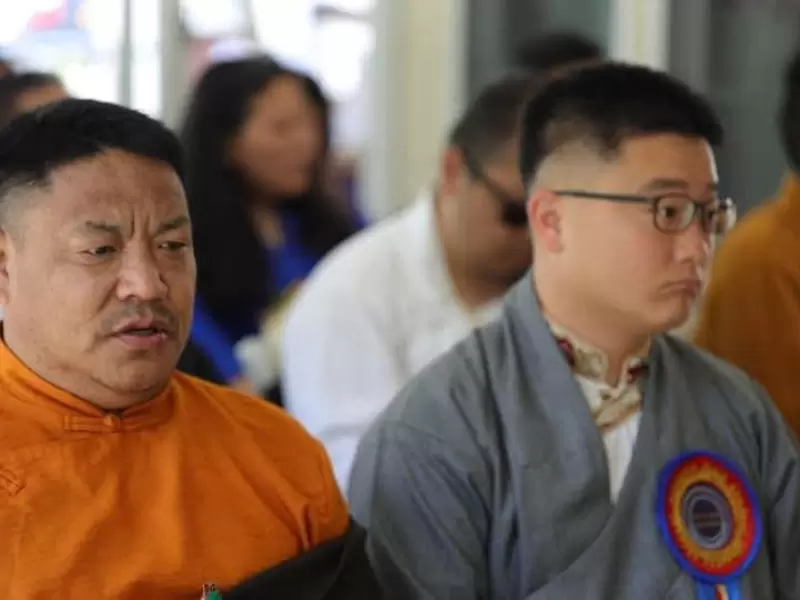 Lobga Rangzen, also known as Lobsang Palden, died after committing self-immolation in front of the United Nations headquarters in New York. / Courtesy Photo
On July 2, the Tibetan community suffered an immeasurable loss when Lobga Rangzen, also known as Lobsang Palden, died after committing self-immolation in front of the United Nations headquarters in New York. His passing has sent shockwaves through friends, activists, and supporters around the world who knew him as a tireless advocate for the Tibetan people and their struggle to preserve their identity, culture, and freedom.
For me, this tragedy is deeply personal.
For the past twelve years, Lobga was not only a fellow advocate but also a dear friend and brother. Throughout our friendship, he patiently educated me about the realities facing Tibetans living under the rule of the People's Republic of China. His knowledge came not only from history but from lived experience, and he carried an unwavering commitment to ensuring that the world never forgot Tibet.
Whether standing outside diplomatic missions, organizing demonstrations, attending rallies, or speaking with anyone willing to listen, Lobga was always present. Rain or shine, regardless of how many people attended, he believed every conversation mattered. Every leaflet distributed, every banner raised, and every peaceful protest represented another opportunity to remind the international community that Tibet's story is far from over.
In recent months, he spoke with increasing urgency about what he viewed as an existential threat to the Tibetan people. He warned that China's newly introduced so-called "Ethnic Unity Law" would further "accelerate efforts to assimilate ethnic minorities into a single national identity". Critics of the legislation argue that its implementation could further erode the Tibetan language, religious traditions, cultural heritage, and distinct national identity through expanded state control over education, public life, and cultural expression. Lobga feared that future generations of Tibetans would inherit a homeland where much of their unique heritage had been systematically diminished.
Throughout his years of activism, Lobga consistently called for unity among Tibetans, regardless of regional background or political differences. He believed that only a united Tibetan movement could effectively advocate for the rights and aspirations of the Tibetan people. Above all, he maintained that complete independence for Tibet—not greater autonomy—was the only lasting solution to safeguard Tibet's identity, culture, religion, and future. Whether one agreed with his political position or not, there was never any doubt about the sincerity of his convictions or the sacrifices he was willing to make in pursuit of them.
The news of his death came as an overwhelming shock. Those of us who knew him understood his passion, but few could have imagined that his final act would be one of such devastating sacrifice.
It is important to say clearly that no one should interpret this tragedy as an endorsement of self-immolation. The loss of any human life is heartbreaking, and no cause should require such sacrifice. Friends, family, and fellow activists grieve not only the activist the world has lost but also the brother, son, and friend whose presence can never be replaced.
Yet understanding why such acts occur requires looking beyond the act itself.
For many Tibetans, self-immolation has become an expression of profound desperation after decades of believing their voices have gone unheard. More than 150 Tibetans have reportedly self-immolated since 2009 in protest against Chinese government policies in Tibet and neighboring Tibetan areas. These acts are not celebrations of death but desperate cries for the world to pay attention.
Lobga's final act should therefore not be viewed in isolation. Rather, it reflects the immense frustration, pain, and sense of powerlessness felt by many Tibetans who believe that peaceful appeals have too often been met with silence. While no one condones such an act, it symbolizes, for many, the burning frustration experienced daily by Tibetans who fear for the survival of their language, faith, culture, and identity.
Those of us who knew Lobga would rather remember the life he lived than the way it ended.
We remember his determination to attend rallies that others overlooked. We remember his unwavering kindness and his belief that awareness was the first step toward justice.
If there is any lesson to draw from this heartbreaking moment, it is not to glorify sacrifice but to renew our commitment to understanding the issues that compelled a man so devoted to his people to believe his final act might awaken the conscience of the world.
Lobga Rangzen devoted his life to ensuring that Tibet would never be forgotten. His passing leaves an irreplaceable void among those who loved him, but it also leaves a profound responsibility for the rest of us: to continue listening, learning, and engaging with the realities facing the Tibetan people through peaceful dialogue, principled advocacy, and an unwavering commitment to ensuring that their voices are heard.
May my friend and brother rest in peace. His flame has been extinguished, but his lifelong call for the world to remember Tibet—and for Tibetans to stand united in defense of their nation's future—will continue to resonate for generations to come.
The writer is Managing Editor/White House Correspondent, Global Strat View
(The views and opinions expressed in this article are those of the author and do not necessarily reflect the official policy or position of New India Abroad.)
Discover more at New India Abroad
Leave A Comment
Related








ADVERTISEMENT

ADVERTISEMENT
E Paper
Video

Comments
Start the conversation
Become a member of New India Abroad to start commenting.
Sign Up Now
Already have an account? Login