ADVERTISEMENT
ADVERTISEMENT



World is turning to Indian knowledge systems: Ishan Shivanand on Yoga
Indian-origin yogic scholar says yoga's growing global appeal reflects a search for solutions to modern mental health challenges
-
 Malvika Choudhary
 - Sun, 21, Jun 2026
- 00:30 EDT
- 85
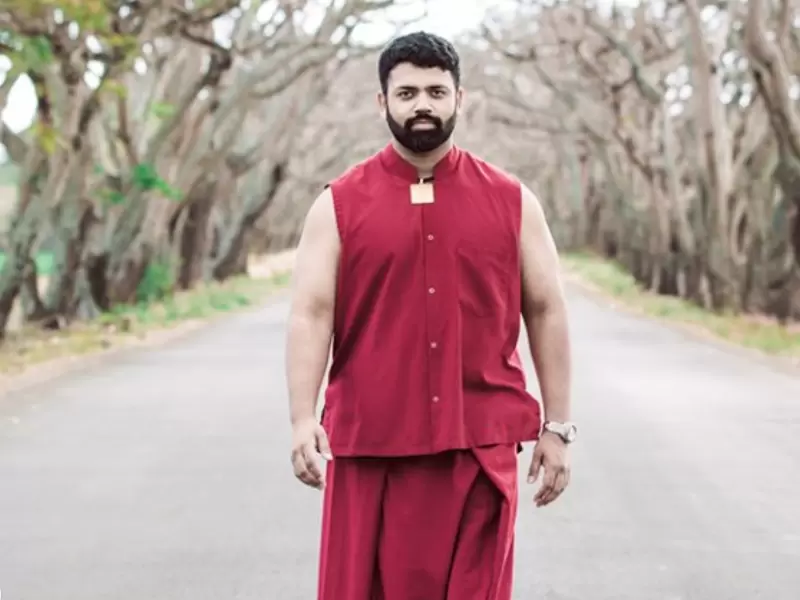 Ishan Shivanand / Courtesy photo
As anxiety, burnout, loneliness, and the impact of technology on daily life continue to draw global attention, Indian-origin yogic scholar and mental health researcher Ishan Shivanand believes more people are turning to ancient Indian traditions in search of answers.
In an interview with India Abroad, Shivanand said the growing popularity of yoga, meditation, and breathwork is part of a broader recognition of Indian knowledge systems and their relevance in addressing contemporary challenges.
ALSO READ: Chicago community marks International Day of Yoga
"The world is recognizing Indian knowledge systems as a very powerful behavioral modification lifestyle tool," Shivanand said. "When we are looking at chronic care, when we are looking at rehabilitative care, or even when we are looking at prevention of mental health issues, then we are looking at Indian knowledge systems."
Born into a 21-generation yogic lineage, Shivanand recently received a Gold Award at the 2026 Nautilus Awards for his book The Practice of Immortality. He is also the founder of Yoga of Immortals and Compassion Unites, initiatives focused on mental health research and community engagement.
For Shivanand, the growing acceptance of Indian traditions extends beyond wellness trends. He believes it has also encouraged many members of the Indian diaspora to reconnect with their cultural roots.
"When there is a culture where your culture is being celebrated, your culture is being appreciated, your culture is being utilized as the solution to the mental health crisis the world is suffering from, then definitely there is going to be acceptance or exploration of your own culture," he said.
According to Shivanand, previous generations of immigrants often felt pressure to assimilate by distancing themselves from their traditions. Today, however, the global embrace of yoga, breathwork, and traditional wellness practices is helping many rediscover those connections.
Beyond postures
While yoga has become a global phenomenon, Shivanand argues that much of the world misunderstands the practice.
"There is a misunderstanding on the definition of what yoga is worldwide," he said.
According to him, yoga has increasingly been transformed into a commercial product, particularly in Western markets where certification programs, branded styles, and social media culture often shape public perceptions.
"Yoga has been made into a product and there is a whole machinery working behind it in the West," he said.
Shivanand said the emphasis on physical postures has overshadowed the philosophical, meditative, and psychological foundations of yoga.
"Yoga is perfect. Yoga has always been perfect," he said, criticizing the proliferation of branded versions that claim to reinvent centuries-old teachings.
He noted that many people now associate yoga primarily with fitness, appearance, or weight loss, despite the practice's broader purpose.
Addressing trends such as "face yoga" and the use of yoga as a weight-loss tool, Shivanand said yoga was never intended to focus solely on physical transformation.
"Yoga was never intended for weight loss. It's for spirituality, it's for mental health, it's for peace, it's for inner dynamics," he said.
While breathwork and yoga can support overall well-being, he argued that reducing yoga to a fitness trend diminishes the depth of a tradition that has endured for thousands of years.
Mental health crisis
Shivanand's interest in mental health research emerged while serving Indian diaspora communities abroad.
After being tasked by his guru in 2015 with working among overseas Indian populations, he spent time in countries including Mauritius, collaborating with governments and education departments. It was there, he said, that he began noticing gaps in existing mental health research, particularly involving South Asian communities.
According to Shivanand, many commonly used mental health assessment tools were developed using Western populations and often fail to account for South Asian cultural realities.
"A lot of the time, the testing parameters, they are based on Caucasian standards. Standards that were made in a lab somewhere in the West and the cultural specifications and considerations have not been taken into account," he said.
He argued that such limitations can sometimes result in South Asians being incorrectly identified as suffering from anxiety or depression.
"If we go through them and if we run them to a South Asian diaspora, I myself saw that so easily somebody can be mislabeled as having anxiety or depression where they do not. And misdiagnosis leads to mistreatment," he said.
Those experiences led him to pursue specialized research focused on South Asian mental health before moving to the United States in 2019 to continue that work.
Through Yoga of Immortals, Shivanand has focused on studying ancient breath- and meditation-based practices and their relationship to mental well-being.
"We weren't using the traditional hatha yoga physical contortions as a practice of yoga. We were using the ancient breath- and meditation-based yoga," he said.
His second initiative, Compassion Unites, was born from the belief that mental health challenges have become too complex for any single institution to solve.
"First social media was a crisis affecting mental health. Then COVID became a crisis affecting mental health. Now alienation and isolation are affecting mental health. Now AI is affecting mental health," he said.
The initiative seeks to bring together healthcare professionals, educators, policymakers, faith leaders, elected officials, and technology leaders to identify solutions and improve access to mental healthcare.
"We must unite to combat this mental health crisis because when the mental health crisis perseveres, all of us are suffering," Shivanand said.
Underlying much of his work is a commitment to preserving knowledge passed down through generations.
"If we get lazy and we lose this information, then this knowledge is gone forever," he said.
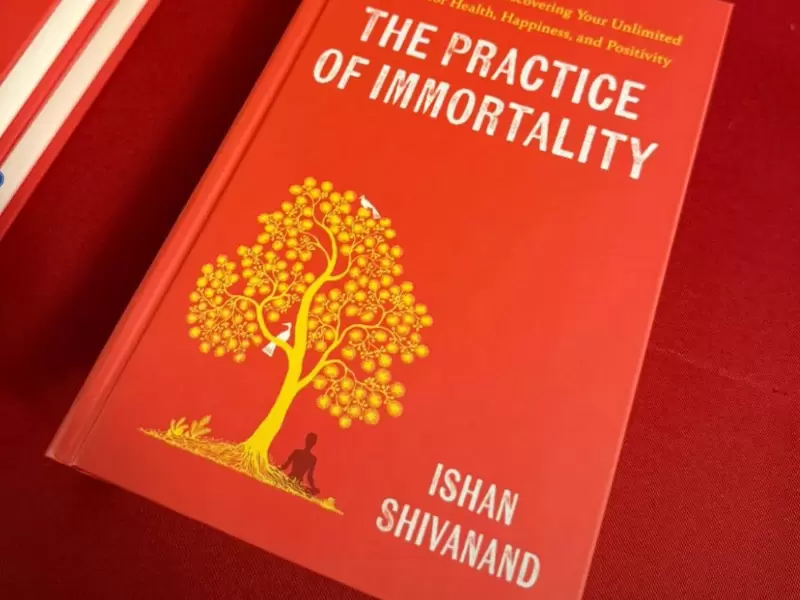 Shivanand's award winning book. / Courtesy photo
Shivanand said that same philosophy informed his award winning-book ‘The Practice of Immortality’, which he described not as a memoir but as a vehicle for sharing teachings through stories. Drawing on traditions found in texts such as the Mahabharata, Ramayana, and Upanishads, the book combines personal experiences with lessons on spirituality, mental health, and self-development.
For those feeling overwhelmed by modern life, however, his advice remains straightforward.
"Take a step," Shivanand said, suggesting simple actions such as taking a walk, eating healthier food, waking up earlier, or forgiving a loved one. Small acts of self-care, he believes, can become the starting point for meaningful change.
Discover more at New India Abroad.
Related
.png)







ADVERTISEMENT

ADVERTISEMENT
E Paper
Video

Comments
Start the conversation
Become a member of New India Abroad to start commenting.
Sign Up Now
Already have an account? Login