ADVERTISEMENT

ADVERTISEMENT



US can exact 'much, much greater pain', ball in Iran’s court: Vance
Vance said US actions so far had been calibrated, including strikes on Iranian targets, while avoiding escalation to critical energy infrastructure.
-
 IANS
IANS - Tue, 07, Apr 2026
- 13:08 EDT
- 17
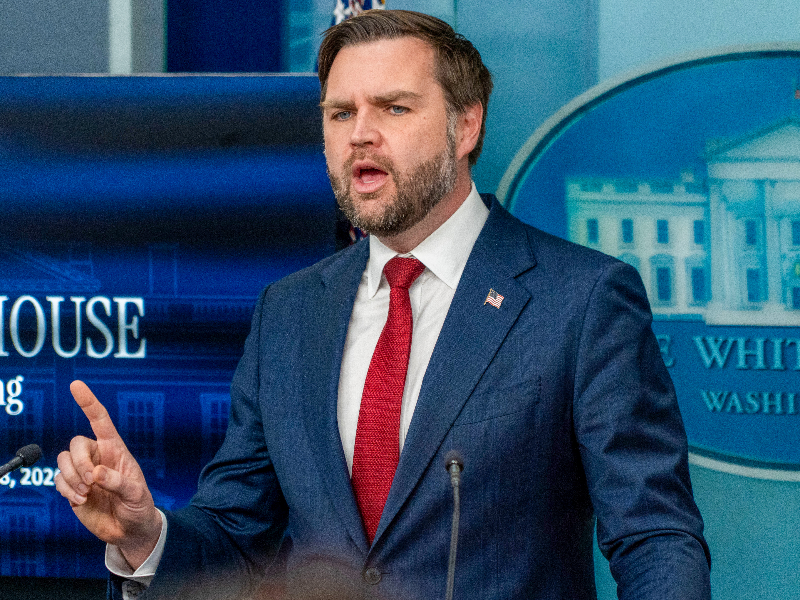 Washington, D.C.: U.S. Vice President JD Vance speaks to reporters during a press briefing at the White House in Washington, D.C., the United States, Jan. 8, 2026.Vance said that currently part of his job is "to try to ensure that Venezuela is stable" and to ensure that the acting Venezuelan government "actually listens to the United States and does what the United States needs it to do under our country's best interest." / Xinhua via IANS
The United States warned Iran it can “exact much, much greater pain” if it fails to change course, with Vice President J D Vance saying, “the ball is in the Iranians’ court.”
Speaking at a joint press conference with the Hungarian Prime Minister Viktor Orbán in Budapest, Vance signaled that the confrontation had reached a decisive stage, with the next move now dependent on Tehran’s response.
“We feel confident that we can get a response… whether it’s positive or negative,” he said, adding that Washington expects clarity from Iran “by 8 o’clock tonight.”
Also Read: Trump warns Iran: Whole civilization will die tonight
Vance said US actions so far had been calibrated, including strikes on Iranian targets, while avoiding escalation to critical energy infrastructure.
“We’re not going to strike energy and infrastructure targets until the Iranians either make a proposal that we can get behind or don’t make a proposal,” he said.
At the same time, he made clear that stronger options remain available if diplomacy fails.
“The President of the United States can decide to use them and he will decide to use them if the Iranians don’t change their course of conduct,” Vance said.
He framed the conflict in economic terms, accusing Iran of attempting to pressure global markets.
“Fundamentally what Iran is trying to do… is they’re trying to extract as much economic pain on the world as possible,” he said.
Vance said Washington’s objective was to prevent disruption to global energy flows.
“What we really want is… a world where oil and gas is flowing freely, where people can afford to heat their homes and cool their homes,” he said.
He also criticised European energy policy, calling it a “huge mistake” for leaders to cut themselves off from oil and natural gas supplies from the East, arguing that such decisions had weakened energy security.
“It’s funny… when I hear people accuse my president… of being pro-Russia,” he said, suggesting that stronger energy strategies would reduce dependence on external suppliers.
Orbán, speaking alongside him, warned that Europe was heading towards “the most serious energy crisis,” citing rising prices and risks of oil and gas shortages.
He stressed that cooperation with the United States remains critical to ensuring Hungary’s energy security amid mounting geopolitical tensions.
Discover more stories on New India Abroad
Related







ADVERTISEMENT

ADVERTISEMENT
E Paper
Video

Comments
Start the conversation
Become a member of New India Abroad to start commenting.
Sign Up Now
Already have an account? Login